North American stocks are mixed as strong mega-cap tech earnings lift the Nasdaq while energy-linked weakness weighs on the TSX and S&P.
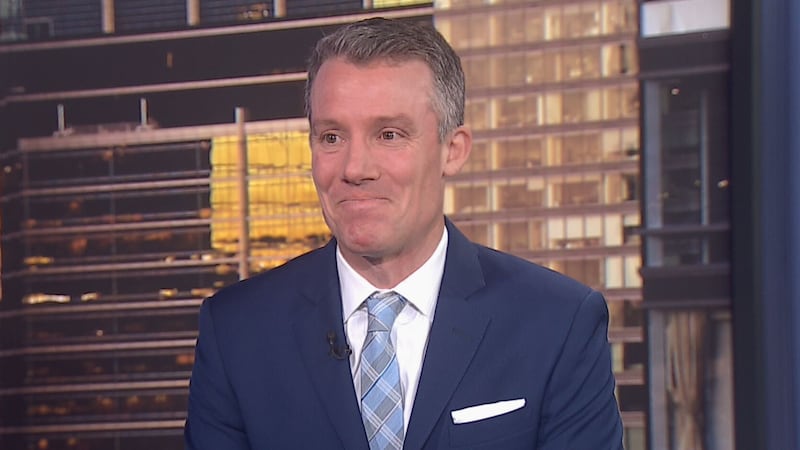
BNN Bloomberg spoke with Ryan Bushell, Chief Executive Officer and Portfolio Manager at Newhaven Asset Management, about rising interest in Canadian natural gas infrastructure, sector risks and shifting investment opportunities.
Key Takeaways
- Mega-cap tech earnings continue to support Nasdaq outperformance while broader indexes lag.
- Canadian natural gas infrastructure is drawing increased global interest, particularly tied to LNG export growth.
- Recent deal activity highlights long-term expansion potential for LNG capacity in Canada.
- Semiconductor stocks face risks tied to overbuilding and growing energy constraints.
- Premium Brands is positioned for long-term growth following major capacity investments tied to key customers.
Read the full transcript below:
ANDREW: Let’s get more from one of our favourites, Ryan Bushell of Newhaven Asset Management. Great to see you, Ryan.
RYAN: Thanks, Andy. Thanks for having me.
ANDREW: My last day. Thanks. And we’ve been talking for years.
RYAN: Yeah, I had to come in and see you today to say goodbye properly, and definitely appreciated everything you did for me over the years when I was pretty green, learning the ropes here.
ANDREW: Thank you very much indeed. One thing that’s jumping out for you lately is these energy deals in Canada — Shell, for example, buying ARC Resources. Big bet on Canadian natural gas.
RYAN: Yeah, and I think it’s more a bet on the infrastructure side, right? So it helps them to backstop LNG Canada Phase 2. We were talking off-air too about the Pembina Gas Infrastructure deal, with Apollo coming in. You usually don’t see one large U.S. private equity firm selling to another large U.S. private equity firm. Usually they’re looking for an exit or a clean exit. But I think both of these deals show the interest in natural gas export infrastructure from Canada, and I think that is a big story to play out here.
You know, the Strait of Hormuz crisis — everybody’s talking about oil, everybody’s watching the oil price. Twenty per cent of the world’s LNG is offline right now in Qatar. That’s, to me, a more acute crisis. The storage and transportation of natural gas is much tighter than it is for oil.
ANDREW: Let’s pop up a five-year chart for ARC — ARX, I think — and PPL as well. So that’s interesting. Apollo is coming in, buying — I think it’s a surge of this gas infrastructure.
RYAN: Forty per cent.
ANDREW: Forty per cent, sorry. But the seller is KKR. That’s what you said — U.S. PE — how did you describe it?
RYAN: Private equity.
ANDREW: Oh, U.S. private equity.
RYAN: So you don’t usually see them, you know, trading horses, so to speak, one or another. Usually they’re looking to offload to maybe, say, a pension fund. And there certainly will be secondary deals on the back of this. But that was an overhang for Pembina Pipeline, because they own the other 60 per cent of this company, and it’s a lot of capital. JVs mean they’re able to put more money to work than raising equity from their shareholders. So it’s a good deal for Pembina in our view.
But I think both of these deals show — again, the ARC Resources deal is bittersweet for us. We’re big holders, and so to get $32 for it, or wherever it’s trading, you would have liked more. I would have liked more. I was surprised the board agreed to it. It must mean that the Attachie project is worse than people thought.
ANDREW: That has stumbled, yeah.
RYAN: Yeah. And so for them to take that deal, especially taking that much stock, I was surprised. But there are other opportunities to move on to, so we’re going to be doing that.
But yeah, I think the bigger story here is what’s ahead for the basin. If you think about LNG Canada Phase 2 and potentially the Ksi Lisims project — I’m pronouncing that wrong, I’m sure — as well, you start to get LNG export. That, and Cedar LNG, which is coming on next year, hopefully, you’re looking at sort of five BCF of incremental capacity in a roughly 20 BCF-a-day market in Canada.
So you’re talking about a roughly 25 per cent expansion to export capacity over the next, call it, five to seven years. That’s material for all of our companies. We had AECO just as recently as this summer, with Alberta gas prices trading at $1 per MCF Canadian, which is pretty poor. If we get that up to $2, $3, $4 — somewhere in that range as a floor — it makes all of these companies much more robust, and I think that’s what Shell sees with ARC.
ANDREW: Yeah, natural gas is so funny. When it gets stranded in Texas, apparently they’re paying people to take natural gas off their hands.
RYAN: Yeah, or flaring it. Exactly, yes. So it is regionally constrained, but there is demand — there’s ravenous global demand — if we can have a surety of supply.
But events like the Strait of Hormuz crisis, there’s been a cyclone in Australia that took some production offline. Even U.S. LNG facilities have outages from time to time. The security of supply has been difficult over the past few years. So what the world needs is more points of supply — secure points of supply — to be fungible for one another. And I think Canada has a big part to play there.
We missed our first opportunity 10 years ago when the U.S. built their first kind of 15 BCF a day of export capacity. They’re building another eight to 10 right now. If, like I said, we can build five, I think it’ll be well utilized. We have so much to offer on that side — especially given the lower cost of our gas, the better cooling temperatures, so less cost to cool down the gas, because it’s cooler here than it is in Louisiana, and a shorter shipping route to Asia as well. So a lot of things going in our favour.
ANDREW: The semiconductor stocks — I know it’s an abrupt pivot — but chip stocks generally, memory chips, investors piling into those. What do you think?
RYAN: Yeah, again, I would just be very cautious. I mean, not just based on the historical examples of Cisco and Nortel, and going back a few cycles to the railroads in the 1800s or the automobile manufacturers in the 1920s — any new thing tends to get overbuilt.
Now, there are actually some energy connections to the semiconductor industry. The first is with the Strait of Hormuz closed — these semiconductor factories are facing shortages of certain critical elements they need for manufacturing, helium especially.
And the other thing I keep looking at and being a bit puzzled by is, look at the NVIDIA sales numbers. However many chips they sell, each one of those chips is like a person from an electricity consumption perspective. So if you think about them adding millions of chips, that’s like adding millions of people in terms of power demand. We just literally can’t build the power fast enough to power all these chips.
So I do wonder at some point whether orders will slow down based on that physical constraint. It is becoming a physical constraint. We had years of Moore’s law — twice the computing power with half the energy. It’s not that that’s not happening anymore, but the computing requirements are growing so exponentially that now it’s pulling the energy with it.
So again, I think if there’s not a psychological or basic market bubble wall that it hits, there is also an energy wall out there somewhere — and we may already be past it and just not know it yet.
ANDREW: One last stock — Premium Brands, PBH. We’ve been talking about it a bit on the channel. Huge in specialty food — Philly cheesesteak shrink-wrapped sandwiches. I’m getting hungry now.
RYAN: Me too. Yeah, so the big deal they have is premium meat products into Costco. So this is what’s changed with the company. Over the past five years, they’ve been working on this, proving out their product line, and now Costco has basically said to them, “We’re ready to take capacity.”
Well, the problem with that is that when you’re a big U.S. company like Costco versus the size of Canadian Premium Brands, previously it was a mismatch — they just didn’t have enough capacity to fill those shelves. So they went on a capacity-building exercise over the past three or four years.
And this is very akin — we were talking about Enbridge five or six years ago when they were building the Line 3 replacement and everybody was saying, “Oh, they don’t have enough cash flow, they’re taking on all this debt.” But they were building one of the biggest capital projects in their history, and when that comes online, it’s going to produce cash flow for them for the next 50 to 100 years.
It’s not that different for Premium Brands. They had to build a pipeline. They have a willing customer, a customer willing to take the offtake — they just had to build the capacity to service that customer. And now that that’s done, we do feel that will be beneficial to them over a number of years.
And that’s before we talk about the innovation they have on different products and getting new products to market that consumers like, with their specialty background in acquiring different specialty food makers. It’s a really good management team, so we’re pretty excited about it.
It’s come off on energy worries, consumer pressure, etc., but you don’t see a lot of consumer pressure in too many areas if you look at retail sales numbers and other luxury goods items. So I actually think it’s a pretty good opportunity right now to be looking at it.
ANDREW: Ryan, thank you very much.
RYAN: Thanks, Andy. Congratulations, and I wish you all the best.
ANDREW: Thank you very much. Ryan Bushell, chief executive officer and portfolio manager at Newhaven Asset Management.
---
This BNN Bloomberg summary and transcript of the April 30, 2026 interview with Ryan Bushell are published with the assistance of AI. Original research, interview questions and added context was created by BNN Bloomberg journalists. An editor also reviewed this material before it was published to ensure its accuracy and adherence with BNN Bloomberg editorial policies and standards.

