A surge in earnings from major U.S. technology companies is underscoring the strength of artificial intelligence-driven growth, while Canadian firms are delivering more uneven results.
BNN Bloomberg spoke with Lorne Steinberg, co-president at Lorne Steinberg Wealth Management, about what is driving the latest earnings and where he sees opportunities across both U.S. tech and Canadian equities.
Key Takeaways
- Large-cap technology companies are posting strong revenue growth, supported by rising demand for cloud services and artificial intelligence.
- Heavy capital spending on AI infrastructure is a major theme, with companies investing aggressively to meet demand that currently exceeds supply.
- Valuations for major tech firms remain relatively attractive given their double-digit growth rates despite recent share price pullbacks.
- Canadian rail companies faced pressure from weaker coal shipments and rising costs, contributing to softer quarterly results.
- Corporate activity such as acquisitions and deleveraging efforts is shaping outlooks for Canadian firms, with free cash flow and balance sheet improvement in focus.
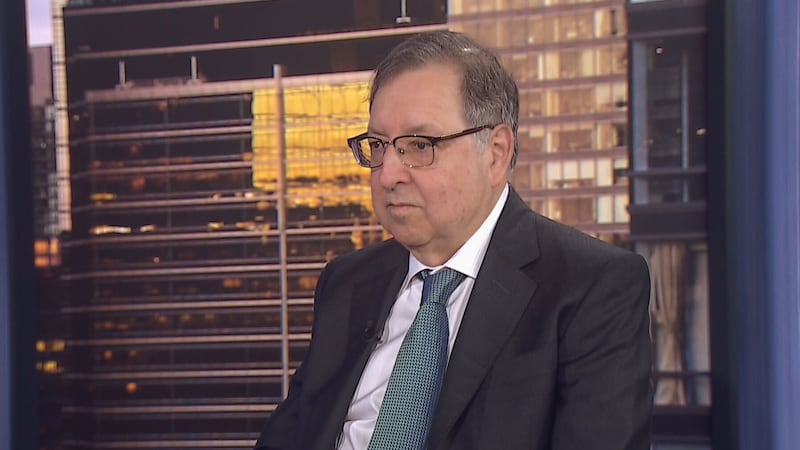
Read the full transcript below:
ANDREW: We have a tidal wave of earnings today, including the tech heavyweights — or some of them — Alphabet, Microsoft and Meta. And we’re also checking out the results from Bombardier, Gildan and CP Kansas City. Let’s get more from Lorne Steinberg, co-president of Lorne Steinberg Wealth Management. Great to see you.
LORNE: Andy, great to be here with you.
ANDREW: Thanks for coming into the studio. Give us your take on these tech numbers. It’s not a new scene — investors have misgivings about the massive capex on AI. They certainly do.
LORNE: The tech numbers are spectacular. Let me say, to have companies with $300 billion of revenues growing at 19 per cent like Microsoft, and 17 per cent or so like Alphabet — actually 17 per cent for Microsoft, 19 per cent for Alphabet — and Meta, 33 per cent revenue growth, it’s just absolutely unheard of. It is spectacular. Of course, the issue for a couple of these companies is the AI spend. Meta will spend US$325 billion between this year and next.
ANDREW: US$325 billion?
LORNE: US$325 billion, and will have negative free cash flow for this year and next, which is unlike most tech companies. Microsoft is basically spending all of its cash flow. And so, when we look at Meta — and we reduced our position in Meta earlier this year — our view is Meta, Mark Zuckerberg seems to be the mastermind behind everything, whereas when you look at Microsoft and Alphabet, it seems to be more of a broad-based executive suite. That’s just the perception. Microsoft, we love it. Microsoft remains at the nexus — they are the major IT vendor for every major company. Alphabet is ad-based, and it just keeps gaining market share. But Meta does too. And our view is that these companies are not just wasting their money — they’re building out data centres to meet demand, and so far demand outstrips supply. So we do like all of these companies despite the spend.
ANDREW: The Wall Street Journal is a little skeptical here. Heard on the Street today says these tech executives are like graduate students running up credit card debt, certain their lucrative careers will pay off.
LORNE: Well, I have to say this. Microsoft, as an example, is spending $190 billion. That’s up about $30 billion simply because chip prices and other items have risen in price. But Microsoft is doing this to meet demand that is already there. So a lot of this stuff is basically pre-sold — they will make a profit on this spend. I think the question is whether they will be able to keep their margins up on all of this money they’re spending, and that is a valid question. That being said, these stocks have sold off. Microsoft is maybe 26 times earnings. It is, for us, compelling. It’s growing at over 15 per cent a year. Alphabet roughly 25 times earnings, growing at roughly the same. There are very few companies in the world growing at these kinds of rates.
ANDREW: And they’re massive, as you know, already.
LORNE: And they are integral to everything that we as consumers and large companies do. We need these companies — they are the giants.
ANDREW: So certainly Microsoft and Alphabet would be two techs that you would favour owning?
LORNE: We do. Meta, we reduced our position. But I have to say, 33 per cent revenue growth is an astounding number. They’re an ad-based company, and part of me says, hey, they’re gaining market share, obviously, because ad spend is growing low- to mid-single digits. So they are doing something very right. You hope they have the capital discipline.
ANDREW: Yes, and eventually rein it in. Let’s walk through some Canadian earnings. CP Kansas City is a stock you own. There was a slight miss.
LORNE: Sure, there’s a slight miss. And we’re seeing somewhat the same thing on the Canadian National Railway side as well. CP Kansas City — the real issue, first of all, is it’s on the shipping side. It was the coal revenues that were down 12 per cent — that’s the main issue that impacted revenues. On the earnings side, where there was a slight miss as well, there was that. So their operating ratio went down.
ANDREW: And it’s not a good thing — just remind us?
LORNE: Right. So the operating ratio actually went up. So in other words, their costs went up versus every dollar of revenue, so they’re making less money.
ANDREW: Yeah.
LORNE: And the second thing is, of course, they’re dealing with fuel price volatility, which is an issue. But the real overhang — because we like both CPKC and Canadian National Railway — is, of course, what’s going to happen with the free trade talks that are coming up.
ANDREW: Yeah.
LORNE: For sure, economic uncertainty is a negative for both companies, but the overhang is the free trade agreement — where does that end up?
ANDREW: Longer term, though, you’re an owner of the two.
LORNE: Longer term, we really like both. And I’ll tell you what, with the selloffs of these companies, the valuations are very cheap.
ANDREW: Okay, what about Bombardier? Fascinating company, obviously. But in a way, when the global rich do well, they do well — not all millionaires buying the Flames, I know.
LORNE: No, but Bombardier really is now purely a private jet and private jet servicing business, with the defence division as well, which is growing.
ANDREW: Yeah.
LORNE: And they delivered 24 private jets this quarter versus 23 last time. So people are still buying private jets. A lot of them are sold to people who buy portions of a jet.
ANDREW: Right.
LORNE: But the servicing business is — I shouldn’t even use that pun — but servicing revenues were up sharply. Most importantly for Bombardier, because they’ve been an indebted company forever, is their free cash flow should surpass $1 billion this year. And ultimately, that’s going to drive this company and valuation, because that has been a huge issue for this company forever.
ANDREW: And what about Gildan? Would you stick with them? It seems like a classic staples retailer.
LORNE: So we don’t actually own Gildan at the present time. Now, this is the first quarter — Gildan bought Hanes last year.
ANDREW: A massive deal.
LORNE: Yeah, exactly. So don’t look at the revenue growth of 60 per cent because it’s meaningless. This is the first quarter with Hanes fully into Gildan. We’re taking a look at Gildan. One thing we do like is they’re going to achieve their $100 million of synergies this year. They’ll probably achieve the $250 million of synergies over the next three years. It seems to be a very well-run company, and this looks like the acquisition truly was accretive to earnings on day one, unlike so many acquisitions. So it looks like they bought Hanes at the right price. There will be no share buybacks for the next couple of years because they took on a lot of debt to do this deal. So their debt to EBITDA is 3.3 times, and they want to get it down to 2.5 times before they even look at share buybacks.
ANDREW: I noticed an odd thing. I was in Michaels, the big crafts chain, and I was looking at T-shirts because they sell them for people to print on. And they were Gildan T-shirts — really cheap. It looks like it’s a cheap place to buy T-shirts.
LORNE: Keep that in mind.
ANDREW: Lorne, thank you very much. I’ve been interviewing you for years. This is my last day. Thank you very much.
LORNE: Andy, I’m truly honoured to be here. On behalf of everybody who’s watched you, a big thank you.
ANDREW: Lorne, thank you very much indeed. Lorne Steinberg, co-president of Lorne Steinberg Wealth Management.
---
This BNN Bloomberg summary and transcript of the April 30, 2026 interview with Lorne Steinberg are published with the assistance of AI. Original research, interview questions and added context was created by BNN Bloomberg journalists. An editor also reviewed this material before it was published to ensure its accuracy and adherence with BNN Bloomberg editorial policies and standards.

