A revived Keystone pipeline project is putting fresh focus on how energy security and infrastructure needs intersect with sustainability goals. Investors are reassessing how environmental priorities fit within a shifting geopolitical and economic landscape.
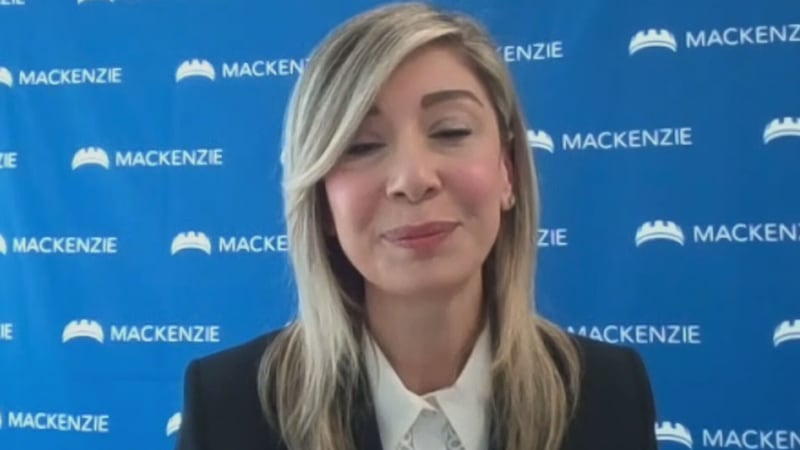
BNN Bloomberg spoke with Fate Saghir, senior vice-president and head of sustainability at Mackenzie Investments, about how investors are balancing competing priorities and where sustainable investing continues to evolve.
Key Takeaways
- Investors are evaluating energy projects through an “energy trilemma” balancing security, affordability and sustainability.
- Indigenous partnerships, environmental factors and regulatory certainty are seen as critical to project viability and timelines.
- Sustainable investing is shifting from values-based strategies to a focus on material risks and long-term opportunities.
- The energy transition is expected to include both fossil fuels and renewables across the full value chain.
- Artificial intelligence is boosting energy demand while offering benefits such as grid efficiency, creating new sustainability trade-offs.
Read the full transcript below:
ROGER: A new project was approved yesterday to bring Canadian crude to the U.S. The deal is a revival of the Keystone pipeline, which drew concern from environmentalists. Joining us now to explore how sustainable investing may fit into these new deals and more is Fate Saghir, senior vice-president and head of sustainability at Mackenzie Investments. Fate, thank you very much for joining us.
FATE: Thank you for having me.
ROGER: Let’s get your initial reaction to the new pipeline that was just approved south of the border, at least.
FATE: Yes, certainly lots of headlines on that this morning. When investors are looking at these types of projects, and certainly the Bridger pipeline expansion, we’re really evaluating them through the lens of what we’re calling now the energy trilemma — so balancing energy security, affordability and sustainability. There’s certainly, especially today, a clear recognition of the role that infrastructure plays in supporting energy security and reliable supply, especially in North America, in today’s environment.
But at the same time, investors are going to be increasingly focused on Indigenous partnerships. That was a big deal in the original Keystone project, and environmental considerations. They’ll look at them not just from social factors, but really as fundamental to the project’s viability and timelines. I think regulatory certainty is also going to be critical, given the long-dated nature of these assets. Importantly, investors are going to be assessing how these projects will fit into the long-term energy transition. This just continues to reinforce that this transition is going to be about a capital allocation story where multiple priorities are going to have to be balanced.
MIKE: Fate, can you tell us about the economics of the industry, given where the prices of competing fuel sources like natural gas are in North America, for example, and the recent input costs? Do the economics still make as much sense as they did perhaps three or four years ago, when interest rates were zero or near zero?
FATE: Yeah, so I will preface by saying I’m not an expert on the commodity markets, but certainly what we’re seeing today is natural gas prices are not as competitive. We’re still trying to figure out our trade agreement with the U.S., so that’ll be really interesting to hear from the Canadian government and see what their reactions are.
From my lens, it’s a bit — you know, we’ve been talking a lot in Canada about exporting into Asian markets and finding new opportunities. So it’ll be interesting to see how this all fits in, and we’ll see what the impact is on commodity pricing.
ROGER: And it must be challenging for sustainable investing, especially with energy stocks surging and stocks going up. People want to chase returns sometimes. How are you striking that balance right now?
FATE: Yeah, so we just completed our seventh annual Earth Day study, where what we found is actually a continued growing interest in sustainable investing. What we’re seeing is a transition from this space being purely a values-focused space to more of a fundamental space that’s focused on the investment risks and opportunities.
One of the big findings for us — we did ask about the energy transition — it’s certainly making a lot of headlines and is a very important part of Canada’s story. What we’re finding is Canadians are very interested in the transition. They believe the transition is going to be made up of renewables and fossil fuels.
What that looks like, and how we think about fossil fuels in terms of transitional sources of energy, will be interesting. That’s still to be determined, but there continues to be growing interest. We’re starting to think about it as part of a full value chain, where we will still have a need for upstream sources as well as downstream sources. Certainly, renewables will continue to play a big part of that as well, especially as we see growing demand on electricity. Renewables are going to help bridge some of that growing demand.
MIKE: Fate, have you found in more recent times that governments at all levels have been working better with the industry in order to accelerate timelines and get projects on the ground faster? How do you find the bureaucratic process associated with getting projects online? Is it getting better, worse or about the same in your view?
FATE: Yeah, well, again, to be determined. There are lots of things we’re seeing out there. Certainly Bill C-5 was meant to help accelerate some projects. I think it’ll be interesting to see what that acceleration means. It takes a very long time — more than a decade sometimes — to set up some of these projects, so we need to move faster as a country.
The new announcement of a sovereign fund in Canada will be interesting in terms of funding and attracting capital here. We’ll see. I do think there’s an appreciation in today’s world, and certainly in the geopolitical circumstances we’re facing, that we need to move fast. There’s a focus on economic prosperity as a country.
When I think about sustainability, the definition includes economic prosperity, social inclusion and environmental stewardship. You get sustainability when all three dimensions are in balance. Today, it’s going to be really hard to balance all three when we feel that our sovereignty or economic prosperity is at risk. I think that’s what we’re seeing from the current government in Canada. They’ve certainly been focused on establishing Canada as an energy superpower. So more to come, but good progress so far.
ROGER: And I just want to sneak in one more question — we’re supposed to wrap up here — but AI, where does it fit in when it comes to sustainable investing?
FATE: Yes, well, it fits in in many ways. There are a lot of pros and cons. Sometimes I refer to Maslow’s hierarchy of needs and what the priority is for us — food, water, shelter — and AI is not helping with any of those right now.
It will help with grid balancing and so on. There will be lots of benefits from AI. Right now, it’s certainly driving demand for electricity, and that’s where, when we’re seeing renewable power come online, it’s supporting that growing demand from data centres. So there are pros and cons. We’ll see where it lands.
For us, we’re always looking at this from a very balanced approach. Is it helping keep the lights on and keep us warm? I’m not sure. So it is about balance.
ROGER: Okay, we have to leave it there. Fate, thank you very much for joining us.
---
This BNN Bloomberg summary and transcript of the May 1, 2026 interview with Fate Saghir are published with the assistance of AI. Original research, interview questions and added context was created by BNN Bloomberg journalists. An editor also reviewed this material before it was published to ensure its accuracy and adherence with BNN Bloomberg editorial policies and standards.

