Oil prices are rising as tensions between the United States and Iran escalate, with markets weighing whether the gains reflect a temporary spike or a more sustained shift in supply dynamics.
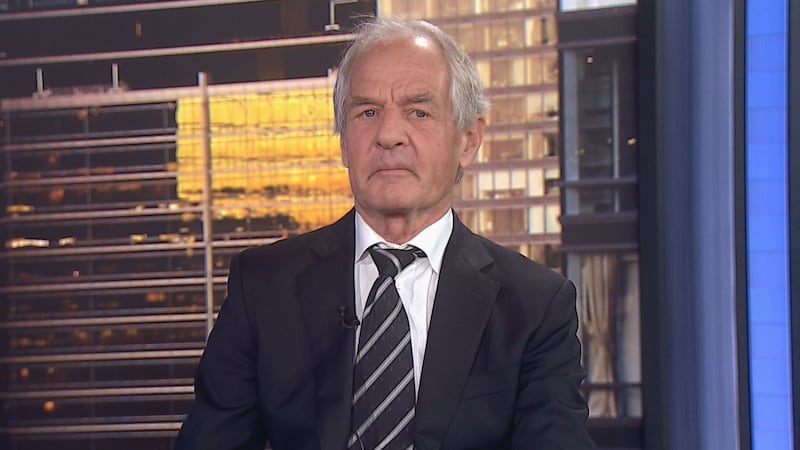
BNN Bloomberg spoke with John Zechner, chairman and founder at J Zechner Associates, who says structural tightness in the oil market and shifting investor sentiment could support Canadian energy stocks.
Key Takeaways
- Oil markets may remain tight even if geopolitical tensions ease, with longer-dated prices signalling sustained supply constraints.
- Investors could increasingly factor geopolitical risk into valuations, shifting how global energy assets are priced.
- Canadian energy companies may benefit from renewed foreign interest due to stable supply, long-lived reserves and lower geopolitical risk.
- Recent acquisition activity suggests a potential reversal after years of capital outflows from Canada’s energy sector.
- Oil-focused producers with strong reserve bases are positioned to outperform amid continued supply uncertainty.
Read the full transcript below:
LINDSAY: And while many investors are betting that the conflict will be short-lived and oil prices will come back down after the war is resolved, our next guest says he thinks the conflict will have a more long-lasting impact.
So joining us now is John Zechner, chairman and founder of J Zechner Associates, joining us in studio. It’s great to have you in.
JOHN: Hey Lindsay, nice to see you.
LINDSAY: And you’re here because, of course, you were running a marathon over the weekend, so thanks for coming.
JOHN: Yeah, down to the live show, yeah.
LINDSAY: Yeah. How did it go? There you are. So we just wanted to start off by showing a picture of you running a marathon. And yeah, it went —
JOHN: Well, yeah, I got — my story goes back. Unfortunately, training for Boston about eight years ago, I had a brain hemorrhage. So it’s been a bit of a struggle, a stroke, to get back. But yeah, I’m sort of back to running them now, and I’m certainly not the first guy across the finish line, but, you know, closer to the back of the pack — but at least I’m doing it.
LINDSAY: Hey, you’re doing it, and it looks like you’re going strong. So congratulations on that.
So let’s now turn to the markets and, of course, the price of oil, like we were talking about off the top there. You say some of the impacts could be more long-lasting. What are the long-lasting impacts that you think we’ll see?
JOHN: Well, it’s funny — when the whole thing started, the front end of the curve, like the very short futures, moved up dramatically, which is mostly the financial players not knowing exactly what’s going to happen.
And then that faded back, but into the longer end of the curve — you go out a year or something like that — that has slowly moved higher and started to close the gap. And that’s more, to me, a signal of what’s going on in the physical market for oil. It’s still tight, and it’s going to remain tight, even if they open the Strait of Hormuz tomorrow.
And I think that should affect the valuations of most of these energy companies. They ran up initially, then people sold them off thinking, like a lot of things in the market lately, investors seem to believe everything is going to be OK — it’s going to be a short-lived war, oil prices will go back to where they were.
But I think the curve is telling you a different story, and I think the physical tightness in the market is telling you a different story. And the valuations of the Canadian stocks, I think, are very attractive.
I think it’s a great portfolio hedge at this point. If this conflict does continue and prices stay relatively high, the valuations are low. I think people missed the importance last week of that bid by Shell for ARC Resources.
Since 2014, we have seen nothing but money going out of the Canadian energy sector. Foreigners, whether for ESG reasons or whatever, have continued to sell. This reversal in seeing money come back, I think, is very significant and maybe a signal of a change in trend.
LINDSAY: I was going to ask you that — is this a signal in a change of trend, or does this say something about the value of Canada’s energy sector going forward?
JOHN: Both. It tells you a little about the value and it tells you about the relative safety.
I think investors — almost like 9/11 made them look differently at air travel and how you evaluate investments — I think investors now internationally are going to look at security of supply as very important. Geopolitical risk is very important.
And when you look at the long-lived reserves you have in Canadian oilsands and everything else, some of those other concerns drop to the side. People realize these are great assets, low-cost and basically no geopolitical risk.
And I think that should attract capital, which is good, because we need it to rebuild infrastructure and get more access to international markets.
LINDSAY: OK, so when we’re talking about some of your top picks in Canadian energy stocks — you’ve got Canadian Natural Resources, Cenovus, Whitecap Resources — why those three in particular?
JOHN: There’s a bias to oil production in the short term because nothing is really changing in the natural gas market. We’re still in oversupply.
Even though you’ve got LNG shortages and very high gas prices in Europe, we can’t get our gas there — certainly not quickly, and not for years until we build infrastructure.
So you want to play the companies more directly levered to oil. Whitecap with Duvernay exposure, and long-lived oilsands assets for both Cenovus and Canadian Natural Resources. So to me, they stand out.
LINDSAY: You say years before we have the infrastructure to really start shipping a lot overseas. Is that what’s needed for Canada’s energy sector to continue to grow?
JOHN: Absolutely. You’ve got to get energy moving more across the country, whether you can start moving it east rather than importing it, and get more export capacity.
The demand is there globally — we just have to be able to get it to port and then get it out.
LINDSAY: You also increased your gold holdings in April. Let’s talk about gold. Your top picks include Barrick Mining, Agnico Eagle Mines and Torex Gold. Why those three?
JOHN: You want to take geopolitical risk out of the equation as much as possible. So you look at companies with primarily North American production.
The gold story will continue. You’ve got global diversification by central banks away from the U.S. dollar and fiat currencies in general. I think that move to gold is not going to end.
It paused a bit during the crisis because central banks needed liquidity, which means moving back to the U.S. dollar. I don’t think that lasts.
Even if gold doesn’t go higher, the stocks are cheap. They’re not reflecting US$4,000 or US$4,500 gold. So they’re very good value and can return capital to shareholders.
LINDSAY: Some analysts expected that gold rally to continue. Do you think prices could move higher again?
JOHN: I don’t see a problem getting there from here. You just need some deterioration in the U.S. dollar.
But even at current prices, I think gold stocks are still good value.
LINDSAY: You’ve also added to Canadian telecoms at a time when many investors are wary. Why?
JOHN: We’re looking for more defensive areas where you can get a turnaround with downside protection.
Telecom valuations are cheap — six to seven times operating cash flow. They’re still growing, and they’re essentially infrastructure assets.
Concerns about competition and population growth have weighed on the sector, but those pressures are stabilizing.
If companies reduce capital spending and focus on cash flow — paying down debt, buybacks, dividends — it could become a strong income story.
LINDSAY: Before we wrap up, anything you’re staying away from?
JOHN: I’m cautious on the consumer sector. Higher oil prices could weigh on spending.
Financials have had strong tailwinds, but some of those may fade. Interest rates aren’t likely to fall anytime soon, and that creates some risk.
LINDSAY: Great to have you in studio. Thanks so much for coming in.
That’s John Zechner, chairman and founder of J Zechner Associates.
---
This BNN Bloomberg summary and transcript of the May 4, 2026 interview with John Zechner are published with the assistance of AI. Original research, interview questions and added context was created by BNN Bloomberg journalists. An editor also reviewed this material before it was published to ensure its accuracy and adherence with BNN Bloomberg editorial policies and standards.

