OPEC+ is moving ahead with a modest production increase after the United Arab Emirates exited the group, as ongoing disruptions in the Strait of Hormuz limit the impact on global supply.
BNN Bloomberg spoke with Jeremy Irwin, global crude lead at Energy Aspects, about how geopolitical tensions, constrained trade flows and spare capacity are shaping the oil market outlook.
Key Takeaways
- OPEC+ is increasing output by about 200,000 barrels per day while continuing to unwind voluntary production cuts.
- Disruptions in the Strait of Hormuz are limiting the near-term impact of higher production on global crude exports.
- The UAE’s exit reflects tensions over production ambitions but is unlikely to undermine OPEC+ market control in the near term.
- Iranian supply risks and potential blockades could keep global oil flows constrained into June, with partial recovery expected.
- Supply disruptions and shifting trade flows are contributing to ongoing volatility in global crude pricing and regional differentials.
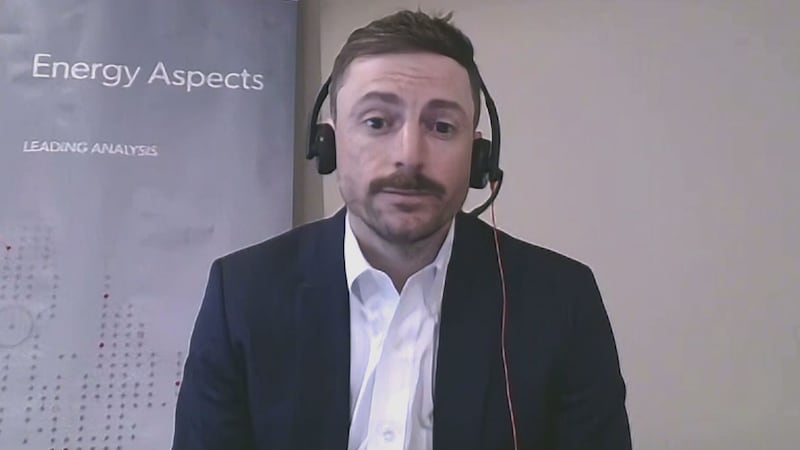
Read the full transcript below:
ROGER: OPEC+ nations are set to slightly increase crude production next month to about 200,000 barrels a day, following their first meeting without the United Arab Emirates, which officially left the group on May 1. To break down what’s next for OPEC and the oil market, we’re joined by Jeremy Irwin, global crude lead at Energy Aspects. Jeremy, thanks very much for joining us.
JEREMY: Thanks for having me.
ROGER: So was it a normal meeting yesterday? Could we call it that?
JEREMY: Yeah, we would characterize it as pretty status quo. They continued on the path of unwinding those voluntary production quotas, as expected. Now, this won’t really translate to higher crude exports, given the ongoing disruptions in the Strait of Hormuz, but yeah, status quo.
ROGER: Any conversations about the UAE added, or were those being held in backrooms?
JEREMY: I think the situation with the UAE had been building for some time now. The timing of this announcement is very much taking advantage of the current situation, where there was some concern within the group that their departure would lead to a selloff in pricing. Now, given the magnitude of disruptions we’re seeing currently, that overshadows their departure, and you didn’t really see that downward pricing pressure on crude. So I would say that explains the timing from our view.
ROGER: So was that the UAE playing nice with OPEC?
JEREMY: I think the UAE has had more ambitious growth plans than the group allowed within its framework of managing the market. So I would say yes, they’re taking advantage of the timing. And I’d say it’s a bit of a peace offering in the fact that they are leaving the group. That’s how I would characterize it.
ROGER: And how much of an impact will it have on OPEC if the UAE, assuming everything is resolved, ramps up production? I think they want to go from about 4.5 million to 5.5 million barrels. What kind of impact will that have?
JEREMY: We would still think OPEC is going to be effective in managing the market. Saudi Arabia still has a pretty big bat to swing there, with some of the spare capacity they withhold. So we still think the group will be effective. Now, the UAE probably grows a little bit quicker, and could this have more supply risk down the road? Potentially, but that remains to be seen. We have to see how Middle East production comes back after these shut-ins. There are a lot of unknowns, so it’s a little speculative to assume it could pressure pricing far into the future.
ROGER: Obviously, more production means more money for the UAE. What are the other benefits, and what might be the shortcomings of them leaving?
JEREMY: The benefits are exactly what you said. They can grow production without restrictions and maximize revenues for the country. The shortcomings are likely more contention among member states. I don’t think you’ll see outright conflict, but there could be economic risks tied to trade agreements or regional trade flows outside of energy.
ROGER: Because all of their neighbours are members of OPEC, are they not?
JEREMY: Yeah, essentially.
ROGER: So what could we see? Trade agreements being torn up, or what else?
JEREMY: I think it’s more about a potentially more hostile negotiating environment when signing agreements outside of oil. There may be some bad blood and contention within the group from disrupting unity at a time when many members would emphasize cohesion in managing the market. I can’t point to a specific deal at risk, but that’s how we would frame it.
ROGER: And from OPEC’s side, are there benefits to the UAE leaving, or is it mostly negative?
JEREMY: I would say it’s mostly negative. The more market share you control, the greater your ability to manage that market. Losing some share is a drawback, but they still hold a sizable enough position in global oil markets to remain effective.
ROGER: Saudi Arabia and the UAE have been jabbing at each other for a while. Will that continue, heat up or cool down?
JEREMY: I think it probably continues. I don’t expect it to heat up right now, but it could come up in future trade negotiations, as we discussed.
ROGER: Bigger picture, with all this unfolding alongside tensions with Iran, if and when the Strait is reopened, how quickly will things get back to normal?
JEREMY: Our latest base case is that flows will be disrupted through May. That’s largely because oil inventories in Iran — and what the U.S. is trying to do by blockading trade flows to withhold oil revenue — will take about four weeks before storage at Kharg Island reaches capacity. That would force production shut-ins and impact revenue. In our view, you’re probably not getting back to pre-conflict levels. Our base case is about 50 per cent of pre-conflict transit by the end of June, meaning another month of sizable supply losses.
ROGER: I heard someone suggest they might store oil in open pits or makeshift storage. Is that feasible?
JEREMY: There could be small workarounds like that, but at scale it’s not feasible. They produce more than three million barrels a day and export up to two million on a good day. It’s just not realistic to create a short-term fix for volumes of that size.
ROGER: We’ll have to leave it there. Jeremy, thanks very much for joining us.
JEREMY: Thank you.
ROGER: Jeremy Irwin is global crude lead at Energy Aspects.
---
This BNN Bloomberg summary and transcript of the May 4, 2026 interview with Jeremy Irwin are published with the assistance of AI. Original research, interview questions and added context was created by BNN Bloomberg journalists. An editor also reviewed this material before it was published to ensure its accuracy and adherence with BNN Bloomberg editorial policies and standards.

