A newly launched Canadian ETF is offering investors diversified exposure to the rapidly expanding global space economy, beyond just rockets and launches.
BNN Bloomberg spoke with Chris McHaney, executive vice-president of investment management and strategy at Global X, about the Global X Space Tech Index ETF (ORBX) and how it targets companies across the space ecosystem.
Key Takeaways
- The space economy is valued at about $500 billion and is projected to reach $1 trillion by 2034 as commercialization accelerates.
- Launch costs have dropped dramatically, enabling new business models and expanding access to space-based industries.
- Growth opportunities extend beyond rockets to satellites, communications, geospatial data and downstream applications.
- ETFs offer diversified exposure across the full space value chain, reducing risks tied to individual companies or segments.
- Rising defence spending and government investment are supporting long-term demand for space-based infrastructure and services.
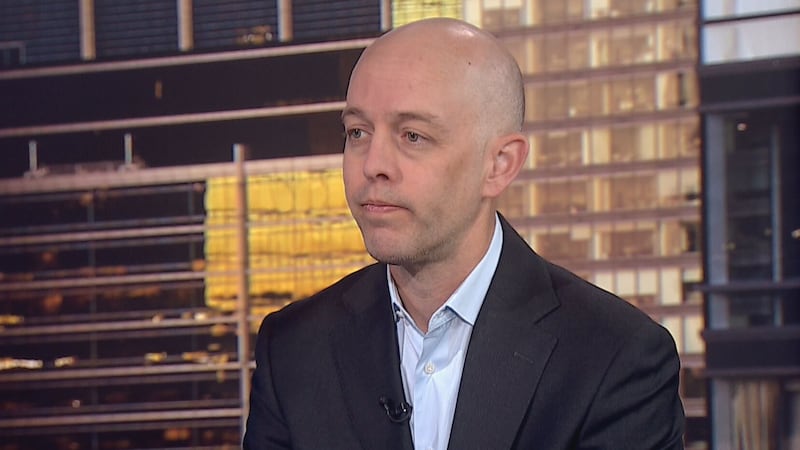
Read the full transcript below:
ROGER: The space economy is heating up, and it’s not just rockets and launches. It’s satellites, data, defence and eventually exploration and tourism. A new Canadian space ETF gives investors exposure across the whole ecosystem. Let’s find out more.
Joining me now is Chris McHaney, executive vice-president, investment management and strategy at Global X. Chris, thanks very much for joining us today in person. Always nice to have somebody in the studio.
CHRIS: Yeah, happy to be here.
ROGER: And not out in space somewhere. You could have done this live from the space station or something. Why go with an ETF for space? Quick, and then we’ll get into what’s going on in space — but why? What’s your main reason?
CHRIS: Sure. When you think about the industry, we really don’t know exactly where it’s going to go. This is a long-term trend. By utilizing an ETF that diversifies across not just companies, but also sub-industries within the space economy, that allows you to fully diversify and capture the full value chain.
ROGER: How big has it become? It seemed like it moved along and then, all of a sudden, in the last few years — Elon Musk is probably a big driver — how big has the space industry become?
CHRIS: It’s really become significant. Today, it’s about a $500 billion industry that’s forecast to reach about $1 trillion by 2034. So continuing to grow significantly. As you know, the cost of launch is coming down. If we go back to the 1960s, it cost about $400,000 for one kilogram of payload. Today, that cost is about $1,000 per kilogram. That’s opening up a lot of new industries that are economically viable.
ROGER: And where are some of the opportunities within this? People see the rocket ships going up, but it’s not just the rocket ships, is it?
CHRIS: No, it’s not. You have companies that facilitate the launch. Thinking about reusable portions of rockets — that’s what makes it efficient. So launch services and rockets themselves, but also satellite companies — communications, data transfer, geospatial imaging — all of that is becoming very important.
ROGER: Within that sector, say satellites, how many companies are there? Are the options almost endless?
CHRIS: There’s certainly a handful of larger companies. Even one here in Canada — MDA Space, formerly known as MacDonald, Dettwiler and Associates — most famous for Canadarm2, but very specialized in communications as well. They’re looking at broadband satellite services to homes and potentially to cellphones.
ROGER: And how many satellites are up there now?
CHRIS: There are about 10,000, and that’s projected to grow to about 100,000 in fairly short order.
ROGER: What kind of time frame?
CHRIS: A handful of years. We see SpaceX with a continuous cadence — there’s even a launch scheduled today sending up 24 satellites. These launches are happening every few days or weeks.
ROGER: It’s almost like regular bus runs up there. From the ground side, where are you looking?
CHRIS: It comes down to launch services — building rockets and components — but also orbital transfers and data communications. Taking data from satellites and delivering it where it needs to go on Earth.
ROGER: What kind of companies fall into that?
CHRIS: Rocket Lab is one example — one of the larger holdings in the ETF. They build components, conduct small- to medium-sized satellite launches and provide satellite servicing.
ROGER: And do you go beyond that — companies supplying the space companies?
CHRIS: Exactly. There’s software, analysis and components. You’re getting everything from hardware to software to analytics. It’s like any other technology-based industry, with a wide range of components and customers.
ROGER: With increased defence spending — countries targeting two per cent and even higher — do you see opportunities there?
CHRIS: Very much so. This has moved from government-led to more private- and public-company-led, but governments are still major spenders. Canada, Germany and Japan are increasing defence spending, and as that builds out over the next several years, there’s a lot of opportunity tied to space.
ROGER: What about countries people might not think of as leaders?
CHRIS: It is largely U.S.-based right now, but Canada, Japan and Korea are providing key components.
ROGER: Do you look beyond that — suppliers like fuel providers?
CHRIS: We take more of a pure-play approach. We focus on companies generating at least 50 per cent of their revenues from space-related services — whether that’s launch, data systems or satellites. Once you move too far beyond that, it starts to dilute the exposure.
ROGER: It muddies the water a bit?
CHRIS: Exactly.
ROGER: How many companies does that leave you with?
CHRIS: We have 28 companies in the ETF, which can go up to 30 depending on index eligibility. We want that diversification, but also a focused exposure.
ROGER: And it’s global?
CHRIS: Yes, global — across developed and emerging markets, though predominantly U.S.-based right now.
ROGER: All right, Chris, thank you very much for coming in. We appreciate it.
CHRIS: Thank you.
ROGER: That was Chris McHaney, executive vice-president, investment management and strategy at Global X.
---
This BNN Bloomberg summary and transcript of the May 5, 2026 interview with Chris McHaney are published with the assistance of AI. Original research, interview questions and added context was created by BNN Bloomberg journalists. An editor also reviewed this material before it was published to ensure its accuracy and adherence with BNN Bloomberg editorial policies and standards.

