Canadian energy and mining companies are benefiting from a renewed focus on supply security and resource production as geopolitical tensions reshape global markets. Investors are increasingly rewarding firms with strong cash flow, stable production and exposure to North American energy and metals supply.
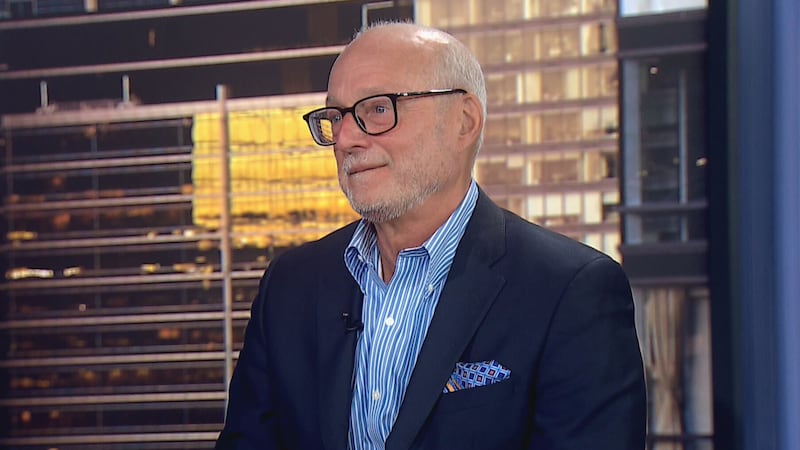
BNN Bloomberg spoke with Jim Thorne, chief market strategist at Wellington-Altus Private Wealth, about why companies such as Cenovus Energy, Suncor Energy, IAMGOLD and Pan American Silver remain well-positioned as global energy security concerns, AI-related infrastructure demand and commodity prices continue to support the sector.
Key Takeaways
- Canadian oilsands producers are benefiting from renewed concerns around global energy security and the search for stable North American supply.
- Cenovus Energy remains well-positioned after a strong rally, with investors continuing to favour Canadian energy companies tied to long-term infrastructure and export growth.
- Suncor Energy’s integrated business model and production scale continue to support strong cash flow generation during commodity price volatility.
- Gold and silver producers such as IAMGOLD and Pan American Silver are still supported by higher metal prices, though future gains may depend more on operational execution than sector momentum.
- AI infrastructure demand, resource security and shifting global trade dynamics are reinforcing expectations for a longer-term commodity cycle.
Read the full transcript below:
ROGER: Markets are poised to open sharply higher as a negotiated end to the Middle East war is reportedly within reach. Meanwhile, Canadian investors have a slew of earnings to look over, including Cenovus. My next guest says the energy giant is one of the biggest winners from the Iran-Hormuz shock. Joining me now is Jim Thorne, chief market strategist at Wellington-Altus Private Wealth. Jim, thanks, as always, for joining us.
JIM: Thanks for having me.
ROGER: Can we just get your initial thoughts on what’s unfolding today? Or is it just another day in the Middle East?
JIM: There’s going to be a deal.
ROGER: You think so?
JIM: There will eventually be a deal. We’re going to have a flush of oil come onto the market. I think the world has changed dramatically because of the closure of the strait. This plays right into Canada’s strengths in terms of whether we want to become a resource superpower or a hard power. I think Mr. Carney understands that.
You’ve got some energy stocks that have really benefited. Some are up between 70 and 80 per cent this year. If the world goes from $100 oil down to $60 oil, it doesn’t mean these companies are bad or that their cash flow is bad. It just means sentiment could change.
You could see a period of consolidation, but long term, if we take advantage of this situation history has given us, Canada looks very good going forward.
ROGER: The big question is whether the world has changed enough. Has this been closed long enough that people are now looking for alternatives?
JIM: Yes, I think it has. Where I upset people is that I view President Trump as pragmatic. I don’t listen to the noise.
And when I go west, I say Mark Carney is pragmatic too. He’s not an ideologue. When you listen to him on economic issues, he understands this, and he’s slowly moving Canada back toward the centre.
We’re in a period where things have changed. Energy and resource security are now at the top of the list. Climate is still important, but it has moved lower down the priority list.
The real question for Canada is how quickly we want to move to take advantage of this generational opportunity.
ROGER: What’s it going to take? Government spending? Government approval? A green light from Ottawa?
JIM: I think Carney understands that the global capital markets have had enough with us, and he also knows we’ve got to evolve quickly.
I think he’s going to use debt to help do that. Debt that increases the productivity of an economy is good. He understands that.
Then we change the environment so foreign capital comes in. We had the Shell deal with LNG Canada. It’s still early days, but Canada can’t move as fast as the United States.
When the Prime Minister says the risk is the United States, I interpret that differently. To me, it means the Americans are moving quickly and we have to adjust rapidly. We take the world as it is, not as we want it to be. When we adjust, the future looks bright for our economy.
ROGER: The reality is the Americans are next door to us. They’re not going anywhere.
JIM: No, they’re not.
ROGER: Let’s talk about some stocks. Cenovus — what do you like about it?
JIM: It’s really about Canadian energy. After a pullback, and I think we’re going to get one here, investors will focus on whether we expand capacity and whether people understand our natural resources are secure.
Can we be honest with ourselves that oil from Alberta compares favourably environmentally to oil from places like Venezuela or Iraq? Can we shelve carbon capture?
We’re already hearing about possible pipeline approvals to the United States. That’s our short-term solution. It may not be ideal from an economic sovereignty standpoint, but it’s what we have.
It’s going to take five years for Canada to get itself together. Energy is going to be a key component of our industrial strategy. Investors should use any pullback to position themselves, and Cenovus fits into that.
ROGER: Let’s move on to TransAlta.
JIM: It’s going through a generational change. If you like turnaround stories with a new CEO, it’s fine, but it’s lagging the sector.
ROGER: Can it catch up?
JIM: Sure, but it’s going to take time.
Right now, though, we’ve got names like Flex up 27 per cent pre-market and AMD posting strong numbers. The fever is coming back.
Building portfolios now is about tactical adjustments. I think we’re going to have rolling bull markets. Right now it’s memory and hardware in the United States, and those names have gone vertical, just like gold did a couple of months ago.
Eventually they’ll reach a level and then trade sideways.
ROGER: You mentioned gold. Are investors going to turn their attention back to gold now?
JIM: Yes, but we’ve already had the generational trade. The five-baggers are off the table.
My view is that gold could hit $10,000 by the end of the decade. That’s still a double. The S&P 500 could double too.
Gold and silver are beta plays, and I still love them, but the big money has already been made. As this market fever builds, investors are going to start asking where the next Flex or Micron is.
IAMGOLD has had a great run. Same with Pan American Silver. Fantastic companies. But now the focus shifts to execution because mining is a difficult business.
I still believe investors should have 10 per cent of their portfolio in gold and silver. I haven’t changed my view there. But portfolio management is about rotating capital.
We’re going to be in rolling bull markets, so investors have to ask themselves how much dead money they want sitting in their portfolios during consolidation periods.
ROGER: What are you doing with your own positioning?
JIM: When the war started, my view was sell gold, sell energy and rotate capital.
I think tech is the place to be right now, especially hardware over software as we build out AI infrastructure.
But software has been thrown out with the bathwater. I also like the passing of the Clarity Act in the United States. Investors need to look at crypto.
I still like banks because as oil prices come down, interest rates will come down too.
The big question is when Tiff Macklem and Jay Powell realize policy is still too tight and continue cutting rates. When that happens, the consumer comes back and real estate starts moving again.
ROGER: On that note, we’ll wrap it up. Jim, thanks as always for joining us.
JIM: Thanks for having me.
ROGER: That was Jim Thorne, chief market strategist at Wellington-Altus Private Wealth.
---
This BNN Bloomberg summary and transcript of the May 6, 2026 interview with Jim Thorne are published with the assistance of AI. Original research, interview questions and added context was created by BNN Bloomberg journalists. An editor also reviewed this material before it was published to ensure its accuracy and adherence with BNN Bloomberg editorial policies and standards.

