Markets may be underestimating the risks posed by rising energy prices and prolonged geopolitical instability as investors continue pouring into artificial intelligence-linked stocks. Jay Bala says the AI boom depends heavily on access to affordable energy and warns that sustained oil price increases could pressure margins and slow infrastructure expansion.
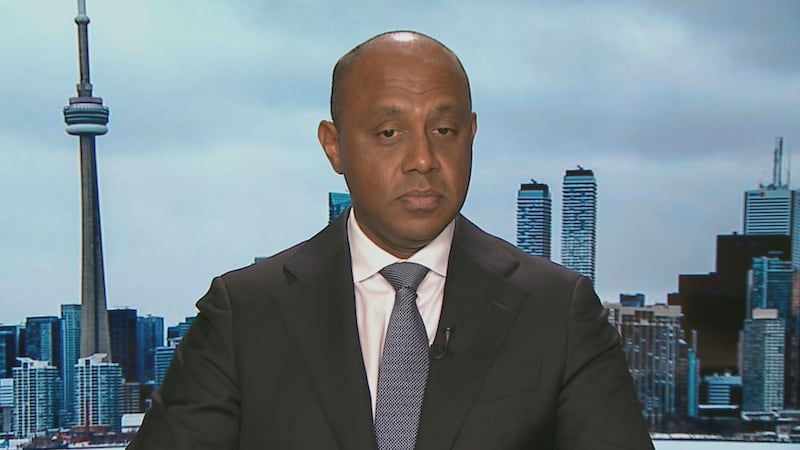
BNN Bloomberg spoke with Jay Bala, CEO and senior portfolio manager at AIP Asset Management, about the growing importance of energy security for AI development, the potential market impact of major AI-related IPOs and why index rule changes could accelerate passive buying into newly public companies.
Key Takeaways
- Affordable energy remains critical to AI infrastructure growth because compute capacity and data centre expansion rely heavily on power availability.
- Bala says a prolonged disruption involving Iran and the Strait of Hormuz would pose a greater risk to markets than a short-term spike in oil prices.
- North America’s energy production capacity could provide a competitive advantage in the global AI race if supply chains become more fragmented.
- Potential IPOs from companies such as SpaceX, OpenAI and Anthropic could reshape major indexes and attract significant passive investment flows.
- Proposed changes to S&P 500 and Nasdaq inclusion rules could accelerate demand for newly public mega-cap companies and distort price discovery.
Read the full transcript below:
LINDSAY: Markets are back near record highs this morning, as you just saw, on optimism that the U.S. and Iran are approaching a peace deal. Our next guest says that while markets are treating geopolitics as background noise, energy is one variable that could break the AI narrative. Here to give his perspective is Jay Bala, CEO and senior portfolio manager at AIP Asset Management. It’s great to have you join us. Thanks so much.
JAY: No problem. Thanks for having me on.
LINDSAY: You say high energy prices could be what breaks the AI tech momentum we’re seeing right now. Why is that?
JAY: One of the key ingredients for compute and for the AI rally really is energy. Whoever has cheaper energy and can build out more compute is going to win the AI rally. If oil prices are at US$100 or going higher, it makes it more expensive to develop all of that AI infrastructure. That’s going to be key.
LINDSAY: We know tech companies have been posting strong earnings so far, but a lot of the results we’re seeing now are from before the war in the Middle East really began. What are you expecting to see next quarter with that in mind?
JAY: You might see some prices increase, but I don’t think a short-term disruption in energy is going to cause that problem. If you have a longer-term issue where the issues with Iran and the Strait of Hormuz go on quarter after quarter, year after year, I think you’re going to see some significant problems. But I don’t think a short-term problem is going to slow down anything at this point.
LINDSAY: Right. But as you say, if this war were prolonged, the longer it goes on, the longer we’d see the aftereffects, the trickle-down effect.
JAY: We would. The one thing to keep in mind, though, is if you look at Canada and the U.S. as one continent, we are energy independent. It might not be so great for the rest of the world, but you could effectively create Fortress North America, where you have one energy powerhouse. We would have sufficient energy to power AI, and we would have sufficient energy to power our economies. It may not be so great for the rest of the world, but I think we would do pretty well. That’s another angle we should take a look at.
LINDSAY: Do you think anyone is taking a look at that? That’s a good point, but do you think conversations about that are happening? Are we stepping up to the plate in that sense?
JAY: I think so. I don’t know if it’s front and centre in terms of the news, but I’m sure there are plenty of people who see the realities. The U.S. is the largest oil producer in the world. I think Canada is No. 4, but we are their single largest supplier of oil. If Canada stopped supplying everybody else and only focused on our continent, we would do great. There are probably a lot of discussions going on behind the scenes about building out infrastructure, building pipelines and making sure we are fortified, because AI is a very important strategic technology on a go-forward basis. This will redefine human history over the next 100 years, and we need to get this right.
LINDSAY: Let’s talk about some of these big companies, because we’ve got some potential IPOs coming up for SpaceX, OpenAI and Anthropic. You say the Magnificent Seven could eventually turn into the Magnificent 10. Tell us more about that theory and why you think that’s the case.
JAY: If you look at the sheer size of these companies, they are already top-25 companies in the world. But what’s most important is they are the fastest-growing companies in the world. SpaceX, for example, is being discussed at a valuation of US$1.75 trillion to US$2 trillion in market capitalization, and that would make it a top-10 stock in the world.
LINDSAY: How would that change the market going forward if there were more Magnificent Seven stocks, if it became a Magnificent 10, for example?
JAY: I think we just adapt to that new world. These are the new realities. You’re going to have this huge bifurcation between these massive AI companies that are part of this new revolution and everybody else. The way we compare AI to history is that it’s kind of like building the first factory during the Industrial Revolution, but more oriented toward services. You can imagine 100 or 200 years ago Ford introducing the assembly line. It changed the entire dynamic of how that industry operated.
LINDSAY: The S&P 500 is considering changing profitability and inclusion rules for mega-cap IPOs. What do you think about that potential decision and whether it’s a good idea?
JAY: I think it’s a great idea. At the end of the day, the indexes have decided to compete for the likes of OpenAI, Anthropic and SpaceX, so they’re changing the rules to make sure they can compete for these companies because they don’t want to get left out. That changes the power dynamic and changes the way people should think about trading these stocks.
The way we look at it is there’s an effective index arbitrage here. Those that can get into companies like SpaceX, OpenAI and Anthropic before index inclusion stand to benefit. There are a couple of ways to do that. You can buy in the pre-IPO world if you’re accredited and have access to it, or you can buy in the first few days of trading.
Once those companies hit the index, you’ll see a huge amount of passive money flowing into them. As an example, the Nasdaq 100 has about US$5 trillion worth of ETF money tracking it on a passive basis. That US$5 trillion can only buy those 100 companies. If SpaceX goes public and becomes one per cent of the index, that means as soon as it’s added to the index 15 days later, there would be roughly US$5 billion of forced buying power that has to buy the stock. You can imagine what could happen to the stock after 15 days.
LINDSAY: We’ll have to leave it there. Jay Bala, CEO and senior portfolio manager at AIP Asset Management, appreciate your time. Thanks for coming on.
JAY: Thank you so much.
---
This BNN Bloomberg summary and transcript of the May 6, 2026 interview with Jay Bala are published with the assistance of AI. Original research, interview questions and added context was created by BNN Bloomberg journalists. An editor also reviewed this material before it was published to ensure its accuracy and adherence with BNN Bloomberg editorial policies and standards.

