Investors have faced heightened market volatility in recent months amid geopolitical tensions and uncertainty in the Middle East, prompting portfolio managers to reassess positioning and look for opportunities across sectors. Energy, healthcare and semiconductor infrastructure companies are among the areas attracting attention as investors seek a balance between defence and growth.
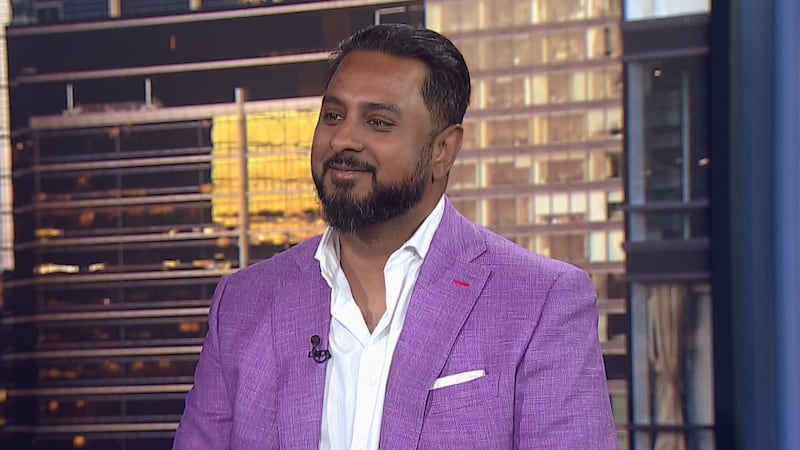
BNN Bloomberg spoke with Shiraz Ahmed, CEO at Sartorial Wealth, about how momentum-based investing strategies are adapting to volatile markets and why he has been adding positions in Marathon Petroleum, Roche Holding and Tokyo Electron to portfolios.
Key Takeaways
- Momentum-based investment strategies are shifting toward sectors showing stronger risk-adjusted returns during volatile markets.
- Refiners have benefited from geopolitical uncertainty and strong fuel demand, while offering insulation compared with upstream energy producers.
- Defensive healthcare companies with recurring revenue and stable dividends remain attractive during periods of economic and market uncertainty.
- Semiconductor equipment makers continue to benefit from long-term AI investment trends and rising chip manufacturing demand.
- Investors are being encouraged to stay invested despite volatility, with portfolio positioning focused on diversification and disciplined participation in markets.
Read the full transcript below:
ROGER: It has been a challenging several months for investors trying to navigate volatile markets during the Iran conflict. Let’s find out how one portfolio manager has been positioning and some stocks he has added to his portfolio. Joining me now is Shiraz Ahmed, CEO of Sartorial Wealth. Shiraz, thank you, as always, for joining us and bringing some colour, too.
SHIRAZ: Thank you. My pleasure. Going to have some fun with it.
ROGER: In Toronto, it’s a rainy, cloudy kind of day, so some colour is a nice thing. I guess we could describe the markets over the past month as colourful. Some colourful words have probably been used at times by people.
SHIRAZ: Absolutely. This has been one of the more volatile markets that I’ve seen in my professional career. There seems to be an outlier event happening every single day here and there, so it’s definitely been one that we’ve been watching very closely. It’s never a dull moment.
ROGER: How have you been managing it? What are you looking for? Are there any trends with what’s going on right now?
SHIRAZ: In our practice, we’re primarily momentum-based investment managers. We look at momentum in the sense of risk-adjusted return, which is really the primary way that we look at momentum. We’re constantly rebalancing the portfolio. The best way to describe it is that it breathes with the market. As we’ve seen over the last little bit, the market has breathed toward higher concern over geopolitical risk, energy and higher levels of volatility. The risk-on, risk-off trade is constantly rebalancing, so that’s the way we’ve been doing it lately.
ROGER: Have you been busy?
SHIRAZ: Yes, to put it very lightly, it’s been very busy.
ROGER: Where has the rebalancing taken you?
SHIRAZ: Lately, it’s taken us to a little bit of a higher weighting in energy than we’ve historically had. One of the stocks I wanted to talk about was Marathon Petroleum, one of the largest oil refiners in the United States. Frankly, it has done extremely well as a result of the current geopolitical crisis and conflict. It has also benefited from increased crack spreads. I’m by no means an energy analyst, but the company is really well positioned and there’s a degree of insulation there. It also recently announced a US$5-billion share buyback. I think there are still a lot of legs left in this trade. Again, it’s about risk-adjusted return, and given what we’ve seen lately, the stock has performed quite well.
ROGER: Does it feel like that trend is going to continue? Even with what we’re hearing today, that maybe there are settlements or a deal in the Middle East? They’ve been pumping out like crazy, haven’t they?
SHIRAZ: They absolutely have. This has been a phenomenal time for any energy producer, but Marathon is a refiner. They’re taking crude oil and making gasoline, diesel and other products consumers need. They have a degree of insulation in their operations as well. Because they’re a refiner and not necessarily one of the drillers, it’s a different type of play. That’s one of the reasons we like it. Again, there’s momentum there as well.
ROGER: Are there things you’re staying away from right now? Any sectors you’re shying away from?
SHIRAZ: I wouldn’t necessarily say we’re shying away from anything. Part of the way we invest is that we try not to make emotional decisions. A lot of what we do is algorithmically based. We still have representation from the majority of sectors out there. Currently, though, I’m seeing less focus on software in general. With the AI trend happening in the background, software names have unfortunately been in the penalty box a little bit while investors sort out who the obvious winners and losers will be. We’ve had a lower weighting in software and, frankly, there’s little to none at the moment.
ROGER: So no indication yet that trend is reversing?
SHIRAZ: So far, no. But if the momentum starts to pick back up again, we’re happy to participate. We take a very agnostic approach. These are all just tools in a toolbox. We’ll jump in and jump out. If we see value, we’ll happily participate.
ROGER: Another company you’re seeing value in is Roche Holding, a global healthcare leader.
SHIRAZ: Yes. Roche is a very diversified healthcare company with both diagnostics and pharmaceutical operations. It’s also a nice dividend play. We don’t necessarily invest for the dividend, but it has had a very sustainable dividend for quite some time. Of the three positions I’m talking about today, I’d say this is probably the most defensive. It seems to be doing quite well regardless of the macro environment we’re currently seeing. It’s also helped us increase our international exposure in Europe.
ROGER: So it’s been consistent, but you’re still jumping in and out of it?
SHIRAZ: It’s consistent in its dividend and defensive profile, but from our standpoint, it still needs to have positive price momentum for us to participate. That’s why we’ve recently jumped back into it.
ROGER: What is bringing it to your attention right now as something that could trend higher?
SHIRAZ: It’s primarily risk-adjusted return. That’s really our main focus and primary data point. Is it behaving well right now or not? It’s fairly binary in that sense. We don’t take a lot of opinions on the stock overall, but it has had very strong fundamentals lately, and that has been supported by the recent price movement.
ROGER: Another one you’re looking at is Tokyo Electron — just fun to say, first of all. What does it do?
SHIRAZ: I’d call it a picks-and-shovels semiconductor play. It makes manufacturing equipment used to create semiconductor chips for companies such as Nvidia. It’s another infrastructure play on the ongoing AI theme. I don’t think the AI theme is over. While it may not be making as many headlines as it was a few months ago because of the Middle East crisis, it’s still absolutely there in the background. It’s also part of the reason software companies remain in the penalty box. We still think there are a lot of legs left in the theme, but our preferred way of playing it is through the picks-and-shovels approach.
ROGER: Would Tokyo Electron be a competitor to Nvidia?
SHIRAZ: No. It would actually likely be a supplier to Nvidia.
ROGER: Who would be its competitors?
SHIRAZ: There are several semiconductor manufacturing equipment companies out there. I couldn’t name all of them off the top of my head, but there are many names investors could consider. This is one we’ve historically liked. Again, it also increases our geographic diversification by giving us exposure to Japan.
ROGER: With AI, it looks like it’s back on again, doesn’t it?
SHIRAZ: Absolutely. It’s not over yet. It may not be making the front-page headlines right now, but it’s still a theme in the background. I don’t know one company that isn’t considering its AI strategy going forward. It’s something we’re watching very closely. We’re happy to participate, but I still think it’s difficult to determine the obvious winners and losers right now. That’s why we prefer the picks-and-shovels method.
ROGER: During the gold rush, the people who got rich were the ones selling the picks and shovels. What are you telling clients right now? It has been a rocky time, but the markets are back up. What do you tell them?
SHIRAZ: To a degree, it is about staying the course. What you’re seeing right now is a decoupling between the rhetoric and the resilience of the markets. The markets seem to be pricing in a lot of the volatility we’re seeing. We’re reaching new highs in a lot of the indices right now. Investors are concerned about when to jump in, but from our perspective, you just need to participate. It’s that same old adage: time in the market is more important than trying to time the market.
ROGER: The market can remain irrational longer than you can remain solvent.
SHIRAZ: Exactly.
ROGER: Thank you, as always, for coming in. Appreciate it.
SHIRAZ: My pleasure.
ROGER: That was Shiraz Ahmed, CEO of Sartorial Wealth.
---
This BNN Bloomberg summary and transcript of the May 6, 2026 interview with Shiraz Ahmed are published with the assistance of AI. Original research, interview questions and added context was created by BNN Bloomberg journalists. An editor also reviewed this material before it was published to ensure its accuracy and adherence with BNN Bloomberg editorial policies and standards.

