Disney shares climbed after the entertainment giant reported quarterly earnings that beat analyst expectations, helped by improving streaming profitability and optimism around park bookings for the second half of the year. McDonald’s also reported quarterly revenue that topped forecasts as the fast-food chain continues to focus on value offerings to attract lower-income consumers.
BNN Bloomberg spoke with Justin Elliott, portfolio manager at Caldwell Asset Management, about Disney’s streaming progress, competition in theme parks, McDonald’s consumer trends and several stock picks tied to long-term growth themes.
Key Takeaways
- Disney+ posted double-digit operating margins for the first time as the company continued integrating streaming more deeply across its broader media and parks ecosystem.
- Disney said bookings for the remainder of the year remain strong despite traffic headwinds at U.S. theme parks and rising competition from Universal.
- McDonald’s is leaning further into value offerings as lower-income consumers in the U.S. face mounting financial pressure from inflation.
- Elliott said persistent food inflation, wage pressures and shifting consumer preferences toward healthier eating have weighed on McDonald’s stock performance.
- Elliott highlighted PriceSmart and KLA Corp. as companies benefiting from long-term growth tied to membership retail expansion and semiconductor manufacturing demand.
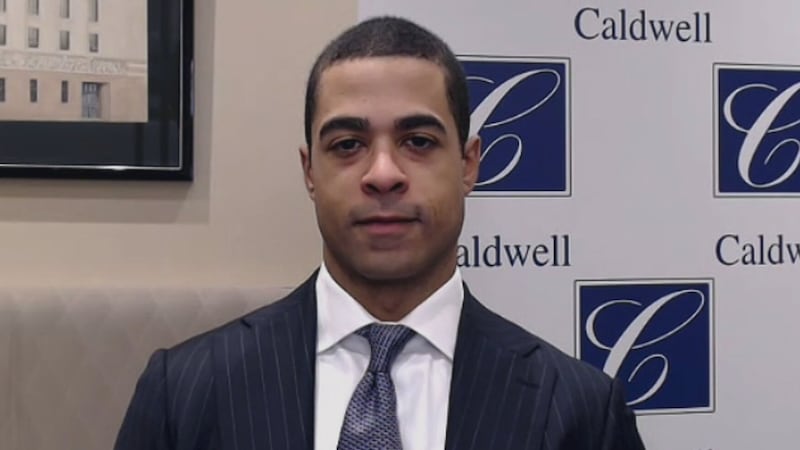
Read the full transcript below:
LINDSAY: Meanwhile, shares of Disney are trending higher after reporting an earnings beat, and McDonald’s reported first-quarter revenue that beat forecasts as well. Our next guest just listened to the earnings call. Joining me now is Justin Elliott, portfolio manager at Caldwell Asset Management, to break things down for us. Great to have you with us this morning.
JUSTIN: Good morning. Thank you for having me on.
LINDSAY: Let’s start there. What did you take away from the McDonald’s earnings call?
JUSTIN: Yeah, it was an in-line quarter, in our view. It was basically a slight miss on comparable sales. The key takeaway for us ties into the K-shaped economy narrative that we see in the U.S. McDonald’s is really pivoting hard into the value menu and trying to capture share among that lower-income consumer that has been quite stressed, and that seems to be deteriorating faster than the higher-income consumer.
That will really be the focus this year. They’re trying to adopt new value items across all dayparts — breakfast, lunch and dinner — in the hopes of capturing those lower-income consumers. We think that’s going to continue to be the focus. They’ve got a lot of innovation coming up, and they also lapped promotions from last year, including the Minecraft campaign, for example. When we look at their comparable sales numbers going forward, we think it’s going to depend on capturing those lower-income consumers.
LINDSAY: Interesting. I’m just looking at the stock. It’s up slightly today, but over the last couple of months it has really dropped. What’s behind that, in terms of how investors are feeling about the company?
JUSTIN: They’ve obviously dealt with inflation in input costs, including higher chicken and beef prices. Wages are still going up in the U.S. When you combine higher inflation with a softening top-line growth outlook, there has been pressure on margins, and we think that has been the key driver of the stock’s performance over the last year or so.
From a longer-term secular standpoint, there has obviously been a big increase in people taking more care of their health, and fast food does not necessarily fit into that trend. That said, there is still a huge market for fast food globally and in the U.S., but we think some consumers on the margin are shifting away from McDonald’s toward healthier options.
LINDSAY: Let’s move on to Walt Disney, which reported earnings yesterday. This was also the debut quarter for the new CEO. What were your takeaways from Disney’s results?
JUSTIN: Correct. It was the first earnings call with the new CEO. The stock was up eight per cent yesterday, and the big driver, in our view, was the streaming business. Disney+ posted double-digit margins for the first time ever, and that is a really positive proof point that the business is heading in the right direction.
It’s under new leadership as well. They’ve combined their traditional media assets with Disney+, and they want Disney+ to become more of an operating platform for Disney, where consumers can interact with content and learn about what’s happening at the parks. The goal is to drive greater customer stickiness.
When we look at the experiences and parks side of the business, they did face some traffic headwinds in the U.S. However, management believes that gets easier for the rest of the year as comparisons become easier. They’re confident based on the bookings they’re seeing for the remainder of the year. Overall, we think it was a pretty decent quarter, and it was encouraging to see streaming margins moving in the right direction.
LINDSAY: Any other major headwinds or competitive issues for Disney moving forward?
JUSTIN: Yeah, that was something they called out in the experiences and theme parks business. Universal opened a very successful park last year, and that appears to have taken some traffic away from Disney parks.
That said, Disney has not slowed down on innovation. They’ve made improvements at Disneyland Paris and continue investing in the U.S. parks as well. Disney also wants to expand further into the cruise business, which has shown resilience in the U.S. market as consumers look for more affordable vacation options. We think that’s going to become a bigger part of the story. They’re investing heavily there, and that should help drive more traffic to the experiences business over time.
LINDSAY: Let’s move to some of your stock picks. PriceSmart is the first one. Tell us more about the company and why you like it moving forward.
JUSTIN: You can think of PriceSmart as the Costco of the Caribbean and Central and South America. We think the company has a huge growth runway in the markets it already serves, as well as in newer markets such as Chile.
In many of these markets, PriceSmart is the only membership club retailer available, and there’s strong demand from consumers. It’s also one of the few places where consumers can access mainstream U.S. brands that are perceived as premium products in those countries.
We think there’s a strong runway for new-store growth, and there tends to be a lot of excitement when new stores open. We also see customers upgrading from basic memberships to premium memberships over time, which drives higher spending. That creates both top-line and margin benefits.
The company is also modernizing its technology platform. In many of these regions, consumers shop mobile-first, and PriceSmart has lagged peers such as Amazon and Walmart in that area. We think the company is making strides to catch up, and that should help drive additional growth.
LINDSAY: Lastly, KLA Corp. is another one of your picks. It makes semiconductor manufacturing equipment, which is obviously a critical space right now. Tell us more.
JUSTIN: Exactly. They’re one of the major companies producing semiconductor capital equipment, which is used in the manufacturing of semiconductors. As chips become more complex and factories move toward larger chip sizes, the tolerance for manufacturing errors declines significantly.
KLA’s tools help manufacturers measure and ensure chips are produced to specification. When you combine that with the deglobalization of the semiconductor supply chain — with the U.S. and Europe both building more domestic manufacturing capacity — you see incredible demand for the tools KLA provides.
Really, the only thing limiting demand right now is the pace at which new semiconductor fabrication facilities are being built. As more of those facilities come online in the second half of this year and into 2027, we think demand will accelerate meaningfully. The company actually expects 2027 to be a stronger growth year than 2026. We like the long-term outlook and view this as a durable secular trend.
LINDSAY: We’ll leave it there. Justin Elliott, portfolio manager at Caldwell Asset Management. Appreciate your time. Thanks for joining us.
---
This BNN Bloomberg summary and transcript of the May 7, 2026 interview with Justin Elliott are published with the assistance of AI. Original research, interview questions and added context was created by BNN Bloomberg journalists. An editor also reviewed this material before it was published to ensure its accuracy and adherence with BNN Bloomberg editorial policies and standards.

