Strong earnings from major U.S. companies, particularly the Magnificent Seven, are continuing to support equity markets even as investors navigate geopolitical tensions, rising oil prices and concerns about weakening consumer confidence. AI investments are also beginning to generate returns, helping reinforce optimism around large-cap technology companies.
BNN Bloomberg spoke with Paul Harris, portfolio manager at Harris Douglas Asset Management, about whether concentration in the Magnificent Seven is helping or hurting markets, why he remains constructive on financials and health care, and how AI is beginning to reshape corporate profitability and employment trends.
Key Takeaways
- Stronger-than-expected earnings from the Magnificent Seven continue to provide support for broader equity markets.
- AI investments are beginning to improve revenue growth and efficiency, particularly among large technology companies.
- Concentration in a small group of large-cap technology stocks increases market risk, but those companies continue to generate strong cash flow and margins.
- U.S. banking deregulation and consolidation trends are creating opportunities for both American and Canadian financial institutions.
- Health-care companies continue to benefit from demographic trends, stable demand and advances in biotechnology and disease treatment.
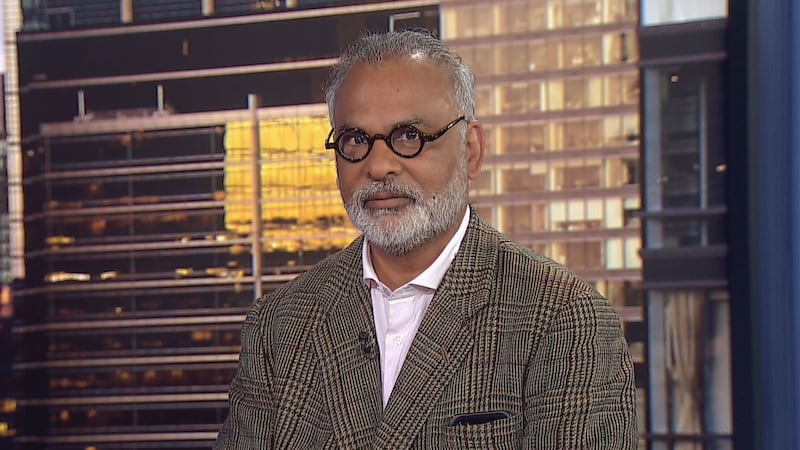
Read the full transcript below:
LINDSAY: In the meantime, we’re turning to other news within the markets. Earnings season is showing that investments in AI are starting to pay off, even as some investors remain nervous about the massive capital investments powering the boom.
So let’s find out whether concentration in the Magnificent Seven supports the market or adds risk. Joining us now is Paul Harris, portfolio manager at Harris Douglas Asset Management. He joins us in studio. It’s great to have you in.
PAUL: Thank you very much for having me.
LINDSAY: Let’s start with the broader picture. Markets seem to keep grinding higher every day. How much of this rally is about earnings, and do you think there are other big factors at play here?
PAUL: Well, I think what’s supporting it is earnings. A lot of people expected earnings to come in weaker given everything happening in the world. Instead, you’ve seen very strong earnings in the U.S. market. I think that provides a really strong base of support.
The other important thing is that earnings expectations continue to move higher. When you looked at a lot of these companies, they also didn’t provide a very negative outlook going forward. That has supported the market quite a bit.
If you look at the Magnificent Seven companies, they generally all beat expectations. Some of the stocks still fell after earnings, but what supported them was the feeling that their spending is going to pay off, and you’re beginning to see evidence of that.
Even with Meta, which is in a different situation from companies like Google and Amazon because it doesn’t have a cloud business, you saw strong advertising revenue growth driven by AI. The stock fell because of the scale of spending, but investors are starting to see that AI is helping improve results.
Even from a cost-saving perspective, if you look at U.S. unemployment numbers today, information services employment was down significantly. That has been a strong trend since November. Companies are gradually using AI to run more of their businesses. You may not see that as much in other sectors yet, but in information technology, AI is already affecting the job market.
What these Magnificent Seven companies have to manage is their cost structure relative to revenue expectations because they are spending a lot of money and free cash flow is deteriorating more than people expected.
LINDSAY: The Magnificent Seven continues to do a lot of the heavy lifting. Does that concentration support the market, or is it adding risk at this point?
PAUL: The criticism is that it adds risk because the market has become concentrated in a small number of stocks. But if you look at markets around the world, concentration tends to happen. In Canada, for example, gold and resource companies often push the market higher. Last year, bank stocks played a major role as well.
It’s not ideal that seven companies are driving the market, but they are also great businesses. They have strong free cash flow, strong margins and good earnings growth. Those are supportive factors for the broader market.
LINDSAY: And it works.
PAUL: Yes.
LINDSAY: You mentioned Canadian banks. I also wanted to talk about financials because you continue to like both U.S. and Canadian banks. Why do you still think the financial sector is attractive?
PAUL: A couple of things are happening. In the U.S., there are changes in the financial sector that reduce the amount of capital banks need to keep on their balance sheets compared with the post-Dodd-Frank period. That helps because banks already have a lot of capital, and they can now use more of it elsewhere.
They can buy back shares, raise dividends or expand existing businesses. Another thing the market is starting to recognize is that mergers and acquisitions in the U.S. banking industry are becoming more acceptable under the current administration. There are simply too many banks in the United States, and I think policymakers want to see consolidation.
You’ve already seen a number of deals in the U.S. banking industry. You may not see a major acquisition involving Citibank or Bank of America, but smaller deals are still possible.
Canadian banks benefit from this because many of them, including BMO, Royal Bank, TD and even CIBC, now have large U.S. operations. Reduced capital restrictions in the U.S. help free up capital that can be used elsewhere.
I also think the housing market in Canada is beginning to stabilize, which is always an important issue for Canadian banks. Overall, they are very strong businesses with good returns on equity. They may not have as strong a year as they did last year, but I think they can still perform well for investors at current levels.
LINDSAY: Health care is another sector that often flies under the radar. What makes it attractive right now?
PAUL: In a world where every social media post can seem to change markets, health care is a much more stable area. Although it wasn’t immune to what happened when the conflict involving Iran escalated, health care generally remains a very stable business.
Even in the latest unemployment data, health care employment continued to grow. It’s a growing sector globally because populations are aging, and demand for health care will continue increasing.
Pharmaceutical companies are also defensive because people will always need treatment. At the same time, we’re seeing major advances in treating diseases. There’s a possibility that, over time, we’ll be able to cure many forms of cancer. Cancer is still deadly, but it has increasingly become something that can be managed as a chronic disease.
There are a lot of important developments happening across health care, both in biotechnology and among traditional pharmaceutical companies, and I think those advances will continue improving profitability.
LINDSAY: We’re going to have to leave it there, but we appreciate you coming into the studio today. Thank you so much. That’s Paul Harris, portfolio manager at Harris Douglas Asset Management.
---
This BNN Bloomberg summary and transcript of the May 8, 2026 interview with Paul Harris are published with the assistance of AI. Original research, interview questions and added context was created by BNN Bloomberg journalists. An editor also reviewed this material before it was published to ensure its accuracy and adherence with BNN Bloomberg editorial policies and standards.

