U.S. markets pulled back from near record highs after inflation accelerated in April as rising energy prices linked to the conflict in Iran added pressure on investors. Concerns are growing that prolonged geopolitical tensions and elevated oil prices could weigh on economic growth and future corporate earnings.
BNN Bloomberg spoke with Phil Orlando, chief market strategist at Federated Hermes, about why he believes markets are underestimating geopolitical risks, how inflation could influence the Federal Reserve’s rate path, and why he currently favours sectors including industrials, financials and materials over technology stocks.
Key Takeaways
- Investors are underestimating the economic and market risks tied to the conflict in Iran and prolonged energy price shocks.
- Rising oil and gasoline prices contributed to hotter-than-expected U.S. inflation in April, reducing the likelihood of near-term Federal Reserve rate cuts.
- Strong corporate earnings have supported equity markets, but elevated energy prices could begin weighing on second-quarter earnings guidance.
- Trade, tariffs, Taiwan and Iran are expected to be major discussion points during meetings between U.S. President Donald Trump and Chinese President Xi Jinping.
- Industrials, financials, materials and international equities are viewed more favourably than technology and consumer discretionary stocks.
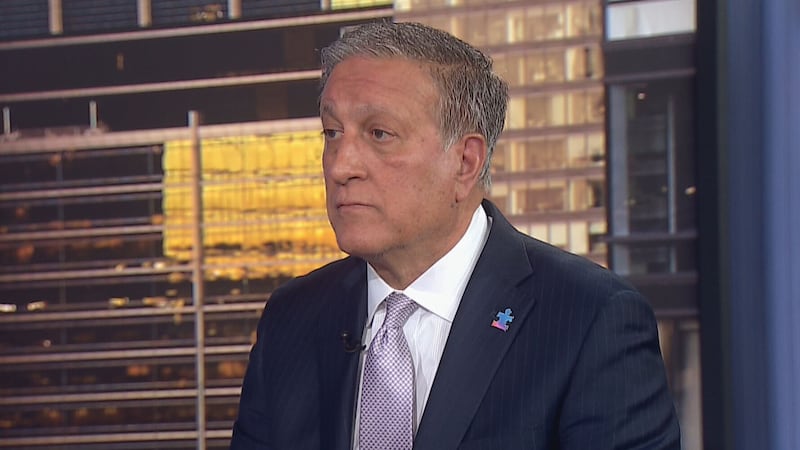
Read the full transcript below:
LINDSAY: U.S. markets are down from near record highs today after inflation rose more than expected in April, and our next guest says investors are underestimating the risk from the conflict in Iran and how this energy shock will impact the global economy. Joining us now is Phil Orlando, chief market strategist at Federated Hermes. Great to have you here.
PHIL: Thanks for having me back.
LINDSAY: Let’s start with that point about the market underestimating this risk. Why do you think that?
PHIL: Well, let’s look at how the market has performed. From the market bottom on March 30 over the next six weeks, we reached all-time record highs. Yesterday, the S&P 500 rallied about 18 per cent and the Nasdaq Composite rallied 29 per cent. We can understand that because corporate earnings have been phenomenal. Revenue is up about 11 to 12 per cent year over year. Earnings are up about 29 to 30 per cent year over year. Those numbers are very strong.
But at the same time, let’s look at what’s going on with Iran. The administration told us this was going to be a limited four- to six-week activity. We’re now at about week 10 or 11. Crude oil prices are up 85 per cent. Gasoline prices are up 50 per cent. We saw in March and again this morning with the April numbers that this is starting to bleed into higher-than-expected inflation levels. I don’t think the market has priced that in because it has implications for what the Federal Reserve may or may not do in managing its dual mandate.
The market is euphoric based on good earnings, but I think investors are not focusing enough on the Iran situation and inflation.
LINDSAY: There’s so much happening geopolitically. We’ve got U.S. President Donald Trump meeting with Xi Jinping later this week in China. It’s a major meeting. There had been talk that Donald Trump hoped the Iran conflict could be resolved before the meeting, but it doesn’t look like that’s going to happen. How do you expect things to unfold?
PHIL: I think the administration may be going to China hoping China can use some of its leverage with Iran. We know that about 60 per cent of the energy coming out of the Persian Gulf goes to Asia, and China is a major purchaser. They have to be struggling to some degree with securing the energy needed to run the world’s second-largest economy.
Part of the discussion between Trump and Xi is likely to be whether China can use its influence to encourage Iran to reopen the Strait of Hormuz so countries in Asia can access the energy they need.
LINDSAY: It’s probably going to be one of the main topics on the agenda.
PHIL: Certainly one of the key topics. Originally, there was going to be discussion about trade and tariffs — whether China would buy the pork and soybeans it promised to buy from the United States, and whether the U.S. could gain access to rare earth minerals. There will also likely be discussions about technology and artificial intelligence. But Taiwan and Iran are two issues I’m sure the presidents will discuss.
LINDSAY: Let’s talk about the U.S. CPI data that came out this morning. Inflation rose 3.8 per cent in April, largely driven by the conflict in the Middle East. How do you think this will affect the Fed’s next rate decision?
PHIL: I think it’s significant because the Federal Reserve is also going through a leadership transition. Perhaps today Kevin Warsh gets approved by the full Senate, probably on a party-line vote. Jay Powell’s term expires Friday, so we’re expecting Warsh to become the new chair.
As the Federal Reserve looks at its dual mandate, the labour market has actually been pretty strong in three of the last four months. We just received the April jobs data on Friday. Inflation, meanwhile, is moving in the wrong direction.
If anything, the Federal Reserve may conclude it does not need to cut interest rates because the labour market is doing well. At worst, it may do nothing, but it could potentially have to raise rates to deal with inflation.
If you look at the spread between the upper band of the fed funds rate, sitting at 3.75 per cent, and the two-year Treasury yield, which is just under four per cent, the implication is that the next move from the Federal Reserve could be a quarter-point increase.
That’s not necessarily Warsh’s mindset coming in. He would like to bring rates down over the next two years to around three per cent. That’s why the Jackson Hole speech he’s expected to deliver at the end of August will be critical in laying out his vision.
Historically, the market tends to test a new Federal Reserve chair about three months into the role. If Warsh takes office on May 15, that would bring us into mid-August, right around Jackson Hole. I think markets could see volatility tied to developments around the Federal Reserve, inflation and monetary policy.
LINDSAY: Interesting. We’ll watch for that. Speaking of markets, there’s been a strong rally recently, largely driven by earnings, especially from major technology companies. Do you expect markets to maintain that momentum after earnings season ends?
PHIL: Longer term, absolutely. But looking at the second quarter, we’ve now seen bad inflation readings for March and April, and May appears to be moving in the same direction. Gasoline prices are up 50 per cent. Could that negatively affect second-quarter earnings? It’s too early to make that judgment.
But as we move into the back half of June, companies will begin providing guidance and adjusting sell-side expectations. If the Iran conflict remains unresolved and energy prices stay elevated, companies could become more cautious with their second-quarter earnings outlooks.
LINDSAY: Would you put more money into technology stocks right now?
PHIL: No. At this point, the Nasdaq Composite is up 29 per cent in the last six weeks and the S&P 500 is up 18 per cent. We’re putting new money to work in areas that are more attractive from a valuation perspective, including domestic large-cap value, international equities with an emerging markets focus, and small-cap stocks on both the growth and value side.
Technology and consumer discretionary stocks are areas where we’re more cautious given current market developments.
LINDSAY: Any particular emerging markets you like right now?
PHIL: The asset class as a whole looks attractive. Commodity prices have been strong and the U.S. dollar continues to weaken. That suggests international markets should continue to perform well. Valuations are compelling. International equities were the best-performing asset class last year, and we think they could continue to lead this year.
LINDSAY: We’ll leave it there. Appreciate your time. Thanks for coming into the studio.
PHIL: My pleasure. Thank you.
LINDSAY: That was Phil Orlando, chief market strategist at Federated Hermes.
---
This BNN Bloomberg summary and transcript of the May 12, 2026 interview with Phil Orlando are published with the assistance of AI. Original research, interview questions and added context was created by BNN Bloomberg journalists. An editor also reviewed this material before it was published to ensure its accuracy and adherence with BNN Bloomberg editorial policies and standards.

