Rising U.S. inflation tied to fallout from the conflict involving Iran is adding uncertainty to the outlook for interest rates, oil markets and global supply chains, even as equity markets continue to climb. Investors are balancing geopolitical risks and elevated energy prices against resilient corporate earnings and renewed momentum in technology stocks.
BNN Bloomberg spoke with Sadiq Adatia, chief investment officer at BMO Global Asset Management, who said markets appear increasingly confident the conflict will eventually stabilize, while strong earnings and improving sentiment toward U.S. technology stocks continue to support equities.
Key Takeaways
- U.S. inflation rose 3.8 per cent annually in April, increasing concerns that prolonged geopolitical tensions could keep inflation elevated through higher oil prices and supply-chain costs.
- Strong corporate earnings, particularly in technology, continue to support equity markets, with investors rotating back into U.S. growth stocks.
- Expectations for U.S. Federal Reserve rate cuts are fading as persistent inflation raises the possibility rates could remain elevated for longer.
- Emerging markets remain a preferred investment theme, with optimism focused on Brazil, South Korea, Taiwan, India and China amid improving global trade sentiment.
- Gold remains a preferred hedge against volatility and geopolitical uncertainty, although bonds and options strategies may also provide defensive protection.
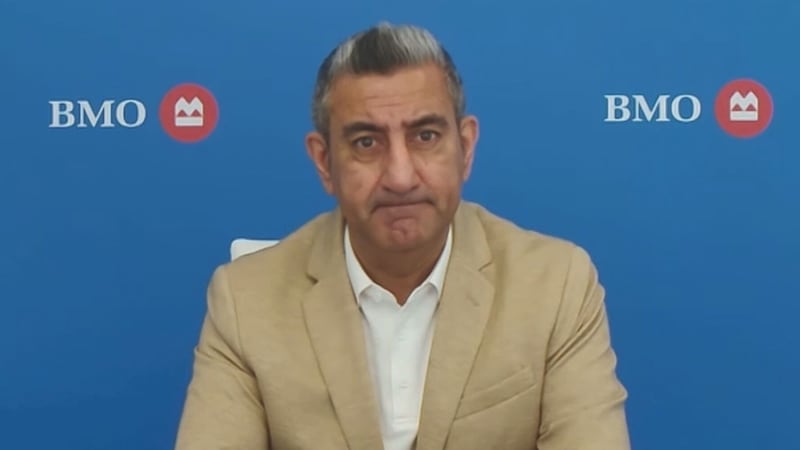
Read the full transcript below:
LINDSAY: Investors are getting a sense of the effects of the war involving Iran today with April’s U.S. inflation reading. Consumer prices rose 3.8 per cent annually in the U.S. That’s the highest since May 2023, raising concerns about the impact of inflation on the U.S. economy. Let’s get some perspective now from Sadiq Adatia, chief investment officer at BMO Global Asset Management. It’s great to have you join us this morning. Good morning.
SADIQ: Thanks for having me.
LINDSAY: I guess we’ll start with your takeaway from these U.S. inflation numbers coming out today. What do you think?
SADIQ: Yeah, I mean, I think we were expecting to see inflation creep up. In the first part of March and April, you didn’t really see much of an impact on inflation, and that really is because there was a lagging effect that would occur gradually over time. We’re starting to see some of that play out now.
The longer the whole situation remains unresolved, the more likely we’re going to see inflation stay at these levels and maybe even inch higher from here as well. That’s obviously going to have an impact on how people look at their spending patterns and how the Federal Reserve and other central banks decide what to do when it comes to interest rates.
LINDSAY: What kind of timeline would it take for this war to be prolonged enough to see a meaningful impact on inflation and market sentiment?
SADIQ: Yeah, I think you need a couple things. One is what price oil is going to be sitting at, and the duration it stays at that level. I think the trigger point for me is US$100 a barrel. If we’re six months from now and we’re still sitting there, then we have a pretty serious impact on inflation.
That changes a lot of things. I think it changes consumer sentiment dramatically. Consumer spending starts to adjust. Central banks can’t even think about cutting rates at that stage and could possibly start moving toward rate hikes.
You’ll also see some pressure on earnings. Consumers will obviously be impacted, but supply chains and other factors will also affect input costs. You’ll start seeing more warnings from companies about future earnings, and that will really dominate the story, despite the good earnings we’ve seen so far.
But again, I don’t think that’s the base-case scenario for us. I think this thing does get resolved. Obviously, it’s going to take a little longer than people expected, but earnings are very strong, and that is the bigger story right now.
LINDSAY: Let’s talk about earnings a little more, because earnings season is nearing the finish line here. What’s the overall narrative you’re taking away from this quarter?
SADIQ: Yeah, very good earnings story. Eighty-four per cent of companies on the S&P beat expectations, and about 70 per cent within sectors have seen beats coming through. So it’s not just technology. Obviously, energy has had a good earnings story as well, but across the board it’s been really strong.
Tech really has been the driver of this. If you go back to the beginning of the year, earnings were still good, but the momentum had faded in technology partly because of concerns around capital spending, whether companies would generate enough revenue from it, and valuation concerns.
What we’re now seeing is the reversal of that. Tech is less impacted by oil prices. You’re seeing more positivity come back into the sector, and with the pullback we saw in February and March, valuations look a lot more attractive as well. So now we’re seeing big momentum back into technology and also into U.S. names more broadly.
LINDSAY: Let’s talk about that rotation back into tech stocks. Do you think this is a short-term trend or a longer-term trend?
SADIQ: I’m going to say it’s more of a midterm trend. The reason is because earnings are very strong, and that continues to be the highlight of everything we talk about at the moment. Stock prices have gone up, but earnings have also gone up, so from a price-to-earnings multiple standpoint, things haven’t dramatically changed.
The second thing is that with the energy situation going on, tech is probably the most immune to that, so money flows back into technology.
Now, if we get to the end of the year and the U.S.-Iran situation is resolved and oil prices start to come down, I think you’ll start to see some rotation back into other segments of the market, just like we saw at the beginning of the year. That’s why I’d call it more of a short- to midterm trend.
LINDSAY: And the same question for U.S. names more broadly. Is that a short-term or long-term trend?
SADIQ: Yeah, I think this one is more long term. We’ve been very bullish, and our biggest bullish position has been in emerging markets, which has paid off really well for us. But we’ve always liked the U.S.
Even when international markets outside emerging markets were doing better, we didn’t think that would last because the fundamentals didn’t match where stock prices were trading internationally. That’s the opposite in the U.S., where fundamentals are very strong.
Now we’re seeing money continue to flow back to the U.S. The only drag could be the U.S. dollar declining and reducing some of the returns, but I think the results we’re seeing from U.S. companies more than offset that currency drag.
So overall, from a short-, mid- and long-term perspective, we still like the U.S.
LINDSAY: Let’s talk about gold for a moment, because we’ve seen gold sliding lower over the last couple of days. Do you think gold is still a good hedge compared with more defensive options like cash or bonds?
SADIQ: I do. Gold has had a fantastic run and has kind of defied the odds a little bit because it hasn’t just been a defensive play. It’s also had some risk-on characteristics.
When we saw the initial stages of the U.S.-Iran conflict escalate, gold did well, but when things intensified further, it didn’t hold up as well as expected. Gold tends to do well in what I’d call a “smoke” environment, but not necessarily in a “fire” environment.
Now that the “fire” part appears to be gone and we’re back in more of a “smoke” environment, I think gold can still be a very good defensive hedge against increased market volatility and geopolitical risks.
In a more extreme environment, I think cash would do better, but bonds would also perform much better. We’re seeing a lower correlation between bonds and equities now compared with what we saw in 2022.
So I do think gold remains a good defensive hedge, but I also think there are other ways to hedge risk right now, including using options strategies.
LINDSAY: Lastly, I wanted to ask you about emerging markets. You say you’re highly optimistic and that it’s your largest overweight position. Why is that, and which markets do you like?
SADIQ: The key areas we’ve been overweight are Brazil, South Korea and Taiwan, but we also think China and India have opportunities to catch up over time — maybe not necessarily in the short term, but definitely over the long term.
These are broad-based economies with growing middle classes, and what I really like is that we’re starting to see momentum return to emerging markets. Last year it was almost a faux pas to be invested in emerging markets, largely because of China.
Now we’ve seen tensions between the U.S. and China improve somewhat, and with the U.S.-Iran situation, the U.S. may need to lean on China to help resolve things, which could further improve relations.
Valuations are much more attractive than what we’re seeing elsewhere. The technology boom is strong in the countries I mentioned earlier, and I think that creates a very diversified upside opportunity.
I don’t think this is just a three- or six-month outlook. We’re talking multi-year potential where emerging markets could be the best-performing geographic asset class.
LINDSAY: Okay, we’ll have to leave it there. Sadiq Adatia, chief investment officer at BMO Global Asset Management. Appreciate your time this morning. Thanks for joining us.
---
This BNN Bloomberg summary and transcript of the May 12, 2026 interview with Sadiq Adatia are published with the assistance of AI. Original research, interview questions and added context was created by BNN Bloomberg journalists. An editor also reviewed this material before it was published to ensure its accuracy and adherence with BNN Bloomberg editorial policies and standards.

