U.S. markets climbed to fresh highs as the Dow Jones Industrial Average reclaimed the 50,000 mark, with investors continuing to favour AI-related stocks despite geopolitical uncertainty and elevated market valuations. Strong earnings from Cisco Systems and optimism surrounding new AI-focused IPOs helped extend the rally.
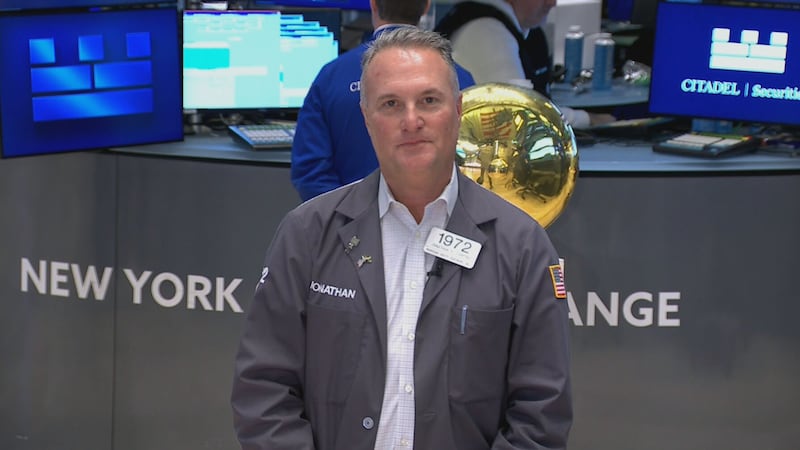
BNN Bloomberg spoke with Jonathan Corpina, senior managing partner at Meridian Equity Partners, about the market’s resilience in the face of geopolitical tensions, growing investor appetite for AI-linked companies and the potential market implications of U.S.-China trade discussions during President Donald Trump’s trip to China.
Key Takeaways
- Investors continue pushing markets higher despite geopolitical tensions, focusing instead on corporate earnings, economic stability and market fundamentals.
- AI enthusiasm remains a major driver for equities, with investor attention centred on Cerebras Systems’ Nasdaq debut and upcoming high-profile IPOs.
- Cisco Systems shares climbed after the company beat earnings expectations, raised its outlook and pointed to continued AI-related demand growth.
- Job reductions remain a recurring theme during earnings season, with companies including Cisco announcing workforce cuts alongside stronger financial results.
- Investors are closely watching U.S.-China discussions, with Taiwan emerging as a key issue that could influence trade relations and broader market sentiment.
Read the full transcript below:
LINDSAY: In the meantime, we’re going to switch gears and take things back to the markets because the Dow Jones Industrial Average has retaken the 50,000 level thanks to an earnings beat from Cisco Systems and following a key meeting between the U.S. and China. We’re going to get more now. Joining us is Jonathan Corpina, senior managing partner at Meridian Equity Partners. It’s great to have you join us. Thanks for your patience.
JONATHAN: Morning, Lindsay.
LINDSAY: Let’s start with the Dow. Do you see it reclaiming the 50,000 level in the near term?
JONATHAN: Absolutely. I don’t see any factor right now — and this is contrary to my internal beliefs — that’s going to stop this market at this point. If you look at the headlines we’ve been dealing with over the last two or three months — geopolitical issues, interest rates, oil trading at US$100 — you would have thought this market would have gone in the complete opposite direction.
So the fact that it’s defying all the rules of logic and continues to trade straight up is certainly confusing to many of us. I think what’s happening now is investors have gotten impatient with the geopolitical issues and recurring headlines — wars on, wars off, straits open, straits closed — and they’ve pushed all of that to the side, getting back to the basics of the market and looking at business fundamentals during earnings season.
They’re also looking at the economic data we get on a weekly basis that’s showing the economy has stabilized and gotten stronger. We have a change coming at the Federal Reserve, and we’ll see how that plays out. Investors have put those negative headlines aside. It doesn’t mean they’ve gone away, but the market continues to trade higher.
I think we’re going to continue to see this trend until the next catalyst or headline takes a little air out of the market.
LINDSAY: And who knows when that will be, right? I was going to ask whether you’re surprised by the strength of the markets right now. It sounds like you are, as you say they’re defying all logic given those geopolitical headwinds.
JONATHAN: Yeah, and who knows when that headline is going to come or what it will be. It doesn’t have to be a major headline. As markets trade higher and higher, investors are going to look for excuses to take some profits off the table.
A two-steps-forward, one-step-back approach would probably be healthy for markets, allowing for a bit of a selloff and another base to build at these levels. We can’t go straight up, and conversely we can’t go straight down. That’s not good for sentiment, and it’s not how efficient markets trade.
At this point, though, whatever the current headline is seems to be helping markets, and I think today’s headline is China.
LINDSAY: Yes, for sure. I take your point that as markets go higher, they’re more sensitive to headlines. I want to talk about Cisco Systems because shares are rising after it raised its full-year AI infrastructure outlook and announced job cuts. What’s your take on Cisco right now?
JONATHAN: It’s a recurring theme we’re hearing during earnings season: companies beating on the top and bottom lines and revising forecasts higher moving forward.
Cisco clearly beat analysts’ expectations, and I think it probably exceeded some of its own expectations as well. Some of its revenue and key products have already beaten estimates for 2026.
Another recurring headline during earnings season has been job cuts — not major slashes, but reductions in headcount. Some people debate whether that’s because of AI efficiencies or simply budgeting and outlook decisions moving forward.
Clearly, though, the overall theme and headlines coming out of Cisco are similar to what we’ve seen from many of its peers this earnings season. Overall, earnings season has had the same type of feeling: expectations were probably not set very high, companies are beating on the top and bottom lines, and the outlook moving forward seems very rosy at this point.
Again, geopolitical risks, interest rates and oil prices can all change very quickly, but for now it seems like everyone feels we’re on the right path.
LINDSAY: We’re also watching Cerebras Systems today, which is debuting on the Nasdaq. Can you tell us more about the company and why it seems to be attracting so much attention?
JONATHAN: I think there are two layers to this. First, if you take a step back and look longer term, there’s been a strong appetite for IPOs. Companies have been waiting a long time for the right opportunity and timing to go public.
You can debate whether this is the right time given the geopolitical backdrop, but overall, looking at the economy, companies seem to believe it is. We haven’t yet seen a significant push in the IPO market, but we’re starting to see more activity.
Investors are clearly paying attention to IPOs, and when you combine that with the AI headline surrounding this company, it’s naturally going to attract attention — not just media attention, but also investor demand reflected in the IPO pricing.
The company has a significant network and relationships with Fortune 500 companies. It’s certainly a new player in this space, but one that could have an impact. This is a company we’ll continue to watch, and there are others on the calendar as well, even if dates aren’t set in stone.
LINDSAY: Before we wrap up, I wanted to get your thoughts on the geopolitical front and Donald Trump’s trip to China. A lot is being discussed right now. What’s your take on what you’re hearing from those meetings, and how could it affect markets?
JONATHAN: From a public relations standpoint, this is clearly a historic visit, and we’re seeing all the pomp and circumstance associated with it.
President Trump invited many CEOs to accompany him on the trip, and I think that’s a clear message from the administration to China that the U.S. wants to work together and expand that relationship.
By bringing all those business leaders to the table, I think it’s showing goodwill. There are conversations about oil, shipping straits and broader geopolitical issues, but the major issue we’re hearing about is Taiwan.
This is something we’ve discussed for a long time. We’ve focused heavily on Russia and Ukraine and on the Middle East, but the tension between Taiwan and China is extremely important, especially given Taiwan’s role in the semiconductor supply chain and trade relationship with the U.S.
I think that’s going to be the key issue. The U.S. and China can make progress in many other areas, but Taiwan is the issue that determines whether broader progress can move forward.
I’m not overly optimistic because there are very strong positions on all sides, so we’ll see how that plays out.
LINDSAY: We’ll have to wait and see. Jonathan Corpina, senior managing partner at Meridian Equity Partners, thanks so much for joining us this morning.
---
This BNN Bloomberg summary and transcript of the May 14, 2026 interview with Jonathan Corpina are published with the assistance of AI. Original research, interview questions and added context was created by BNN Bloomberg journalists. An editor also reviewed this material before it was published to ensure its accuracy and adherence with BNN Bloomberg editorial policies and standards.

