Prime Minister Mark Carney and Alberta Premier Danielle Smith unveiled a new industrial carbon pricing framework aimed at advancing major energy and infrastructure projects while supporting emissions reduction efforts. The agreement is being viewed as a key step toward providing greater certainty for investment in Canada’s energy sector.
BNN Bloomberg spoke with Mark Parsons, chief economist at ATB Cormark Capital Markets, about the significance of the federal-provincial carbon pricing agreement, the future of the Pathways carbon capture project and concerns about Canada’s competitiveness under a higher carbon pricing regime.
Key Takeaways
- Parsons said resolving uncertainty around the federal-provincial industrial carbon pricing framework removes a major hurdle for energy investment.
- The agreement outlines an effective carbon price of $130 per tonne by 2040, giving industry more time to adapt to higher costs.
- Parsons said progress on the Pathways carbon capture project remains critical because the federal government views it as tied to future pipeline development.
- Concerns remain about whether Canada can stay competitive while imposing carbon costs that are higher than those faced by many global peers.
- Parsons said Canada’s challenge will be balancing emissions reduction goals with energy security and long-term oilsands and oil and gas sector growth.
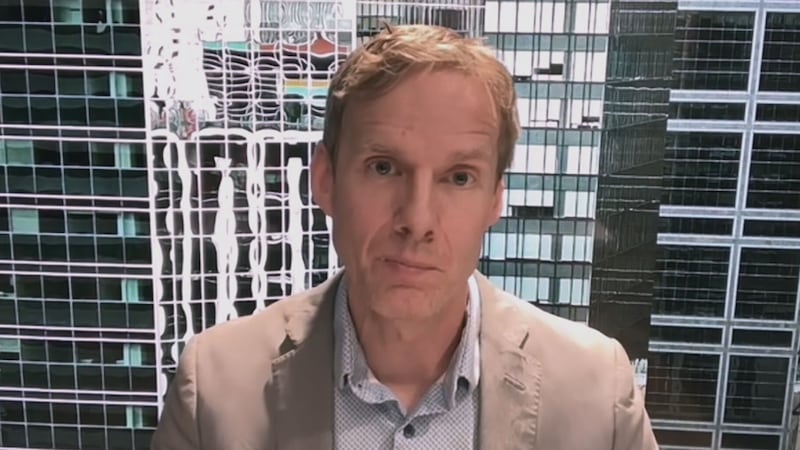
Read the full transcript below:
LINDSAY: Prime Minister Mark Carney and Alberta Premier Danielle Smith met earlier to announce a new industrial carbon pricing program in the province and, for more on what this means for Canada’s energy sector, we’re joined now by Mark Parsons, chief economist at ATB Cormark Capital. Thanks so much for joining us. Appreciate it.
MARK: Thanks for having me.
LINDSAY: So, I’m sure you were listening in to that announcement as well. Now, it sounds as though the province of Alberta and the federal government have kind of resolved the carbon pricing issue. How significant is that when it comes to getting some of these projects going?
MARK: Well, it’s very important. It’s a step in the right direction. This was a major hurdle, and so we have some clarity today, at least on the industrial carbon price. There were rumours it was going to be $130 by 2040. I think we know what that looks like now. It’s $130 by 2035, but the effective price is going to be $130 by 2040. So, there’s a little bit of room or time for the industry to adjust to these higher prices. I think that’s what they’re hoping for, but I’m still cautious on this. I’m optimistic, but cautiously optimistic, in that we didn’t get an agreement, at least I haven’t heard of an agreement, on the Pathways Project between industry and the government. So, still some work to do, but definitely a step in the right direction.
LINDSAY: Can you explain for our viewers how important the Pathways Project element of this whole story is? You’re saying today we didn’t hear much about it. How important is that?
MARK: Yeah, and the Pathways Project is the carbon capture and storage project, which is really pathways for pipelines. That’s the deal. Mark Carney has made it very clear that the federal government will not consider a West Coast pipeline without the Pathways Project because it’s an important step toward decarbonization. So, the industrial carbon price is part of it, getting to Pathways, because, of course, Pathways doesn’t generate any revenue. Maybe, through the carbon price, you accumulate some credits, so that is why we need more clarity on that project. My thought would be potentially the government could move on the pipeline without having everything figured out on Pathways, given some energy security risks we’re seeing with the war in Iran, but it still looks like that’s a big part of the deal.
LINDSAY: Okay, going back to the carbon pricing side of things, because, yeah, that was a big part of this announcement today. How does this position Canada compared to other global carbon pricing plans that we see? Does this position us within the same realm as some other countries?
MARK: Well, no. I mean, it puts us much more aggressive on carbon pricing than our competitors, and I think that’s the concern we’re hearing from industries saying, well, you’re adding additional cost to doing business here in Canada, and so there have been some concerns around competitiveness. So, this is what I’m looking for next. It’s fantastic news that we’re looking at advancing a West Coast pipeline. We need it to support our allies in Asia. We need to improve pricing and get that next layer of growth in the oilsands sector and oil and gas industry, but are we going to be able to achieve this with the additional costs? So that’s the big question mark right now.
Now, if we get it right, we can do both. We can decarbonize, proceed on the Pathways Project, drive decarbonization and address global energy security, but we’re going to have to thread that needle.
---
This BNN Bloomberg summary and transcript of the May 15, 2026 interview with Mark Parsons are published with the assistance of AI. Original research, interview questions and added context was created by BNN Bloomberg journalists. An editor also reviewed this material before it was published to ensure its accuracy and adherence with BNN Bloomberg editorial policies and standards.

