U.S. stocks opened higher as bond-market pressures eased and investors looked ahead to Nvidia earnings, while hopes for reduced tensions in the Middle East helped support sentiment.
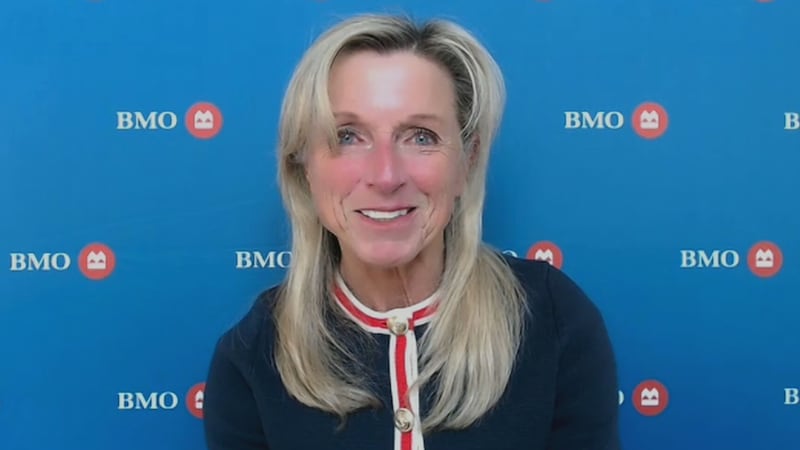
BNN Bloomberg spoke with Carol Schleif, chief market strategist at BMO Wealth Management, about why investors are refocusing on economic fundamentals despite geopolitical risks, how AI-driven investment is reshaping labour markets and why Nvidia’s earnings remain a major focal point for investors.
Key Takeaways
- Investors are attempting to look past Middle East tensions and refocus on corporate earnings, economic resilience and AI-related growth opportunities.
- Nvidia’s earnings remain a major market catalyst as investors watch for signs of margin pressure tied to rising semiconductor input costs.
- AI adoption and automation are expected to reshape labour markets, though human oversight and strategic decision-making remain essential.
- Markets continue balancing concerns about inflation and energy prices against optimism surrounding long-term technology investment.
- Financial stocks could benefit from deregulation and clearer rules around AI and cryptocurrency, though reduced oversight may increase long-term risks.
Read the full transcript below:
ROGER: Markets are opening higher this morning as the bond-market selloff cools and optimism grows that oil shipments through the Strait of Hormuz could resume soon. Our next guest says investors are eager to look past the conflict and refocus on earnings, even as consumers remain frustrated with elevated fuel costs. Joining us now is Carol Schleif, chief market strategist at BMO Wealth Management. Carol, thanks very much for joining us.
CAROL: Good morning. Thanks for having me.
ROGER: All right, we want it to be over, don’t we? What’s going on now, and we saw some supertankers are apparently trying to get through to Chinese and South Korean ports, apparently getting through the strait today. I looked at that earlier, so that was three hours ago. Don’t quote me.
CAROL: Yeah, I definitely think markets, I mean, this week they’re paying attention again to what’s going on in the strait, most specifically as it potentially translates through to inflation numbers, because clearly we’re past the vast majority of earnings in the U.S., with one notable exception this afternoon. Markets are now looking around for where they’re going to anchor near term to the news flow, and obviously things in the Middle East are still there. Investors started to fret about fixed income and rising yields, which so far have actually been in a pretty tight range and fairly well contained, but markets are obviously starting to watch that and worry about whether inflation is short term or more lasting. What happens in the Strait of Hormuz will influence that in the long run, even though North America is substantially less energy dependent than it was in the 1970s.
ROGER: No, but we’d still pay the price though, wouldn’t we? And I think one of the things I was reading is that everybody else has drawn down their reserves, and so we’ve kind of been living under a bit of an illusion, haven’t we? We’ve seen prices go up, but we’re still living under this illusion that everything’s going to be okay.
CAROL: Well, either the illusion, or markets still vacillate in that tug-of-war between whether to worry about that or lean into what’s going on with the data-centre buildout and transformative technologies, not just related to data centres, but the broader use of artificial intelligence and all the other things it touches in our lives. Markets are also trying to parse a lot of technology companies announcing layoffs. You had more announced this morning. So there are a whole lot of things for markets to try to process, and instead we’d much rather be getting prepped for a long, lazy summer, I think.
ROGER: I’d be okay with that right now.
CAROL: Yeah, I would as well.
ROGER: And with the layoffs, there are still some relatively strong job numbers and healthy earnings, but I was trying to remember the quote from that banker on Monday where he talked about AI being more valuable than people, and I think it hit a nerve for a lot of people.
CAROL: Yeah, I think there’s that piece. There’s also the assumption that the more we automate plants — you can put robots in plants, they can run 24/7 and they don’t need breaks — but they don’t pay taxes either. So there are all kinds of implications there. I think it’s important to remember that every time we’ve had a major technological shift, think electricity or the buildout of railroads, it’s caused changes over time in the way work is done and the types of jobs we have. We’re in the very early stages of that right now, and it’s hard to see what the jobs look like on the other end, but you still need human intervention and strategic thinking. There’s actually one argument that there’s a lot of room for more neurodivergent thinkers and those who can articulate well in an AI-dominated environment, but there’s a lot of angst at the beginning because we’re given the technology, but not necessarily the instructions in the middle of it.
ROGER: All right, let’s talk tech. Nvidia’s earnings are out today after the bell. So goes Nvidia, so goes tech. Or is it more diverse now?
CAROL: It’s more diverse in the long run, but in the short run all eyes will be on Nvidia. The hard part is that the stock has beaten, raised, beaten, raised, and people don’t step back and look at the sheer margins that you’re getting from a semiconductor company to begin with. One of the things I suspect a lot of people will watch today is those margin levels, because Nvidia and others are paying more for memory prices and other cost inputs. Nvidia and most tech companies have the margins to absorb much of that, but that is one place where you’re seeing inflation creep in that’s not necessarily directly energy induced.
ROGER: And I just want to get in one more question about the financial sector, where you say deregulation and reduced capital requirements could boost activity. What about the risks that come with it?
CAROL: Yeah, there is definitely that risk, and you’re seeing hints of various regulations being unwound or loosened. If you go back and look at the history of crashes, they’ve typically been accompanied by some sort of major debt unwind, but they’ve also involved regulations being loosened. We’ll watch that very carefully. On the other hand, setting ground rules for things like artificial intelligence, cryptocurrencies and related areas at least helps the industry directionally know which way to go, rather than letting each of the 50 states apply their own laws, which makes it very difficult for businesses to operate.
ROGER: All right, Carol, we have to wrap it up there. But thank you, as always, for joining us.
CAROL: Thank you.
ROGER: Carol Schleif, chief market strategist at BMO Wealth Management.
---
This BNN Bloomberg summary and transcript of the May 20, 2026 interview with Carol Schleif are published with the assistance of AI. Original research, interview questions and added context was created by BNN Bloomberg journalists. An editor also reviewed this material before it was published to ensure its accuracy and adherence with BNN Bloomberg editorial policies and standards.

