Oil prices are climbing as investors weigh the likelihood of a lasting resolution to tensions between the U.S. and Iran, with uncertainty around Middle East supply continuing to support energy prices. At the same time, investors are increasingly focused on Canada’s opportunity to expand natural gas exports and strengthen its role in global energy markets.
BNN Bloomberg spoke with Ryan Bushell, chief executive officer and portfolio manager at Newhaven Asset Management, about the outlook for Canadian energy infrastructure, the long-term opportunity for LNG exports and why pipeline and midstream companies remain attractive investments.
Key Takeaways
- Canadian natural gas exports could expand significantly in the coming years as global buyers look for more reliable sources of supply outside the Middle East and Russia.
- LNG Canada Phase Two, Cedar LNG and other proposed projects could materially increase Canada’s export capacity over time.
- Midstream and infrastructure companies are positioned to benefit from rising export volumes regardless of commodity price swings.
- Canadian energy producers with strong balance sheets and cash flow generation remain attractive as oil supply risks persist globally.
- Pipeline expansion remains politically challenging, with uncertainty around whether governments can overcome regulatory and regional opposition.
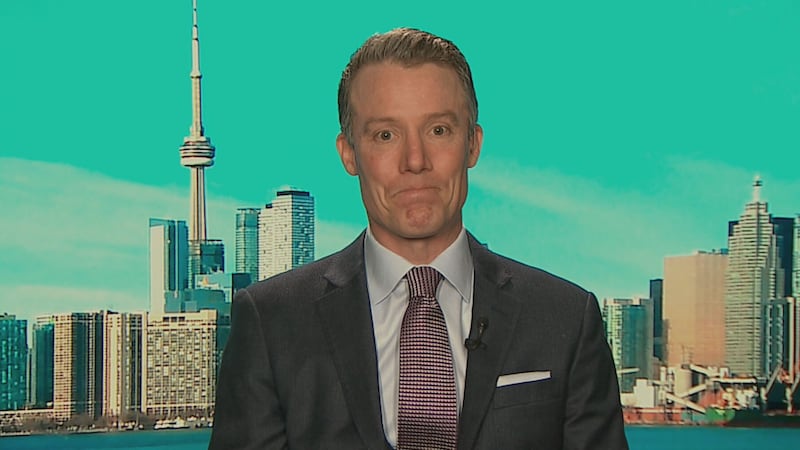
Read the full transcript below:
ROGER: Well, oil prices are higher this morning as investors wait to see whether talks between the U.S. and Iran will translate into a tangible peace deal. Joining us now to share his thoughts on the Canadian energy sector in the wake of this conflict is Ryan Bushell, chief executive officer and portfolio manager at Newhaven Asset Management. Ryan, thanks, as always, for joining us.
RYAN: Thanks for having me, Roger.
ROGER: All right. Just thoughts on what’s unfolding over the last few days in Iran, and is there reason for optimism, do you think?
RYAN: I don’t think so, actually. You know, obviously the Trump administration, the U.S. government, I think would like to be done with this, but I just don’t think it’s that simple, and they can’t retreat in a way that sort of makes them look bad, right, and makes them look weak. If they were to retreat now, I think Iran would have more control over the Strait of Hormuz than the global community wants, and so I think it continues to be a bit of a stalemate.
ROGER: And so where does this — we saw oil retreat for a couple of days. It looks like it’s on its way back up today. Where does this leave the Canadian industry?
RYAN: Canadian industry is in a great position. Oil prices aside, you know, I do think that eventually we will get some resolution here, and eventually barrels will start flowing out of the Strait of Hormuz, and things will be somewhat more normalized, although I doubt we’re going back to the 20 million barrels a day. With that in mind, the Canadian industry has a great opportunity here to expand egress potential. Now things are back on the table. You know, we have a modified Keystone XL back on the table, but really the thing that I’m much more excited about is on the natural gas side and natural gas exports. I think this crisis is much more acute in gas because of the lack of storage capacity for natural gas and just the way that commodity moves around the earth and how concentrated supply was in Qatar. I think the world is now looking for more points of supply, and Canada has a big part to play there. I think with Shell coming back into Canada as a big vote of confidence, that says, hey, you know, there’s going to be some more investment in the Canadian industry, and that is exciting for us as infrastructure owners in Western Canada.
ROGER: What would you like to see Canada’s role in natural gas — or Canadian companies’ role in natural gas — become?
RYAN: I mean, I just think we have such an opportunity. I think we could be an exporter of five-plus BCF a day — billion cubic feet a day. Right now, we’re a little over one with LNG Canada Phase One. So LNG Canada Phase Two, we have Cedar LNG coming online, a smaller project, Woodfibre. There’s a few smaller ones. There’s an Indigenous-led project as well that’s quite large. I think we could do all of them over time, and that would be — you know, we have abundant natural gas supply that’s very, very economic. We have a shorter shipping distance to Asia and a cooler ambient temperature, which means that there’s less energy required to cool the gas. So, you know, longer term, we really need to get something going east as well, and that’s another opportunity. If we’re actually in a position where the existential threats that have been presented to us by the U.S. with trade negotiations over the past couple of years, and just what’s happened with the global energy sphere, I think Canada has a big opportunity to play going forward, and hopefully we’re ready to do that.
ROGER: And with the pipeline agreement that was signed between Ottawa and Alberta — and then the prime minister was in B.C. yesterday trying to make amends there and trying to mend fences, because that’s a roadblock for it — do you think he can work through that? Do you think we can get that pipeline through?
RYAN: I don’t. You know, I’ll believe it when I see it. This is a fool me once, shame on me, fool me 100 times. You know, he can’t keep going down that road, right? So I don’t think we’re going to see a greenfield West Coast oil pipeline built, and I don’t necessarily think we need one. I think if this Bridger pipeline gets done into the U.S., that would be more than enough to satisfy demand for quite some time. It would be better for us to diversify our customer base and have more going to tidewater, but I do think that the road is just too difficult for any private company to take on, and therefore then you need government guarantees. Then we’re into, you know, how long do terms last and who’s in charge of the province versus the federal government, and we’re into a bit of a mess there. So, again, never say never, but I’ll believe it when I see it.
ROGER: All right, let’s talk about some of the names you like: Enbridge, AltaGas, Pembina Pipeline. I always want to say Pembina Pipelines. What do you like about them?
RYAN: Again, I just think that all of them have opportunity here, especially Pembina and AltaGas on the natural gas side. There is really strong demand in Asia. Asia has had cargo taken away from them now twice by different crises — first the Nord Stream and Russia-Ukraine crisis, and now the Iran-Qatar crisis. In terms of natural gas, I think we have willing customers over there for our product. So I think, again, in terms of natural gas transport, processing and export, there’s a lot of opportunity if we go from, again, one-and-a-half BCF a day to say five-and-a-half BCF a day. That’s more than a threefold increase. You’ve got more volumes that need to be handled, and that’s where we’re more focused on the volumes, right? We’re not so focused on the pricing. More volumes flowing through pipes, more volumes flowing through plants means more plants that need to be built, which means more revenue for these companies.
ROGER: All right. What are your top producer holdings right now?
RYAN: We like — obviously Canadian Natural Resources has been our top holding, and it’s funny, it was a source of funds to fund trades into other names like Cenovus and Imperial Oil primarily over the past couple of years. But if you look at this company and what they’ve amassed, they were big buyers of different assets. They bought Painted Pony for, if I remember what it was, $4 a share back in the depths of the pandemic. This is a company that acquires counter-cyclically and produces a lot of cash flow when the cycle is high, and that’s where we’re at right now. Their net debt position going down to that $13 billion number, where they start to return 100 per cent of free cash flow to shareholders — you know, they’re saying 2027. If the strip starts to come up to where the spot prices are — you know, the strip is still down in the US$70 to US$80 level — that’s going to keep coming up as this crisis goes on. We saw the oil inventory draws from the U.S. yesterday. A massive 17 million barrels came out of storage in the U.S. last week. That’s going to push that long-end price up, and that means that’s going to happen sooner for CNQ. So we really like that holding.
ARC was our other biggest holding, ARC Resources, which has been acquired by Shell, as I mentioned earlier, so we are replacing that with Tourmaline over time. We’ll wait and see how this ARC deal goes. It’s 75 per cent stock, so it’s a difficult thing to know. Should we be selling here and moving into the next thing, or waiting and seeing what happens to share prices globally?
ROGER: All right, we’ve got to wrap it up there, Ryan. But thanks, as always, for joining us.
RYAN: Thanks, Roger.
ROGER: Ryan Bushell, chief executive officer and portfolio manager at Newhaven Asset Management.
---
This BNN Bloomberg summary and transcript of the May 21, 2026 interview with Ryan Bushell are published with the assistance of AI. Original research, interview questions and added context was created by BNN Bloomberg journalists. An editor also reviewed this material before it was published to ensure its accuracy and adherence with BNN Bloomberg editorial policies and standards.

