Nvidia delivered another blowout quarter, but investor enthusiasm appeared restrained as concerns around inflation, oil prices and higher U.S. interest rates continued to weigh on sentiment. Despite strong earnings growth across corporate America, investors remain cautious amid geopolitical tensions and rising commodity prices.
BNN Bloomberg spoke with Michael Landsberg, chief investment officer at Landsberg Bennett Private Wealth Management, about Nvidia’s earnings, inflation risks tied to higher oil prices and investment opportunities in aerospace, travel and senior care.
Key Takeaways
- Nvidia continued to post strong earnings and revenue growth, reinforcing confidence that artificial intelligence spending remains robust.
- Strong corporate earnings growth has contrasted with cautious investor positioning, including elevated short interest in Nasdaq futures.
- Higher oil and commodity prices are increasing concerns that inflation and U.S. interest rates could move higher in coming months.
- Aerospace and power generation companies are benefiting from strong demand tied to aircraft engines and AI-related energy needs.
- Travel and senior care businesses remain attractive long-term themes tied to affluent consumers and aging demographics.
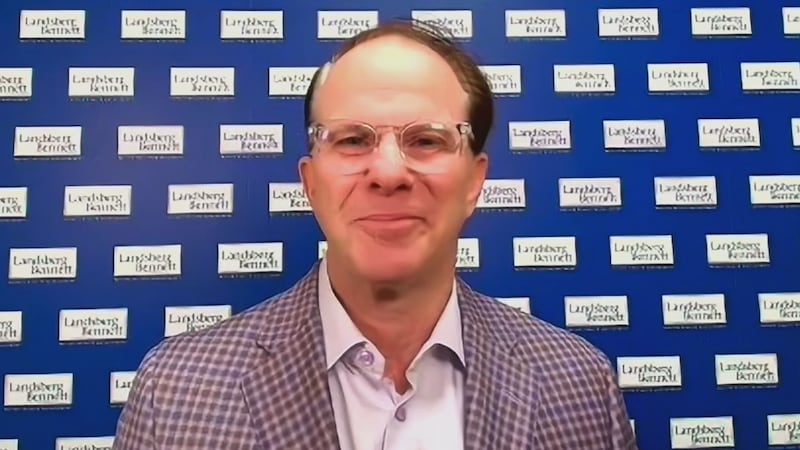
Read the full transcript below:
ROGER: Well, U.S. stock futures are lower and partly weighed down by less-than-expected enthusiasm over Nvidia’s blowout first-quarter earnings report. Let’s get more from Michael Landsberg, chief investment officer at Landsberg Bennett Private Wealth Management. Michael, thanks very much for joining us today.
MICHAEL: My pleasure, Roger.
ROGER: What’s Nvidia got to do to make people happy?
MICHAEL: Tell you what, it’s tough to know. It’s really reminiscent of almost like watching Tiger Woods at his prime. No matter what he did, people are like, it’s kind of boring. I mean, they had a huge blowout quarter, both on earnings and revenue, and buying back a ton of stock, you know, raised the dividend dramatically. I really don’t know what else you could do. The good thing is, I think it signals to the rest of the world that AI is still very much a big theme and should be invested in accordingly.
ROGER: Are there any legitimate concerns as a competition? Do investors see some competition on the horizon?
MICHAEL: I think ultimately there has to be some competition. I mean, they’re not going to keep the level of market share, but this is such a big, growing, expanding marketplace, even a little bit of market share erosion is not going to hurt them. I mean, they can’t make chips fast enough, and I don’t see that changing for the foreseeable future. So, I think it’s still a stock that you want to continue to own, and if you don’t own it, shame on you. But if you don’t own it, you probably need to take any weakness to get some exposure.
ROGER: And is that backlog a good thing, or could it hurt it down the road?
MICHAEL: Most times the backlogs are good. I mean, ultimately, what ends up happening is it sorts itself out, but I think longer term the backlog is going to, unfortunately, more competitors will come in, they’ll start to figure out ways around it. You don’t want to wait four years for a chip, but again they can’t make enough of it right now, and 50 per cent of their business is to the hyperscalers, those big five or six buyers, and so that’s still a very strong endorsement of Nvidia’s chip and their technology.
ROGER: All right, and bigger picture, with the S&P 500, 90 per cent of the companies have reported at this point, what’s your report card on their reports?
MICHAEL: It’s amazing. This is the sixth straight quarter of double-digit revenue growth, but this is actually the best quarter. I think we’re 27 per cent year over year, and I think Nasdaq is even higher than that. So, very, very strong quarter year over year for growth, and I think a lot of people underestimated the ability of corporations to earn money, given the fact that we’ve had, you know, tariffs over the past year. You know, recently we’ve had a war, so I think there’s a little bit of underestimation of the power of this market.
ROGER: And with that war, I mean, I think we saw that initial selloff when it started, but now it seems people have just kind of baked it in, and what might, is there something from that? I mean, today we’re seeing a little bit of a pullback, but is there something, if it would have to explode fully back into an actual, what do they call it, kinetic war, that’s the term they’re using now. Would it have to go back to that to have an impact on the markets?
MICHAEL: Yeah, I don’t know. I think right now, what’s happened, I think people have kind of overestimated or underestimated the impact longer term of higher oil prices, and we think commodity prices are on the move higher. Oil basically affects everything, and although it’s higher, if there is a peace treaty tomorrow, the Strait doesn’t open tomorrow. So I think you still got this overhang of lack of oil around the world for a short period of time. Strategically, it probably is better for the U.S. as a nation for it to go longer, because I think the warring factions inside Iran are ... I don’t know who’s running Iran, and I’m not sure they do either. That probably is a different story than market-wise, but anytime there’s this kind of a skirmish, I think people have underestimated the longer-term effects of it. I think it’s partly from last year. A lot of people missed the rally because of the tariffs, and I think people are like, hey, I’m staying in this market regardless of kind of the bad news that we’re seeing over in the Middle East.
ROGER: And could gas prices play a factor on this? Could that derail the economy?
MICHAEL: Yeah, I mean, certainly. I mean, the U.S., interestingly enough, is now not really reliant on any oil from the Strait, so I don’t necessarily see it getting to the point where it derails the economy per se, but does it certainly hurt some portions of the marketplace? Absolutely. The U.S. economy is 70 per cent consumer-driven, and if you see a 30 to 40 per cent increase in the price of oil, that’s 30 or 40 per cent less they can spend somewhere else. So, I think it’s definitely a possibility, and there’s some of those stocks or companies that don’t have pricing power, I think there’s a concern there about what are we going to get from that. So, there is a possibility the longer it goes on, the more it could ultimately slow growth. I just don’t see it at this point.
ROGER: And you do see some pockets of opportunity, though?
MICHAEL: Absolutely. I mean, I think what’s happened is, I think the overall AI trade, for the most part, you know, I think people own a lot of chips. I think you need to continue to diversify. We like some things that are kind of outside of that space that aren’t trading at kind of all-time highs. One name I like is Rolls-Royce, one of the leading power makers in the world for engines. There’s only four real makers of engines in the world. Airbus’ CEO recently stated they can’t get enough engines. It’s a similar problem to the chip scenario, and so you’ve got that scenario where you can’t make enough engines fast enough for the buyers. That’s a positive. Also, yeah, they’ve got record profits, and they do have obviously power generation is going to be big for AI. This is kind of an AI-adjacent play. Anywhere you can get power is going to be positive for the AI story. So, I think it’s a name that we like. It’s not trading at all-time highs. It’s a name that’s not owned that much. I mean, people still think they make the cars, they don’t. That’s a BMW division that actually owns that. This is the engines, the nuclear and the aerospace. And I think it’s a good story, underowned, underappreciated.
ROGER: All right, jet engines running data centres. I have a good visual on that. Viking Holdings is the other one you like as well.
MICHAEL: We love Viking Holdings, and kind of talked about the gas prices hurting people. Gas prices don’t hurt the typical Viking customer. They’re wealthy, they go on trips, they’re planning their travel, and they’re doing what they want to do. Viking caters to that. It’s a 55-plus, you know, no casinos, no kids, it’s high-end, it’s expensive, you get what you pay for, but they provide a very, very high-quality product, and it continues to do well. Bookings are, they’re looking at 2028 and 2029 bookings already, all seven continents, big ships, little ships, and they do it all, and again, they’ve got a small market, and they focus exclusively on that small market. What I’ve liked here recently is when I like to talk about stocks, it’s pulled back a little bit because the oil prices, as you mentioned, are higher. It gives you an opportunity to pop into a name that, longer term, again, oil prices aren’t going to affect the prices here that people are willing to pay for this product. It’s a high-end product. Got a lot of clients that go on that line, and they love it. The repeat buyer is very high customer loyalty.
ROGER: Okay, and last one, the Ensign Group.
MICHAEL: Yeah, this is kind of a, we have a couple themes that we use, obviously AI being a theme, cybersecurity. The other one we have is kind of the aging populations, you know, the North American aging populations are big. They need more care, whether it’s acute care, skilled nursing. Ensign is a smaller name in the space. They operate 300 hospitals in 17 different states. People are living longer, they need more care, more therapy, things like that. It’s a good business that isn’t going away anytime soon. The old days of when people retired at 65 and died at 68 isn’t happening. People are retiring in their early 60s, living to be 95 years old, and they need therapy and care and different levels of it. They’re at kind of a great spot for that, and it’s traded off a bit. It’s up over the last 12 months, but if you’ve noticed since March, it’s traded back a bit to give you an opportunity, I think, to get into an area that you could own for three to five years, because that space is not going away.
ROGER: All right, we’ve got to wrap it up there, Michael. But thanks, as always, for joining us.
MICHAEL: My pleasure, Roger.
ROGER: Michael Landsberg, chief investment officer at Landsberg Bennett Private Wealth Management.
---
This BNN Bloomberg summary and transcript of the May 21, 2026 interview with Michael Landsberg are published with the assistance of AI. Original research, interview questions and added context was created by BNN Bloomberg journalists. An editor also reviewed this material before it was published to ensure its accuracy and adherence with BNN Bloomberg editorial policies and standards.

