First-time homebuying activity has fallen to its lowest level in decades as high interest rates and affordability pressures keep many young buyers sidelined in the U.S. Still, new data suggest single Gen Z women are emerging as a major force in entry-level homeownership, outpacing men in their generation by nearly two-to-one.
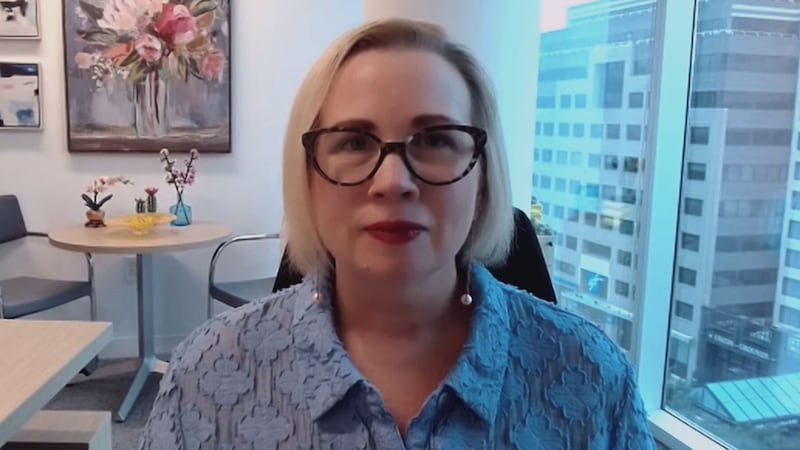
BNN Bloomberg spoke with Jessica Lautz, deputy chief economist at the National Association of REALTORS, about why more young women are entering the U.S. housing market alone and how financial planning, higher incomes and family support are helping some buyers overcome affordability barriers.
Key Takeaways
- Single women account for 35 per cent of Gen Z homebuyers in the U.S., compared with 18 per cent for single men.
- Overall first-time homebuyers fell to 24 per cent of the market, the lowest level since records began in 1981.
- Higher college graduation rates among women are contributing to earlier career and income gains among young buyers.
- Many Gen Z buyers are reducing discretionary spending, living with parents or using government programs to save for down payments.
- Lautz said ongoing affordability challenges and limited entry-level inventory continue to leave many prospective buyers locked out of the housing market.
Read the full transcript below:
LINDSAY: First-time homebuying is at its lowest level in decades, and yet new data show single Gen Z women are entering the market at nearly double the rate of men in their generation. The numbers point to a growing gender gap in entry-level ownership, even as affordability pressures keep many young buyers on the sidelines. Here to break it down for us is Jessica Lautz, deputy chief economist at the National Association of REALTORS. It’s great to have you join us. Thanks so much.
JESSICA: Thank you. I’m excited to be here talking about this.
LINDSAY: Yeah, this is very interesting because first-time buyers are hitting a wall that hasn’t been seen since 1981. We know that a lot of people are waiting on the sidelines. How are these single Gen Z women successfully securing financing on a single income in such a hostile environment at the moment?
JESSICA: Absolutely. These women are savvy. They’re moving home, they’re living with their parents first, some of them do have higher income. Overall for Gen Z, we know their buyers have a household income of $76,000. We also know that they’re taking advantage of government programs, so they’re quite smart when they look at the housing market to see what they can qualify for, and to even tap their 401(k) to make sure that they can secure a home of their own.
LINDSAY: What’s driving the gap, though? Why are men in this same cohort not doing the same things or not seeing the same results?
JESSICA: Well, I think what we know is when we look at the data that women have always outpaced men in the housing market. They’re actually second only to married couples, and they have been historically all the way back to 1981, when we started collecting data on this. I think women learn from generations of women before them. They learn from their mothers and their grandmothers to secure a home of their own, to earn housing equity. Marriage can come later, but let’s get the house first.
LINDSAY: You say also in your notes — I’m not sure if you mentioned this — that women are graduating from college at higher rates than men, giving them an earlier career and income advantage, even in their 20s.
JESSICA: Absolutely, they have a boost, and we suddenly saw for the first time in the 40-plus-year history of our data that single women first-time homebuyers, their household income is higher than that of single men who are first-time homebuyers. So we are seeing that college is paying off, so it makes sense that they’re taking advantage of those earnings and putting that into the housing market.
LINDSAY: What’s the tradeoff, though, or is there a financial tradeoff, whether that be location, home type or how they’re saving for the down payment?
JESSICA: You know, I don’t think there is a tradeoff here. Of course, they are willing to make financial sacrifices, so they’re cutting spending on other items like luxury goods or entertainment, but is that really a tradeoff in the end? I don’t think so, because they have a home of their own and they can earn that housing equity. You can always go out to brunch or host the brunch at your new place, right?
LINDSAY: Do you feel as though younger buyers are prioritizing homeownership and financial independence earlier? Is that something you’re seeing?
JESSICA: I think that Gen Z has really learned from millennials, and they understand how to make savvy financial decisions. So they’re really second-guessing that college expense, looking at that student loan debt, making sure the payoff is worth it, but they’re also really saving. I think as we watch them transform these savings into the housing market, we could see a very interesting dynamic for this generation moving forward.
LINDSAY: What’s the difference there? What were you seeing with millennials instead?
JESSICA: For millennials, what we saw is many of them were partnered, so we did see that less than a quarter of millennials at the same age were actually single in this market. These Gen Zers are saying it’s okay to move into the housing market as a single buyer, and perhaps looking at government programs, looking at their 401(k) as an opportunity to come into homeownership, more willing to move home, live with parents, skip paying rent. So they’re making very smart financial steps for their future coming into homeownership.
LINDSAY: At the same time, Gen Z does make up a very small portion of total homebuyers at the moment, right? So what does that tell you about the broader accessibility of the market right now?
JESSICA: Well, I think when we look at the housing market overall, for all first-time homebuyers regardless of age, it is very difficult to come into the housing market. If you have a household income under $75,000, you’re going to have a hard time finding a home in the U.S. right now. So we do know that it’s quite difficult to find that entry-level inventory.
LINDSAY: And what does this trend tell you about where the housing market is headed? Who gets left out if conditions don’t improve in the long run?
JESSICA: Well, it continues to be a K-shaped economy. It continues to be a K-shaped housing market. We know that people who are homeowners build that housing wealth, they’re able to transfer that housing wealth to future generations. Those who are left out of the housing market are really struggling to save for that down payment and be able to actually put all of that money together, and then find that property too. So there is still a lot of competition when we look at the housing market today.
LINDSAY: Does it seem optimistic, though, in the future, in terms of more people getting into the housing market?
JESSICA: I think that there’s a lot of pent-up demand, and that pent-up demand gives me optimism. When we think about the pipeline into homeownership, we need to have that available inventory for them to really enter into the market. We need to have lower mortgage interest rates, housing affordability improve somewhat with more building. So if we see more inventory coming in, if we see affordability conditions continue to improve, we should see more homebuyers there, because that demand is certainly there.
LINDSAY: And there needs to be more certainty too, right? What we’ve been hearing month after month is a lot of people still waiting on the sidelines because they’re just not sure what’s going to happen, particularly with the Canadian economy.
JESSICA: Well, I think that’s probably true when we look at uncertainty. We know this is the biggest financial decision that one makes in their lifetime, so they want to be secure in their personal finances, in their neighbours’ finances, as they look forward. They want to have security in this financial transaction, certainly.
LINDSAY: Okay, Jessica Lautz, deputy chief economist at the National Association of REALTORS. Appreciate your time. Thanks for joining us.
---
This BNN Bloomberg summary and transcript of the May 22, 2026 interview with Jessica Lautz are published with the assistance of AI. Original research, interview questions and added context was created by BNN Bloomberg journalists. An editor also reviewed this material before it was published to ensure its accuracy and adherence with BNN Bloomberg editorial policies and standards.

