Strong AI-driven business investment continues to support U.S. economic growth and corporate earnings, even as investors contend with rising energy prices, sticky inflation and higher bond yields tied to Middle East tensions. Investors are also watching whether elevated valuations leave equity markets vulnerable to renewed volatility and whether Canadian bank earnings can justify recent gains.
BNN Bloomberg spoke with Michael Dehal, senior portfolio manager with Dehal Investment Partners of Raymond James, about the impact of AI investment on the U.S. economy, inflation and interest rate risks, and what investors should watch during Canadian bank earnings season.
Key Takeaways
- AI infrastructure spending remains a major driver of U.S. economic growth and corporate earnings, especially across large technology companies.
- Consumers are becoming more cautious as higher energy prices and inflation pressure spending and sentiment heading into the summer months.
- Rising bond yields and narrow leadership in technology stocks are increasing concerns about the sustainability of the current equity rally.
- Investors are watching for signs of stagflation risk if inflation remains elevated while economic growth begins to slow.
- Canadian bank earnings are expected to be solid, but loan loss provisions and management guidance could determine whether bank stocks extend recent gains.
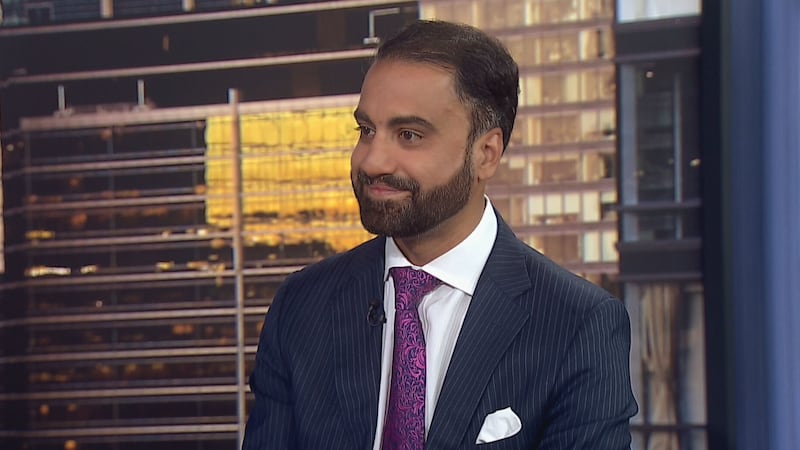
Read the full transcript below:
LINDSAY: The U.S. economy remains resilient, driven by strong AI-led investment. However, investors are facing re-accelerating inflation, rising energy prices tied to Middle East tensions and the risk of higher-for-longer interest rates. Joining us now to discuss all of this is Michael Dehal, senior portfolio manager at Dehal Investment Partners. It’s great to have you in studio once again.
MICHAEL: Thank you, Lindsay. Great to be here.
LINDSAY: The U.S. economy grew two per cent in the first quarter. That’s quite a bit of growth, with business investment doing much of the heavy lifting. How important is the AI buildout in all this growth?
MICHAEL: It’s really important. Most of the growth has come from AI investments and AI infrastructure buildout. Even the earnings growth we’ve seen in Q1 — it was 26 per cent year-over-year earnings growth in Q1 — largely came from the AI buildout in the tech companies. So AI is definitely a tailwind for the U.S. economy right now.
LINDSAY: For sure. Speaking of that, we’ve been seeing consumer spending starting to slow down, but on the flip side, businesses are investing more. What do you make of that? Is that a warning sign right now?
MICHAEL: Consumers are cautious. The latest consumer sentiment numbers that came out last week in the U.S. were the lowest in, I believe, three or four decades. Consumers are cautious with the ongoing conflict and higher prices, especially with higher oil and gasoline prices heading into the summer months, when demand for travel increases. Consumers are cautious, but on the flip side, businesses are still upbeat, although they are becoming more cautious heading into the summer and into Q3.
LINDSAY: Okay, so it’s not necessarily a healthy rotation that we’re seeing right now.
MICHAEL: Even if you look at the markets, the S&P 500 has seen a tremendous rally from the March lows until now, but we’re seeing an increasingly narrow rally. It’s really a handful of stocks, mostly in tech and AI, that have been powering the rally higher.
LINDSAY: How dangerous is that? If we’re looking at the S&P 500 and it’s really just a couple of companies or sectors driving growth, that’s not necessarily healthy or diverse.
MICHAEL: Correct. We want a broadening market because that’s healthier. When you see this kind of narrowness in a market rally, it is worrisome because those handful of stocks can reverse direction quickly and lead to downside moves in the broader market. As investors, we want to see the rally broaden out. This narrowness isn’t really good for markets, but we’ll take it for now.
LINDSAY: We’re also seeing inflation pick up. In April, it accelerated, largely due to rising energy prices. How concerned should investors and consumers be about another inflation wave later this year if energy prices stay high?
MICHAEL: In the near term, we do expect inflation to re-accelerate because of higher oil and food prices. However, later this year, in Q3 and Q4, if the conflict ends or we get some kind of resolution in the Middle East, inflation could come back down to around two per cent. Energy is really the wild card for inflation and consumer spending.
LINDSAY: How much does the market really depend on oil prices right now?
MICHAEL: Quite a bit. Even if the Strait of Hormuz were to fully reopen tomorrow, it would still take two or three months for energy prices to normalize. We expect higher inflation over the next couple of months, which is why, after this strong rally, we could see some near-term weakness in June and July.
LINDSAY: The Fed is remaining on hold for now. Do you think the market has fully adjusted to the idea of higher-for-longer rates?
MICHAEL: If you look at the two-year U.S. Treasury yield, which is usually an indication of where the Fed is headed, it has been rising alongside the 10-year yield. The 10-year yield hit 4.70 per cent last week, and the 30-year U.S. bond yield hit its highest level since 2007. Bond markets are signalling higher-for-longer rates and possibly higher inflation for longer as well. It complicates the Fed’s picture, but overall corporate profits are still strong, labour markets remain robust and unemployment is at 4.3 per cent. I think the Fed could stay on hold for the remainder of the year, but labour markets and inflation will be key to watch.
LINDSAY: We’ve also heard more about the possibility of a stagflation test for equities. What does that mean, and what would it look like?
MICHAEL: Stagflation is when you have rising prices alongside a slowing economy. If GDP growth slows while inflation remains elevated, that’s stagflation, which nobody wants. Consumers would be dealing with higher prices while also facing weaker economic growth or even job losses. If economic activity in the U.S. slows significantly while inflation stays high, that would create a stagflationary environment similar to what we saw in the 1970s.
LINDSAY: And a stagflation test would basically be how equities respond to that environment?
MICHAEL: Exactly. It would likely be very negative for equities if we entered a stagflationary environment.
LINDSAY: Earnings in the last quarter were remarkably strong, particularly in certain sectors. What was your main takeaway from the latest earnings season? And looking ahead, will companies start pricing in the effects of what’s happening in the Middle East?
MICHAEL: Earnings were very strong. As I mentioned earlier, we saw the best earnings growth in three or four years, with 26 per cent year-over-year growth. Nvidia and Micron were key drivers, along with other technology names. But if you look beneath the surface, Walmart reported a more cautious outlook for the rest of the year, and we heard similar comments from Home Depot and Lowe’s. Going into Q2 earnings, we’ll likely see more impact from higher prices and inflation, and we could hear more caution from consumer-facing companies.
LINDSAY: I want to turn to Canada because we’re also watching the big banks report earnings later this week, starting Wednesday. Is there anything specific you’ll be watching for?
MICHAEL: We do expect earnings to be strong, but given the run-up in Canadian bank stocks and the elevated valuations we’ve seen, the key factor will be PCLs, or provisions for credit losses. Capital markets, trading and wealth management should continue to support earnings, but investors will focus closely on whether banks are setting aside more money for potential bad loans. If banks reserve more aggressively, that could negatively affect stock prices. Given current valuations, the bar is already very high for Canadian banks to continue outperforming.
LINDSAY: We’ll have to see how they do. We’ll leave it there for now. Michael Dehal, senior portfolio manager at Dehal Investment Partners. Thanks so much for coming in.
MICHAEL: Thank you.
---
This BNN Bloomberg summary and transcript of the May 25, 2026 interview with Michael Dehal are published with the assistance of AI. Original research, interview questions and added context was created by BNN Bloomberg journalists. An editor also reviewed this material before it was published to ensure its accuracy and adherence with BNN Bloomberg editorial policies and standards.

