Canada’s economy slipped into a technical recession in the first quarter of 2026 as weak business investment, soft government spending and tariff-related pressures weighed on growth. While consumer spending remained resilient, economists say the broader backdrop remains fragile.
BNN Bloomberg spoke with Avery Shenfeld, managing director and chief economist at CIBC Capital Markets, about the weaker-than-expected GDP report, the impact of trade tensions on investment and exports, and what the data could mean for the Bank of Canada’s next moves.
Key Takeaways
- Canada’s economy entered a technical recession after posting a second consecutive quarterly contraction, alongside a rising unemployment rate.
- Tariff uncertainty is weighing on exports and discouraging business investment, particularly in sectors exposed to U.S. trade policy.
- Weak housing activity continues to drag on economic growth through lower residential construction and reduced real estate activity.
- Consumer spending remained a source of support, though higher gasoline prices could create headwinds in coming months.
- The Bank of Canada is expected to remain on hold, with weak economic conditions offsetting concerns about temporary energy-driven inflation.
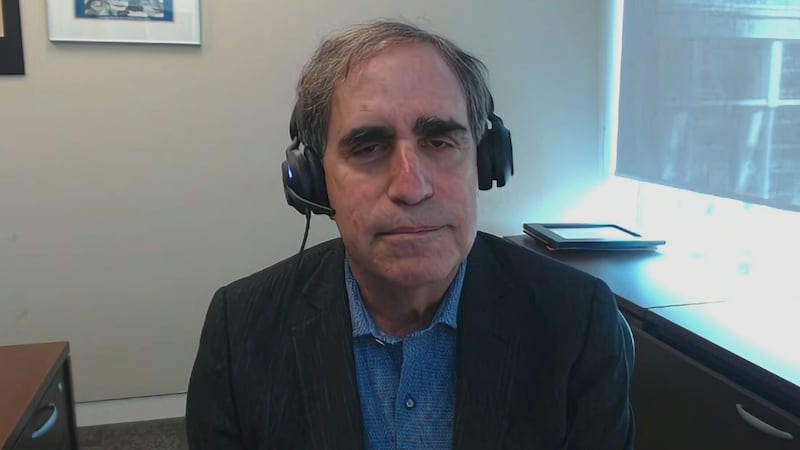
Read the full transcript below:
ROGER: Well, the Canadian economy edged into a technical recession in the first quarter of 2026 as weak business and government spending drove a slight contraction. Let’s get perspective on this from Avery Shenfeld, managing director and chief economist at CIBC Capital Markets. And Avery, thank you very much for joining us. It is a technical recession, but it’s pretty close, isn’t it?
AVERY: Yes, we don’t tend to actually sort of define a recession until actually a little bit past this sort of point in time. You want to see revised data and so on. For example, we did see that the 2025 growth rate for the year as a whole did get revised up a bit, so you don’t issue these declarations right away. But we have seen an increase in the unemployment rate as well, so this may end up being called a recession at the end of the day. We’ll wait and see the final numbers when they come out in a while.
ROGER: Okay, the annualized negative 0.1 per cent, and the Bloomberg median estimate was 1.5 per cent. That’s a big miss. How concerning is that?
AVERY: Well, what it tells you is that the industry-level GDP data that we were tracking got revised a bit, so the pattern wasn’t as strong going into this March reading for that monthly number as we would have thought. And so it looked like that GDP-by-industry series was going to come in at around 1.5 per cent, but with all the revisions and the disappointing March, it actually showed some slight growth, but not nearly as much as expected. And really, what this is telling you is that we’re still struggling, and we knew that already with what was happening in the labour market, what was happening in the export sectors, particularly those hit by tariffs like auto, steel and so on. So it’s not a huge surprise that the Canadian economy is struggling, but it’s certainly disappointing that we’ve now had a couple of quarters with some slippage here.
ROGER: And are the tariffs really finally biting? Is that what that is?
AVERY: I think that’s a part of it, and certainly that’s part of the story going back over the past year, is that our export performance has been weak, and we did see that again in these first-quarter numbers. Weakness in exports was part of the story. There are other moving parts here. Business capital spending has also been quite weak, and I think that may also be tied up with the tariffs, in the sense that if you’re worried that your industry could be the next one hit by the Trump administration, you’re going to be reluctant to build a plant in Canada if the target market is the U.S. So we’ve seen weakness on that front. And then there’s a whole separate story, which is a made-in-Canada story, which is the weakness in our housing market. And again, in the first quarter, weak home sales meant that real estate agents weren’t making money; they count in GDP. So we also had another decline in the residential construction component. Consumer spending was one thing that did grow, but elsewhere it looked like a pretty sluggish report.
ROGER: And when you look at all those other numbers you were just talking about and then see consumer spending growing, does that surprise you, or are there solid reasons for it?
AVERY: Well, it is interesting that consumers are actually digging into their savings a bit, so the savings rate dropped. People were spending a greater share of the money coming in, and that may reflect the fact that investment portfolios have done pretty well. So people may feel that if they’ve made money on stocks, for example, they don’t need to put more of their money into savings; they can actually spend a little more. It is a bit concerning, though, looking ahead in the upcoming months. We have this squeeze from higher gasoline prices. That does suggest that consumer spending might struggle a bit in the second quarter. The only good news we got on that front is that the first estimate of April GDP was a 0.4 gain. That’s a healthy start to those GDP-by-industry numbers for the second quarter, so it may indicate that we’re due for at least some growth in that quarter. But it all adds up to an economy that isn’t really where we want it to be, and I would blame the weakness in housing and the trade tensions that are hitting both exports and investment for the major part of that story.
ROGER: And also, I believe defence spending was off, and that might have thrown this for a loop too.
AVERY: Yeah, so these numbers will seesaw. If the government orders major defence systems in a given quarter and then the next quarter doesn’t, it shows a drop there. So government spending was, in general, weak as well in the first quarter. I don’t think we’re going to see that as an ongoing story for the economy, but it did impact these first-quarter numbers.
ROGER: All right. And where does this leave the Bank of Canada? What does the Bank of Canada do with these numbers?
AVERY: Well, the interesting thing is the market has been pricing in some odds of the Bank of Canada raising rates at some point this year to respond to the energy inflation, and there’s really been two blows to that sort of thought. I never joined that view. I thought the economy was far too weak for them to consider that, and this only adds to that. And of course, if we are in fact getting closer to some sort of deal to reopen the Strait of Hormuz, then some of that inflation pressure that the Bank of Canada was worried about will disappear, at least over the next year or so. So I think at the end of the day, the Bank of Canada is going to sit tight here. They’re not going to respond to the uptick in inflation from energy prices if that’s temporary. And if anything, it does mean that if we get a quick end to this conflict and oil prices come down, there is still room for the Bank of Canada to think about cutting interest rates. My view is they want to wait to see how these trade talks go before they would make that sort of judgment. If we don’t get hit by additional tariffs or get some relief from the Trump administration on those that have already been imposed, that might be enough to keep the Bank of Canada in a stand-pat position. So our current forecast is no move at all from the Bank of Canada for the foreseeable future. Maybe in mid-2027, if the economy improves enough, they could even think about hiking rates, but it’s a long way off for now. And I think the market is going to rethink that idea that they could be hiking this year.
ROGER: Okay, we have to wrap it up there, Avery. But thanks, as always, for joining us. Appreciate it. Have a great weekend.
AVERY: Same to you.
ROGER: Avery Shenfeld is managing director and chief economist at CIBC.
---
This BNN Bloomberg summary and transcript of the May 29, 2026 interview with Avery Shenfeld are published with the assistance of AI. Original research, interview questions and added context was created by BNN Bloomberg journalists. An editor also reviewed this material before it was published to ensure its accuracy and adherence with BNN Bloomberg editorial policies and standards.

