Artificial intelligence infrastructure spending continues to drive demand across the technology sector, with companies tied to servers, semiconductors and customized AI chips benefiting from the ongoing buildout.
BNN Bloomberg spoke with Michelle Connell, president and owner of Portia Capital Management, about Hewlett Packard’s earnings, opportunities in technology, utilities and commodities, and the companies she is watching during a busy week of earnings reports.
Key Takeaways
- Hewlett Packard’s strong quarter reinforces that demand for AI infrastructure remains robust beyond the industry’s largest players.
- AI spending is expected to continue for years, supporting opportunities across servers, semiconductors, software and customized chipmakers.
- Broadcom remains well-positioned because of its focus on customized AI chips, while software companies may benefit as AI adoption broadens.
- Utilities are emerging as a secondary AI investment theme because growing data centre demand is increasing power needs.
- Commodities remain attractive as persistent inflation and higher transportation costs continue to pressure consumers and businesses.
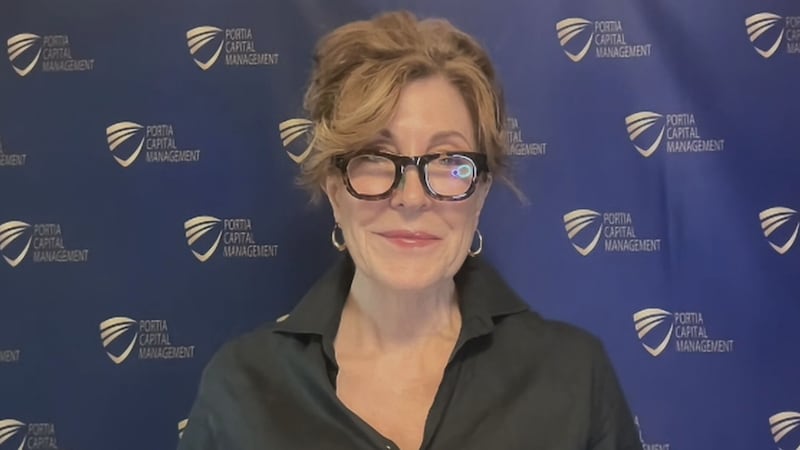
Read the full transcript below:
LINDSAY: Shares of Hewlett Packard are surging after reporting blockbuster second-quarter results. Revenue was up 40 per cent from a year ago, and the server maker bumped its full-year EPS guidance by a full dollar. Let’s get reaction now from Michelle Connell, president and owner of Portia Capital Management. It’s great to have you join us. Good morning.
MICHELLE: Good morning, Lindsay. Thanks for having me.
LINDSAY: Were you surprised by these results that we saw from Hewlett Packard?
MICHELLE: You know, I was, but I shouldn’t have been, because I’m an owner of Dell, and Dell blew the doors off its earnings last week. So I really shouldn’t be surprised, because Hewlett Packard is No. 2 in terms of servers. So it makes sense, right, that if they can sell AI servers, they’re going to benefit as well.
LINDSAY: Right. Because I was going to ask you, where does Hewlett Packard fit into the AI buildout, but I guess it’s in terms of manufacturing servers?
MICHELLE: Yes, it does. They do other servers, and they also have a retail or PC side, just like Dell does. But the difference is that I don’t see the partnerships for Hewlett Packard that some of the other AI server players have, like Dell. But what I thought was really interesting was that their CEO said that Hewlett Packard’s pipeline, or the orders behind the pipeline, is many multiples of their backlog of $7 billion. Their AI server sales this quarter were growing at a triple-digit rate over the previous year, so they’re benefiting as well.
LINDSAY: It’s interesting, though, with all of that in mind. You mentioned you don’t see the partnerships that other companies are forming at this time. Why is that, or is it just a matter of time before we see partnerships for this company too?
MICHELLE: Everybody is realizing that they have to have some sort of partnership, whether it’s a software company or a SaaS company. Those have been hurt, so they’re reaching out and having partnerships with Nvidia, et cetera. Also, because the buildout takes so much money, we’re looking at another $2 trillion this year and potentially another $8 trillion between now and 2030. That’s a lot of money. So these partnerships are necessary if you’re going to need a lot of capital to deploy.
LINDSAY: How has the AI buildout affected your investment strategy?
MICHELLE: Well, I’m biased, Lindsay, because I started out as a semiconductor analyst in 1998, back in the day. I cut my teeth on these names, so I’ve held a fair number of semiconductor stocks. I was fortunate enough. I’d rather be foolish than smart is kind of the saying sometimes. I own Dell, and I bought that in December and did well. I’ve also been weighing in on some of these SaaS or software names because they’ve been so beaten up. We’re starting to see that, yes, we are going to need software as well as hardware for an AI buildout, so you’ve seen some of those names play out and get some attention too.
LINDSAY: There are obviously some other companies reporting this week, and today Palo Alto is one of those that you’ve got your eye on. What are you watching for there?
MICHELLE: I hope that they also have great numbers, for their sake, because the stock is up 52 per cent year to date. It’s now at a forward P/E of almost 80, meaning that you’re paying 80 times next year’s earnings. They also recently acquired CyberArk, so they have a lot to show their shareholders because there’s been such an interest in them and you’ve had this rally. So they better show that they’re worth it.
LINDSAY: Ulta is another one that is reporting a little later today. It’s down 16 per cent year to date. What are you going to be watching for there?
MICHELLE: I want to see if their traffic has picked up. They’ve been losing their competitive edge, and I also think customers or consumers, even if it’s something like discount cosmetics, are cutting back. But the good news for Ulta is that discounters are where you’re going to go first as a client if you need those types of things. So they need to get more customer share, and they also need to get their costs under control. I think part of that is how much more we’re having to pay, not only as consumers but as companies, for transportation. It’s more expensive to ship your goods, and Ulta is affected by that too.
LINDSAY: You’re also watching Broadcom report earnings tomorrow. The company is getting a boost today in the premarket because of some things the Nvidia CEO said, as well as plans from Alphabet. What are you watching for from Broadcom tomorrow?
MICHELLE: Full disclosure, I own it in my portfolios, and I’ve owned it for a while. I like this stock, even though it’s up 30 per cent year to date, because it’s still cheap on a forward price-to-earnings basis at less than 40 times. What’s interesting about Broadcom is that its focus has been on customized AI chips. So if you’re somebody who needs something specific to your company, this is where you’re going to go, versus Nvidia, which is more of a GPU or generalized semiconductor provider. I think customization is what’s really helping Broadcom, so I expect them to do well and raise guidance too.
LINDSAY: Other than technology, where else are you finding areas of opportunity right now within the market?
MICHELLE: On the other side, I like utilities because utilities are benefiting from the data centre buildout. There are some out there that are still pretty inexpensive, and they usually pay a dividend. That’s a nice way to balance out the hypergrowth of your technology names in your portfolio. Commodities will continue to be of interest to me too because inflation doesn’t seem like it’s going to go away anytime soon.
LINDSAY: Okay, we will leave it there for now. Michelle Connell, president and owner of Portia Capital Management. Always good to have you on. Thanks so much.
MICHELLE: Thank you, Lindsay.
---
This BNN Bloomberg summary and transcript of the June 2, 2026 interview with Michelle Connell are published with the assistance of AI. Original research, interview questions and added context was created by BNN Bloomberg journalists. An editor also reviewed this material before it was published to ensure its accuracy and adherence with BNN Bloomberg editorial policies and standards.

