Canada and the United States are continuing discussions ahead of the July 1 CUSMA review deadline, but expectations are growing that negotiations will extend beyond the date as both countries work through unresolved trade issues and tariff disputes.
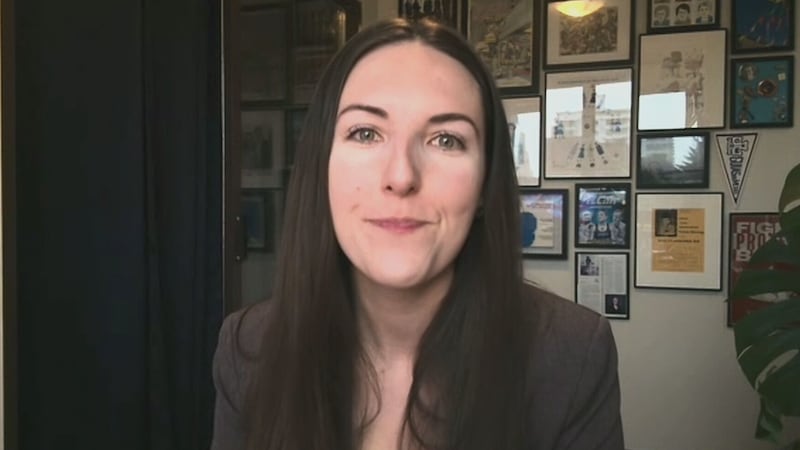
BNN Bloomberg spoke with Diamond Isinger, former special advisor to Prime Minister Justin Trudeau on Canada-U.S. relations, about the significance of recent meetings between Canadian and U.S. officials, the evolving timeline for the CUSMA review, and the broader push for long-term trade certainty across North America.
Key Takeaways
- Recent meetings between Canadian and U.S. officials are viewed as a positive sign that discussions on CUSMA are continuing despite limited concrete outcomes.
- The July 1 review date remains important, but the focus has shifted toward demonstrating progress rather than reaching a final agreement by that day.
- Canada continues to advocate for a long-term renewal of CUSMA to provide businesses with greater certainty and avoid recurring renegotiations.
- Separate U.S.-Mexico discussions are not necessarily a sign Canada is being sidelined, as each country faces different trade issues and priorities.
- New U.S. tariff proposals, including measures tied to forced labour concerns, add another layer of uncertainty to ongoing North American trade negotiations.
Read the full transcript below:
ROGER: Federal Cabinet Minister Dominic LeBlanc met with U.S. Trade Representative Jamieson Greer yesterday in Washington. This comes as the two countries hurtle toward the July 1 deadline for the North American free trade pact that is less than a month away. So, here to talk about the meeting and the state of CUSMA, as well, is Diamond Isinger, former special advisor to PM Trudeau on Can-U.S. relations. Diamond, thanks, as always, for joining us.
DIAMOND: Thanks for having me this morning.
ROGER: Was that trip yesterday worth it?
DIAMOND: I think it was. The government has made very clear all along to the U.S. administration that they’re eager and willing to have any conversation at any time that the U.S. is game, and that’s what they did yesterday, in anticipation of additional followups that will need to happen over the coming weeks ahead of this long-anticipated July 1 deadline, however firm that ends up being.
ROGER: What do you think of his call, LeBlanc, that we have a 16-year deal, we’d like to see it go 16 years? Who’s that playing to?
DIAMOND: Yeah, it’s consistent with the commentary that the Government of Canada has made all along, which is that CUSMA serves the three countries very well. It is helpful for business and investment stability to have a renewed agreement for the long term, not to get into some sort of annualized cycle, for example, of reconsideration of this agreement, and it plays to, I think, increasing some urgency on the United States to take some action here, with them being the partner that we are most waiting for, the willingness to sit down and have proper conversations with, and also to stakeholders across the continent, including business leaders who can hopefully exert some additional pressure on the U.S. administration that will resonate far more than the Government of Canada saying that same thing.
ROGER: And with the meeting, should we take something from the fact they got together? I mean, we heard Trump afterwards calling 51st state again, but should we take something from the fact they actually did sit down?
DIAMOND: Absolutely. It’s very positive that they had that opportunity to interact. While brief, it’s a little bit awkward, of course, because the U.S. trade representative was heading off on a trip internationally that I believe he left for last night or early this morning. He’s going to encounter in that trip abroad another Canadian trade minister, Maninder Sidhu, so perhaps they’ll have the opportunity to have some brief conversations on the margins of some international meetings. But it’s always positive when we can have those conversations face to face in the room together, particularly because the bluster or the rhetoric or jokes about annexation on Truth Social, for example, are actually the outlier here. Most positive is when Canada and the U.S. can have working-level constructive conversations face to face, relate our interests to each other, figure out some common ground and ways to move forward, away from media and social media.
ROGER: It’s been kind of nice. We haven’t heard that comment in a while, so that part’s been nice. Now, of course, there’s negotiations going on with Mexico as well. Are we in this, like, “Oh my goodness,” like it’s almost like we’re dating the U.S., they’re talking to Mexico more than they’re talking to us. Should we be worried?
DIAMOND: Oh, in that metaphor, I’m not so sure. I mean, back in 2017 and 2018, this was also the case. Actually, we had very formal trilateral renegotiation talks going on in these rounds that took place throughout North America over the course of about 18 months. But at different points, there were actually bilateral conversations that did happen separately between all of the parties, including the U.S. and Mexico. Those at times seemed to be operating on a different track, perhaps faster or with more progress. I don’t take that as a deal breaker, though, for the possibility of getting to this renewed CUSMA with the three countries involved because Mexico and the U.S., as the prime minister has said, as many commentators would observe, they have their own unique issues. There are many issues, including, as you may ask about in this conversation, last night’s new forced labour tariffs that came out from the United States. We have very different labour realities, for example, in Canada versus Mexico, very different workforce realities, very different dominant industries. And so I think it makes sense for Mexico and the U.S. to have those conversations, but with the goal of getting to the table, all three together, very shortly for a formalized review.
ROGER: And I wanted to get your thoughts, actually, on that, that we’re actually facing that tariff, the forced labour tariff. Is that just a play, or is it legitimate?
DIAMOND: Forced labour is not an issue in the sense that it’s important that countries take action. Canada has previously had legislation that was introduced and passed to take action in this regard. I understand from your coverage the prime minister has just made some comments indicating that Canada is willing and able to take additional action. But really, this is yet another endeavour by the U.S. administration, and particularly the president and the U.S. trade rep, to essentially replace the tariff regime that was in large part struck down by the Supreme Court with a patchwork of other tariff possible avenues to see what is durable. They were told essentially that their prior approach was not legal and that they couldn’t proceed in that way, and so we’ve seen a number of other tariff issues come forward in recent days and weeks as they try to replace that with this new set of options.
ROGER: All right, last question. We’re almost out of time. But July 1, carved in stone?
DIAMOND: No, absolutely not. If you had asked that question a few months ago, perhaps the answer might have been different. We have this deadline that actually is from the agreement itself. It makes reference to July 1. It’s not a deadline that media or stakeholders or government made up independently. It has existed all along, but the urgency of actually resolving this issue by that date versus instead making progress and signaling our clear intentions, that is the piece that has shifted. I think it does provide some useful pressure, though, as if there wasn’t already enough inherent economic pressure for the three countries to come to the table to have those conversations. But I think the real-time pressure this year is really going to be in and around the U.S. midterms, as the U.S. administration continues to feel pressure under the rise in cost of living of goods across the United States, job losses, et cetera, that are influenced by tariff pressures, and hopefully getting to a solution.
ROGER: I got to wrap it up there, Diamond. But thank you, as always. Always a pleasure talking to Diamond Isinger, former special advisor to PM Trudeau on Can-U.S. relations.
---
This BNN Bloomberg summary and transcript of the June 3, 2026 interview with Diamond Isinger are published with the assistance of AI. Original research, interview questions and added context was created by BNN Bloomberg journalists. An editor also reviewed this material before it was published to ensure its accuracy and adherence with BNN Bloomberg editorial policies and standards.

