Investors face an unusual mix of geopolitical and market risks as uncertainty around Iran collides with shifting bond dynamics and anticipation surrounding a potential SpaceX IPO. Mark Sebastian says both an escalation in conflict and a move toward peace could create challenges for equities through different channels.
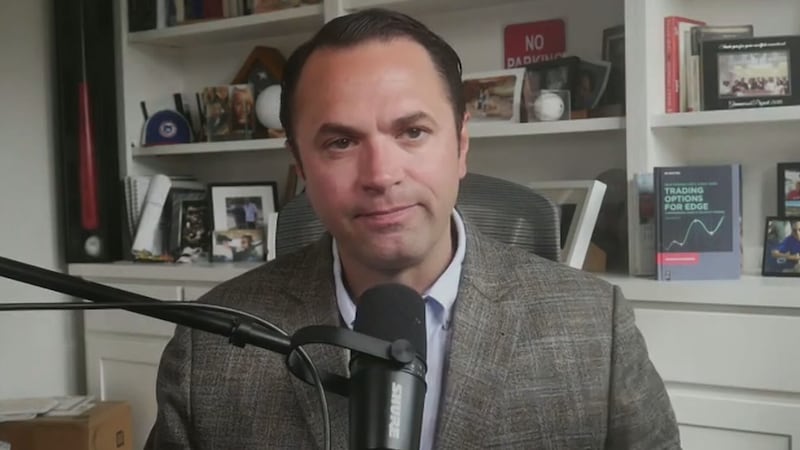
BNN Bloomberg spoke with Mark Sebastian, founder of Option Pit and chief investment officer at Karman Line Capital, about the outlook for oil, bonds and stocks, as well as opportunities he sees in industrial, energy and technology names.
Key Takeaways
- Both a renewed conflict with Iran and a peace agreement could create headwinds for equities, though through different market mechanisms.
- A peace-driven bond rally could encourage investors to rebalance portfolios away from stocks and back toward fixed income.
- A potential SpaceX IPO could attract significant capital and weigh on related sectors as investors shift funds toward the offering.
- Higher oil prices resulting from renewed conflict could pressure bonds and stocks by pushing yields higher and tightening financial conditions.
- Sebastian highlighted Deere & Company, Intel, Exxon Mobil and Chevron among his preferred investment ideas.
Read the full transcript below:
ROGER: Well, the tensions in Iran have been weighing on the markets. My next guest says either conflict or calm would likely bring their own challenges for investors. Layering events like a SpaceX IPO, the question becomes whether the market is vulnerable to a broader rollover. Let’s get more from Mark Sebastian, founder of Option Pit and CIO of Karman Line Capital. Mark, thanks very much for joining us today. An interesting day. Gold’s down, oil’s down, markets are down. Your thoughts? And then we’ve got concerns. It feels maybe people are actually concerned about what’s unfolding in Iraq.
MARK: Yeah, I mean, we’re kind of at a spot where, if you told me next week this ceasefire deal was passed and, you know, the strait was starting to open up, I would believe it. Even if you told me things had completely blown up and we were bombing Iran again, I would believe that as well. It’s, you know, you just shrug your shoulders at this point because, you know, on one hand, we have ceasefire talks continuing, and then we’ve got an escalation of bombing overnight, and either way they bring their own challenges.
If we do see a reignition of war, you’re going to see oil prices start to pop, and you’re going to see bonds have, you know, I think they’re going to take a lot of pain. That is going to be very bad for financial markets as bond yields start to get higher and higher. We see the S&P, the Qs, worldwide markets start to correlate with U.S. Treasuries. That becomes a problem.
But a peace deal doesn’t necessarily mean that markets are going to go straight up. Talking to a lot of advisors, they’re not in the current 60/40 normal that you would see out of, you know, a standard long-term retirement account. A lot of them are leaning 70/30, 65/35, and with good reason, right? Look at the run the markets have had.
If we get peace and oil starts to come off, that takes pressure off the need to get dollars to buy oil, and you start to see the bond market rally. With two-years sitting around four per cent, you’re going to see financial advisors, hedge funds and asset managers look and say, “Hey, maybe I should be rebalancing a little bit more toward bonds because it looks like they’re going to get a rally.” That actually could put some pressure on stocks.
Yet in the SpaceX IPO, which I think a lot of people are excited about, that could become a little bit of a market vampire, kind of sucking all the wind and energy out of the market except for SpaceX. So you get money moving into bonds and then moving into SpaceX at the same time. You could see softness in space stocks, and that could spill over into the Nasdaq 100 as well.
ROGER: Okay, a lot there. Going back, let’s talk oil first. If this flares up again, the conflict, will we see the reaction in oil people were talking about, $150 a barrel? Will we see that actual reaction? Because they’ve drawn down the reserves. A lot of places are running low on reserves now. Could you see that unfolding?
MARK: I mean, look at the price action over time. It’s not like oil has been absolutely tanking on this news. It is very, very hesitant to get a major selloff. And, you know, in North America we’re not going to see the real pain, but in Europe and Asia it becomes a real problem.
You will see WTI back over $100. You’ll see a big pop in Brent. And yeah, that again will put pressure on U.S. Treasuries, which then puts pressure on the stock market. So it’s kind of a waterfall effect. You go from oil — you need cash for oil. How do you get cash? You sell bonds. Bond market selling off puts pressure on the stock market. Stock market rolls over.
ROGER: All right. And talk a little bit about SpaceX. What if they don’t get the interest? I mean, I’m assuming they will, but what if they don’t get the interest? What does that tell people?
MARK: That would tell people that a $1.75-trillion IPO is maybe a little bit rich for our blood right here. When you look at the IPOs that are out there, Anthropic is likely going to IPO at over a trillion dollars. ChatGPT wants to do some — OpenAI wants to do something similar.
It’ll maybe make the market rethink its appetite. The last time I saw IPOs this exciting was, I think, Facebook, now Meta. Initially Meta did get a big pop, but then pulled back some.
Similar to what we’re seeing in space stocks like Lunar, ASTS, Rocket Lab — I could go down the list — they’ve all gotten a big rally ahead of this SpaceX IPO. I expect them to come off dramatically as money probably rolls out of the ancillary exposure to SpaceX and into SpaceX itself.
Similar to what we saw leading into the Facebook IPO. People were excited about Zynga, which was at the time the biggest Facebook app because you could play Words With Friends on Facebook. That thing had a nice run into the Facebook IPO and then, you know, it has never been seen since.
Not saying that’s going to happen to space stocks, but that’s an extreme example of what we might be seeing here.
ROGER: All right. I want to get, before we run out of time, some stocks you like. Let’s start with Deere. You’re liking Deere right now.
MARK: Yeah, that is an AI infrastructure play. You know, they had weak earnings because farming has been under pressure. A lot of people don’t realize that a lot of fertilizer comes out of the Middle East, a lot of ammonia, and that is creating some problems for farmers and farming equipment.
But a lot of people also don’t know Deere does heavy machinery on top of farming equipment, and there is real demand for heavy machinery for this data centre buildout. You’ve seen the move in Caterpillar. I think Deere is a name that will catch up with Caterpillar, and with this selloff post-earnings, I think it’s an opportunity to play from the long side up to $600.
ROGER: All right. And I know you like Intel, but I want to talk about Exxon Mobil and Chevron kind of together. Oil has taken a bit of a beating with everything that’s unfolded, but do you see an opportunity there?
MARK: Absolutely, especially if there is some sort of ceasefire and these names come off. There’s kind of a sweet spot for oil. A lot of people think Exxon makes the most when oil is at $150 or the higher it goes. Not necessarily true.
There is a sweet spot where you allow for demand growth and margins on that barrel of oil are at their highest. That sweet spot for energy companies is somewhere between $75 and $85 a barrel.
Even with the ceasefire, I don’t think we’re going to be seeing sub-$75 WTI for 18 months, two years, maybe longer. Exxon, Chevron, the full-stack energy companies, they are going to make a killing if demand stays where it is or continues to grow and they’re able to sell that oil at about $80 a barrel.
The runway on those, post-selloff on any ceasefire, I think is going to be high. I think we’re going to be talking about them well above their Iran conflict highs six months after any ceasefire.
ROGER: Okay, we have to wrap it up there, Mark. But thanks very much for joining us.
MARK: Thanks for having me.
ROGER: Mark Sebastian, founder of Option Pit and CIO of Karman Line Capital.
---
This BNN Bloomberg summary and transcript of the June 3, 2026 interview with Mark Sebastian are published with the assistance of AI. Original research, interview questions and added context was created by BNN Bloomberg journalists. An editor also reviewed this material before it was published to ensure its accuracy and adherence with BNN Bloomberg editorial policies and standards.

