Rising oil prices, new U.S. tariffs and continued enthusiasm for artificial intelligence are shaping investor sentiment as equity indexes remain near record highs despite mounting geopolitical and economic risks.
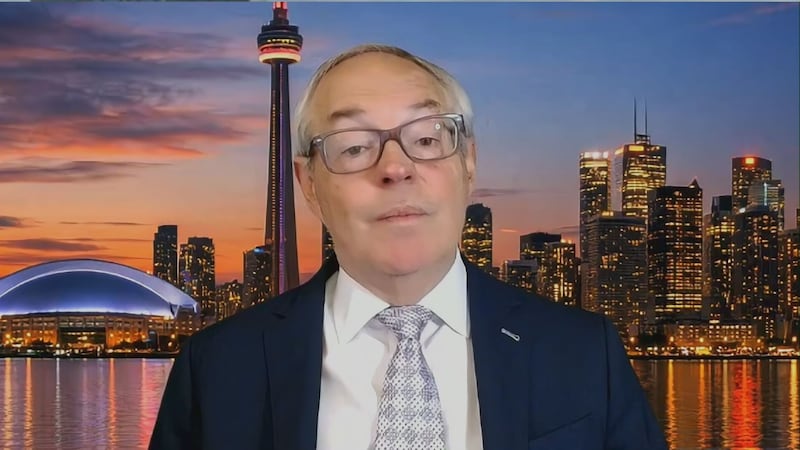
BNN Bloomberg spoke with Lyle Stein, president of Forvest Global Wealth Management, about the impact of higher oil prices, tariff uncertainty, AI-related investment trends and where he sees opportunities in the current environment.
Key Takeaways
- Equity markets continue to be supported by strong earnings, low interest rates and fear of missing out among investors.
- Sustained oil prices near US$90 a barrel could pressure consumers, slow economic activity and challenge corporate earnings expectations.
- New U.S. tariffs add costs and uncertainty to the global economy, with the ultimate impact depending on exemptions and implementation details.
- Investors are rotating within the AI sector, with memory-chip makers attracting interest alongside established leaders.
- Questions remain about whether planned AI infrastructure spending and data centre construction can keep pace with industry expectations.
Read the full transcript below:
ROGER: Okay, U.S. markets are seeing some pressure as the U.S.-Iran ceasefire is strained, driving up the price of oil. All this comes as U.S. President Donald Trump announced a new wave of tariffs on 60 countries around the world. Joining us to unscramble all this is Lyle Stein, president of Forvest Global Wealth Management. Lyle, thanks, as always, for joining us.
LYLE: Good morning, Roger.
ROGER: Just another day in the United States right now. Which one shall we talk about first? We talk about the markets and where they’re going. They’re all essentially in record territory right now.
LYLE: Yeah, so markets basically want to go up. There is just this momentum trade. There’s a fear of missing out. There’s just a sense that, you know, everything is great, and so let’s go buy stocks. You know, it kind of reminds me of the days of years gone by when we used to talk about TINA — there is no alternative — and that’s kind of the environment we’re in. Interest rates are static and low, so money is going into equity markets, and that’s what’s driving every market in North America, you know, essentially around the world, to new highs.
ROGER: And are the earnings solid enough to justify it?
LYLE: The earnings are great. You know, the first-quarter earnings came in much better than expectations. Now, some of that was GAAP — generally accepted accounting principles — that allowed some of the tech companies to see a big bump from their holdings in revaluations of the tech shares that they own. But the reality is, right across the board, earnings have been strong, margins have been good, revenue expectations were beat. It’s been a great environment to see earnings. The question is not what happened, though. It’s what are you going to do for me going forward?
ROGER: And I think that’s a big question. And I think, is oil finally coming in to be a factor? Everybody’s just kind of placed it in a spot. There’s going to be a resolution. We’re now hitting three months into it. Reserves are being drawn down. Summer driving is coming. Is it a legitimate concern now?
LYLE: Well, you know, it’s oil and tariff day today, right? And so, when you look at the imposition of the tariffs, that’s a tax increase. When you look at what happened with respect to the Iranian conflict, Iranian war, oil prices have had a 50 per cent tax put upon them. The $60 oil is now $90 oil, and that’s not good for anybody. And so clearly it’s having impact expectations when it comes to earnings. You know, I think as we go through the Q2 earnings reports that will come out starting, you know, mid-July, it’ll be a much different story than what we heard because I think most people are expecting the war to be resolved, prices to fall back to $60, $70 a barrel, and it’s just not happening. And so, as that gets cooked into people’s expectations, I think we could see some dislocation going forward.
ROGER: And what, how big a dislocation?
LYLE: Well, that’s the wild card. And, you know, when we look at the global economy today, we’re always thinking about the K-shaped paradigm. You know, the fact is that if you have assets, if you have investments, if you’ve got a job, you’re on that upward swing in the K and, frankly, you’ve been immune from the oil price increase, you’ve been immune from cost increases generally. But if you are on the downward shape of that K, if you’re worried about your job, if you don’t have a house, if you don’t have investments, it’s been a very tough period. And so, as we go into the summer, those who need to travel, those who want to fill their car, won’t be able to spend, and that’s going to have economic implications that I think we haven’t really given full thought to because we discounted the end of the Iranian war.
ROGER: All right. And then you mentioned tariffs, more tariffs being announced today. They’re not going into effect yet. There’s going to be — they want to have reviews of it before anything goes forward. What kind of an impact will it have? And is this one that’s going to stick, do you think?
LYLE: Well, remember that we lost Trump’s first round of tariffs with the Supreme Court decision back early in the first quarter that was replaced by a 10 per cent across-the-board tariff that had a limitation that ends in July. And so this 301 tariff that he announced last night is just an extension of the 10 per cent that’s on everybody that he was able to do. 301 requires discussions and consultations and what have you. So, we’ll have to see how it shakes up. But right now, that 10 per cent tariff is being charged. But then there are exceptions, and the question always is, what are the exceptions? Which industries are going to be immune from these tariffs? Because that’s important, particularly as we go into an election period. You know, you think of the farmers in the U.S. Their diesel prices are higher, their fertilizer prices are higher as a result of the Hormuz tariff. They’re not happy. And so, you have to think, like, what the consequences are. And I think as we go through these summer months, the consequences are going to come home to roost.
ROGER: All right. And with all this unfolding, we didn’t really get into AI, but what are some of the companies you’re looking at that look like they might hold up through everything that’s unfolding right now?
LYLE: Well, this is a tough one because, I mean, they go up and down, you know, more than a toilet seat, so to speak. The AI stocks have been the place to be. There’s just no question. But now you’re starting to see some rotation. You know, I think the big thing in the AI trade, as it’s called, is look at Nvidia. You know, despite being a $5-trillion behemoth, the stock really hasn’t done much since November. There’s been a great rotation from shares like Nvidia into the Microns, the memory makers, or the next chip to come along the line. You know, Broadcom is having a nice run in here because its chips are going to go into phones that are manufactured by — I forget the name. I mean, the playing field changes.
But the big question on AI is, are we going to actually see the spending? You know, The Wall Street Journal had an article yesterday that the capital spending plans that have really driven the economy are coming under suspicion because the data centres, which have driven all this, they’re just not building them fast enough because of capacity issues with respect to generators, because of electricity supply. You know, will this massive amount of spending actually take place? And that’ll hit the chip companies as well as it does everybody.
So, you know, it’s fun, it’s great. You’ve got to kind of be there. You talk about FOMO in markets in general, it’s in the AI trade. So, you know, we own Google. We think it’s well-positioned. You know, they raised $80 billion. That’s kind of like what Musk is going to raise in SpaceX or Anthropic or OpenAI, and it kind of went out the door easily. Stock was hit only three per cent. We own Micron. We like the memory-chip trade. We think that’s a great space. We also own the Korea ETF to participate in the memory-chip play through Samsung and Hynix, which are hard to buy as individual names. So, I mean, we’re playing memory, I guess, in the AI world today, as well as natural gas. That’s been a theme that we’ve been on for a long time.
ROGER: All right, we have to wrap it up there, Lyle. Thanks, as always, for joining us.
LYLE: Take care, Roger. Have a good day.
ROGER: Cheers. You too, Lyle Stein, president of Forvest Global Wealth Management.
---
This BNN Bloomberg summary and transcript of the June 3, 2026 interview with Lyle Stein are published with the assistance of AI. Original research, interview questions and added context was created by BNN Bloomberg journalists. An editor also reviewed this material before it was published to ensure its accuracy and adherence with BNN Bloomberg editorial policies and standards.

