The recent pullback in AI-related stocks following Broadcom’s earnings highlights the challenges investors face in balancing enthusiasm for artificial intelligence with concerns about valuations and market expectations. Despite near-term volatility, the broader AI infrastructure buildout continues to support long-term investment opportunities.
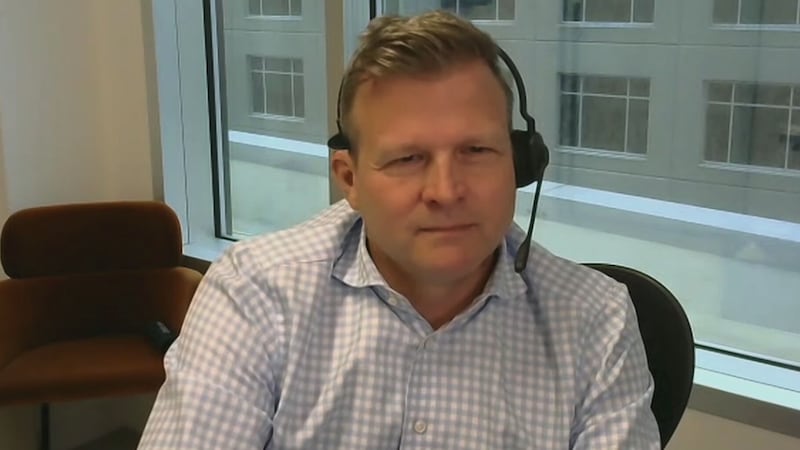
BNN Bloomberg spoke with Steven Rowles, senior portfolio manager at TriVest Wealth Counsel, about positioning portfolios for continued AI-driven capital spending while maintaining exposure to energy and infrastructure assets that can help protect against persistent inflation.
Key Takeaways
- Broadcom’s selloff reflects elevated investor expectations rather than weakening AI demand, with semiconductor revenue growth and long-term forecasts remaining strong.
- AI infrastructure spending continues to accelerate as technology companies invest heavily in chips, data centres and related capacity to meet demand.
- Taiwan Semiconductor offers broad exposure to AI growth by manufacturing advanced chips used across the industry, including for Nvidia, Broadcom and other technology leaders.
- Energy producers and pipeline operators can provide inflation protection through cash flow generation, real assets and exposure to rising energy demand.
- Investors may benefit from balancing AI growth opportunities with cash-flow-generating assets rather than concentrating portfolios in a single theme.
Read the full transcript below:
LINDSAY: Investors are hitting pause on the AI trade after Broadcom’s earnings failed to impress. Let’s get some perspective and some ideas on how to navigate the AI trade and where to find opportunities. Joining me now is Steven Rowles, senior portfolio manager at TriVest Wealth Counsel. Good morning, it’s great to have you.
STEVEN: Hi, Lindsay.
LINDSAY: Hi. So first of all, let’s get your thoughts on the pullback following Broadcom’s earnings results. It seems to be affecting the broader markets in total.
STEVEN: Yeah, it’s a big pullback. It’s not affecting the overall markets dramatically. It’s more of a one-off. Really, it comes to the point that the earnings were actually pretty good in the semiconductor AI space. Actually, their revenues increased by close to 80 per cent, so everything was good on the beats for earnings and revenue. It’s more on the outlook for the rest of the year. They came up with expectations of $56 billion, where the market was looking for something closer to $58 billion, so it really dampened the mood a little bit. But overall, it’s still quite a positive view for the company in the way that their outlook for fiscal 2027 is at revenues of $100 billion. So while it’s a big drop, we’ve got to look at the fact that since March it was hovering around $300, got close to $500, and now we’re back down to $400. So it’s really a state of this AI move continuing to be lumpy here.
LINDSAY: Yeah, because, I mean, still, Broadcom — I take your point that earnings were not actually that bad at all. It’s just kind of falling short of expectations, like really high expectations. Broadcom is down more than 15 per cent today, though. So do you think investors are maybe overreacting a little bit, or is this a correction that needed to happen?
STEVEN: I don’t consider it a correction. I mean, we saw something similar, not as dramatic, but with Nvidia when their euphoric results came out as well. So it’s just a situation of what’s happening in the market right now. It’s not so much about them beating or missing earnings looking back. It’s more on the forward guidance. But the market is really, you know — I think some of this comes from the CEO of Taiwan Semiconductor, who also mentioned today that the demand is too much and that the AI chip makers are not going to be able to fully meet the demand. So with that as a problem, it’s actually quite a positive for the market when you think about it. There’s so much demand for these chips that the revenue backlog continues to build. So missing consensus on forward guidance for 2026 is just a new sort of element that we’re looking at in the market. So I’m still optimistic on the overall AI build.
LINDSAY: Okay, okay. So, and you say Broadcom is not affecting the overall markets today. We’re seeing the S&P 500 and the Nasdaq both down after reaching some record highs recently. What are your thoughts on what we’re seeing today in terms of those markets? Why are they down, do you think?
STEVEN: Well, yeah, definitely. There’s some questioning, there’s some profit-taking, but overall, you know, the market has been on a big tear this quarter. Days like today pull back a little bit. It’s sort of a slower time for earnings, so the market is just taking a breath right now, which, in effect, is quite healthy. But, you know, if one stock is down 15 per cent and the S&P is down just 20 basis points, broadly speaking it’s still quite a positive day. Good news out of the geopolitical space continues to be as volatile as the AI space. So we’re in a very interesting time right now. But the market overall still has a lot of tailwinds behind it, and the number one tailwind is AI industrialization. This is a real industrialization capex spend that has continued to be a big tailwind for the market here.
LINDSAY: Aside from AI and tech, do you think investors are overlooking other opportunities right now?
STEVEN: Well, yeah. I’m sort of looking at the market as two realities. One is obviously the AI capex spend, which is creating an incredible tailwind down south, and it’s important to get part of that. But the other factor is that the geopolitical situation is really making the inflation situation even stickier. So you have to ensure that you’re protecting your portfolio by buying some real assets that are inflation-protected. I think what a lot of investors are doing right now is playing one or the other, and that’s a bit of a dangerous game. I think the wise move is to be prudent by playing the market in a way that gives you some AI exposure through prudent, cash-flow-generating stocks, as well as having some real assets, primarily energy stocks and pipelines.
LINDSAY: Okay. I do want to get to your stock picks as well. One of them is Taiwan Semiconductor. You do own this one, and you say it sits at the centre of the entire AI ecosystem. Tell us more about why you like Taiwan Semiconductor.
STEVEN: Yeah, I like it because it’s really the ultimate pick-and-shovel play. It’s the company that makes the chips for all the chip makers, so it’s well-diversified. It makes chips for Nvidia, it makes chips for Google, and now it makes chips for Broadcom. So it’s the one play where, with AI growth and the capex spend, Taiwan Semiconductor continues to have that consistent revenue. Obviously, there’s always some geopolitical risk with Taiwan and the China situation, but they have done a good job over the past couple of years of diversifying that by building some plants and fabs in the U.S. So I think that’s a good sign. Taiwan Semiconductor, for me, is a core way to play AI capex-spend growth.
LINDSAY: Canadian Natural Resources is your next one. You also own this one. What opportunities do you see here?
STEVEN: It’s one of my favourite companies. It’s a Canadian company that is able to generate revenue in the States, and with the demand for energy in the U.S., I think the continued demand outlook looks good. Good cash flow, incredible capital discipline, buybacks, a good dividend. I think it’s coming back close to $70, near the yearly high. So it’s just one of these well-run companies that benefits from U.S. growth.
LINDSAY: Enbridge is another one. You own this one as well. What opportunities do you see with Enbridge?
STEVEN: Similar philosophy. It’s more about the acquisitions they’re making in the U.S., which are phenomenal. I think the pipeline growth in the U.S. is great. Really getting that LNG to the Gulf — how are they going to do it? Well, Enbridge is a key component in that, getting that LNG right to where it needs to go. So it’s an incredible company that is really able to optimize Canadian energy by using the U.S. as a source of growth. The pipeline debates don’t really have to get included in the Enbridge situation right now because they’re moving full steam ahead in the United States.
LINDSAY: Interesting. Okay, we’re going to have to leave it there. Steven Rowles, senior portfolio manager at TriVest Wealth Counsel. Appreciate your time. Thanks for joining us.
STEVEN: Great. Thanks, Lindsay.
---
This BNN Bloomberg summary and transcript of the June 4, 2026 interview with Steven Rowles are published with the assistance of AI. Original research, interview questions and added context was created by BNN Bloomberg journalists. An editor also reviewed this material before it was published to ensure its accuracy and adherence with BNN Bloomberg editorial policies and standards.

