Chip stocks are extending their rebound as oil prices pull back on expectations of a potential U.S.-Iran agreement. Investors are assessing how lower energy prices could affect inflation, interest rates and leadership across equity markets.
BNN Bloomberg spoke with Jim Thorne, chief market strategist at Wellington-Altus Private Wealth, who said an Iran deal could accelerate disinflation, lead to lower interest rates and broaden market leadership beyond AI into cyclical sectors, transportation stocks and U.S. financials.
Key Takeaways
- Thorne expects a U.S.-Iran agreement to be reached in the near term, arguing lower oil prices would reduce inflation pressures and support lower interest rates.
- He believes investors are underestimating the potential for strong economic growth and earnings growth if lower energy costs combine with continued AI-driven productivity gains.
- The AI investment cycle remains a long-term theme, but leadership is expanding beyond technology to sectors tied to economic growth, including transportation and industrial companies.
- Health-care companies could become major beneficiaries of AI adoption, with Thorne highlighting Eli Lilly as an example of how artificial intelligence may accelerate medical innovation.
- Thorne favours U.S. equities over Canadian stocks, citing stronger growth prospects and more attractive valuations in sectors such as banking and transportation.
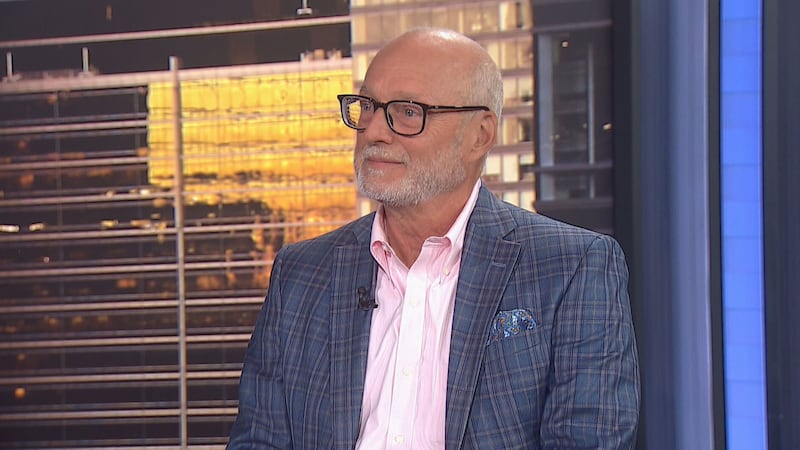
Read the full transcript below:
ROGER: Chip stocks are rebounding for a second day. Oil prices are pulling back on the hopes of a U.S.-Iran deal. U.S. President Trump says the peace deal could be finalized in the next two to three days, paving the way for the Strait of Hormuz to reopen. Let’s get some perspective from Jim Thorne, chief market strategist at Wellington-Altus Private Wealth. And I saw you shaking your head, nodding your head at Bitcoin as well. It’s taken a hit. And thanks for joining us, as always.
JIM: Thanks for having me, Roger.
ROGER: We, I mean, we could talk about Bitcoin, because you were nodding there, but the U.S.-Iran deal, is it just the latest talk? What do we do with this?
JIM: It’s going to get done, I think. Oil is telling you that, gold’s telling you that. I think the more profound question is, when the deal gets done, how quickly does oil drop, and what does this new world look like? And do we get a peace dividend, which supports multiple expansion within the markets, and so they’re going to cut a deal. He needs to. President’s got to cut a deal early enough, because we got the midterms. You know, Iran has been decimated, so, you know, they’re just finished, finishing some things off. So I’ve always been of the point that they’re going to get a deal. What does, you know, investing is about? Roger, 14 to 18 months out, what does that look like with the deal done?
ROGER: And I mean, with we’ve had several of these, we’ve had deals done, it’s coming, and the deal done, the deal done is coming again, and we keep hearing those. When do the markets start going, “Oh, maybe this one’s not the one”? When do they start worrying a little bit about it? But this may drag on far longer than maybe ending now.
JIM: Yeah, you know, it’s interesting, because that’s the consensus when you hear the pundits. The deal’s not going to happen. What I would say to you is, when I look at gold, I look at oil, and I look at the yields in the credit market, that kind of, I get to be able to look at the world without looking at listening to the noise. Look, if he doesn’t cut a deal, yields go substantially higher, and that’s a big problem.
ROGER: Yeah.
JIM: Okay, and oil goes substantially higher, and that’s a big problem. The forcing function in all this, Roger, is we have extreme levels of debt, which is forcing the economic strategy of the United States to change. It’s forcing the global economic strategy to change. So, a deal has to get done. That’s my point.
ROGER: And so, you do feel this one could be the one, like we’re, we’re pretty close?
JIM: Oh, he’s tiring me. You know, is it this one? Is it... it’s gonna get... I would say by the end of the month we’re going to have a deal. How does that sound?
ROGER: All right, we’ll hold you to it now.
JIM: We’ll hold on to it.
ROGER: No, I won’t hold you. I mean, who knows? It’s... it’s likely, and I mean, I agree. I think they’re... I think they’re all spent, and they all have some political repercussions in their own countries that they need to start thinking about.
JIM: Yeah, and this is the first time I’ve ever seen a massive international agreement been negotiated through Twitter or X. It’s just amazing.
ROGER: It’s a different world right now, isn’t it? When it comes to that. Okay, so the strait opens, we’re not back, but it’s months, if not longer, to get back to normal.
JIM: I think it’s going to happen quicker than people expect. Oil goes down quicker than people expect. Then here’s the big bugaboo that everybody... interest rates are going to go down. I know the Keynes, I call them the Keynesian on Bay Street and Wall Street, want rates to go up, but rates go down. And then for investors, what does that mean about your portfolio, given the fact that everybody’s been riding the AI wave, which is a secular growth theme, do we get the other side of the economy going, this cyclical side of the economy going in the United States? And I say yes, because what Trump wants to do is run the economy hot, which means Main Street, which is the real part of the economy, and I think when you look at the transports right now, I think in Canada, you look at CP Rail, for example, you’re starting to see people positioned for that trade, so AI won’t be the only trade in town, rates come down, it’s going to shock everybody, and what we talk about at Wellington, is how do you position your portfolio for that type of environment.
ROGER: And if, if we see this, it’s not necessarily rotation, just more of diversification of people doing things, their, what to do with their money, and it will, this, I mean, most of the earnings reports have been good, if not great, so those numbers are solid, and have they been tempered a little bit by what’s unfolding in the Middle East, and if this is, if there’s a deal, we’ll see that the markets will actually really react to those earnings reports.
JIM: Yes, because you read now we’re good, we have 16 per cent earnings growth, right? Maybe 15. Here’s Roger. Here’s, here’s the secret: earnings grow at basically nominal GDP. So, we have David Dodge out the other day, finally recognizing the fact up here in Canada, there’s going to be no growth for two years. But if in the United States, growth is going to pick up, and you’re going to have — they’re going to run it hot, which means earnings growth is going to be. Above historical norms overlay AI on top of that, a productivity phase, and you’re getting earnings growth 15, 16 per cent. Roger, I have — I’m assuming 10 to 12 per cent earnings growth from here by the 2031, which is where 100 per cent tax deduction of capex goes away in the States. You get $650 of S&P earnings, you put a 22 multiple on it, put a 25 multiple on it. The point is 1650 on the S&P is doable in this era, and what we’ve got is Wall Street and Bay Street are using the models of secular stagnation coming out of the global financial crisis, and we still haven’t seen a pivot. I mean, the reason I’d say that to... we were joking is, look, there are people that still think that a strong job market is inflationary, that’s classic Keynesian dogma. So, we haven’t had that psychological shift. Tiff Macklem definitely hasn’t had that psychological shift. We’re up here talking about whether or not it’s a recession or not. Where the bigger problem is, look, an economy can die many different ways, and when you look at a recession, that’s an economy is dying by a heart attack, that’s what C.D. Howe is saying, and I’m saying to you, the economy is done, has died through cancer, long-term rot. Okay, and up here we’ve got to sit there and be honest with ourselves, and so when you talk about Wellington with our clients and our teams, we sit there and go, well, up in Canada, you look at the TSX, you look at a company like Royal Bank of Canada, excellent company, well managed, world class. It’s trading at 3.6 price to tangible book. Roger, anything above two is expensive. Roger, Bank of America is trading at one six. Are we all going to pile in to banks up here? And so the real question I have is the Trump derangement syndrome that we have up here has amplified and supercharged the home bias, and if we have, you know, finally, you know, former governor, Mr. Dodge, says, “Let’s be honest, no growth up here. Okay, there’s going to be no earnings growth up here. So, are we all going to just pile into the banks because we just saw gold and oil rolling, right, massive chunks of the TSX?” To me, that’s the risk, and risk is perverse up here, so do we get that, and then look at that’s a psychological question, not a, not a fundamental, you know, Excel spreadsheet question.
ROGER: All right, I want to get to a couple stocks you want to, you’re liking right now, or looking at. Eli Lilly.
JIM: Yes, Lilly, first off, it’s the obesity drug, but I think people have got to start thinking about different ways that AI can manifest, and I think what you’re going to see, a lot of people say, you know, if we live five more years, Roger, we’re going to live to, you know, 200 because they’re going to cure all the diseases. That is AI getting into big pharma, and I think the best way to do that right now is with Lilly.
ROGER: All right, Micron, which is enjoying a nice surge today.
JIM: Yeah, well, if, if this is, if this cycle is longer than we expect, right, which is key. And I am in that camp. Then Micron is trading at a very, very cheap multiple because it, there is a view, an old view, that memory is the crappiest part of the semiconductor cycle. Well, if you listen to Elon Musk and Jensen Huang and all these people, memory is the place to be. So, do you get a company that’s significantly undervalued historically trade to a market multiple? So, if market multiple is 20 and you can get $150 of earnings, and let’s say 28, 29, Roger, that’s a $3,000 stock.
ROGER: Okay, we’re gonna wrap it up on that note. Jim, always a pleasure having you in, sir.
JIM: Thanks for having me.
ROGER: Always nice to see you in the studio. Jim Thorne, chief market strategist at Wellington-Altus Private Wealth.
---
This BNN Bloomberg summary and transcript of the June 9, 2026 interview with Jim Thorne are published with the assistance of AI. Original research, interview questions and added context was created by BNN Bloomberg journalists. An editor also reviewed this material before it was published to ensure its accuracy and adherence with BNN Bloomberg editorial policies and standards.

