Oil prices have eased as tensions between Iran and Israel show signs of cooling, but concerns remain about the longer-term impact of disruptions to global energy supply chains and inventories.
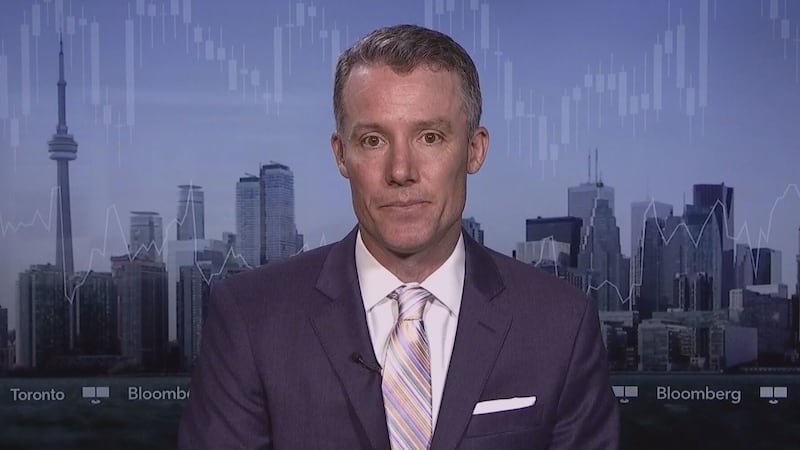
BNN Bloomberg spoke with Ryan Bushell, chief executive officer and portfolio manager at Newhaven Asset Management. He discussed why oil markets may be underestimating supply constraints, the role of gold in portfolios and several Canadian stock ideas he believes are well positioned.
Key Takeaways
- Oil markets may be overlooking the logistical and physical challenges of restoring supply flows after months of disruptions in key producing regions.
- Global crude inventories continue to decline, while production and distribution issues in the Middle East and Russia could support higher oil prices.
- Gold remains an attractive portfolio hedge amid geopolitical uncertainty, inflation concerns and the potential for future monetary stimulus.
- Canadian natural gas producers could benefit from growing demand for secure liquefied natural gas supplies and expanding export capacity.
- Dividend-paying businesses with long-term growth opportunities remain attractive despite ongoing economic and geopolitical uncertainty.
Read the full transcript below:
ROGER: And oil prices dropped this morning after a pause in strikes by Iran and Israel. U.S. President Donald Trump also renewing his claims that the conflict is close to an end. For more, we’re joined by Ryan Bushell, chief executive officer and portfolio manager at Newhaven Asset Management. Ryan, thanks, as always, for joining us.
RYAN: Thanks for having me.
ROGER: All right, oil prices starting to drop, although they’ve been hovering right around neutral. Is this legit? Do you think we’re at the point where we might see oil start to drop?
RYAN: Who knows? I find this whole thing pretty hard to fathom. If you would have told me a year ago that the Strait of Hormuz would stay closed this long and oil prices would be below $90, that would have surprised me. I think that the market is underestimating the physical nature of moving large amounts of crude oil and producing it.
I think that there’s a feeling in the financial world today — money moves so quickly, at the touch of a button, at the behest of a tweet — that oil can just ... as soon as this conflict ends, and really there’s no end in sight here, right? There’s maybe a downshift and upshift, and we keep going through that, but I don’t think there’s going to be a definitive end.
Therefore, having complete normalization of the Strait of Hormuz, I think, is still a long way off. And even if you got there, I kind of agree with Eric Nuttall when he says that maybe the best thing for oil is to open it right up and then see the reduced flows that actually occur, because I think the market believes that everything’s just going to snap back to normal, and I don’t think that’s the case.
ROGER: Even with — I mean, they have made adjustments. You’ve seen them manage to move oil over land, finding alternate ways to get that oil around. Also, people just scale back. But the reality is, I think, too, the fact that the reserves in a lot of places are starting to run dry, aren’t they?
RYAN: Yeah, I mean, it’s the longer-dated nature of this. That’s exactly right. You’ve got storage tanks and physical storage levels in different areas of the world that are being depleted, being depleted rapidly.
China was well stocked headed into this, right? So China was doing a great job — very like them to be prepared — and was buying a lot of discounted crude oil from Venezuela, Iran and Russia over the past three or four years at very cheap prices, not market prices, much below market. So they were well stocked going into this.
But again, this doesn’t last forever. And the fact that this has gone on nearly three months now, again with no tangible end in sight, I think we are getting to levels where you could just wake up one day and it’s a shortage somewhere, or it’s physical traders trying to get barrels and not being able to secure them, that just sort of sends the market a reality check here.
Again, I’m not an uber bull on oil long term, but I do think, along with a lot of other consensus watchers in the space, that the floor is now higher. And we don’t see a ton of new supply coming on. Venezuela did some things earlier this week on removing some clauses that would make investment more palatable there, but I still think that’s a tough one for private capital to get into.
I don’t think you see private capital going back to the Middle East in the same way, meaning non-state-owned actors. And Russia is having major problems as well on the production front and the distribution front.
So we’ve got a lot of problems in the oil industry today, and that’s before we talk about U.S. shale, which really hasn’t responded to this crisis with a huge uptick in drilling.
So, yeah, I think that the floor price is higher, and it looks very good for Canada and Canadian producers.
ROGER: And just before we get to some of your picks, gold has been trying to find its way through this crisis, hasn’t it?
RYAN: Yeah, it’s interesting. Gold is another interesting asset today. We’re seeing gold linked more with tech stocks right now than we are with inflation.
Inflation is on the rebound. I saw consensus CPI numbers for tomorrow in the U.S. at 0.5 per cent, with 4.2 per cent year over year. That’s getting back into hike territory. But the U.S. dollar has been strong through this as well, which has hurt gold.
So I think gold’s in a consolidation phase that had massive gains in 2024 and into 2025. I think you’re in a consolidation phase, but ultimately, as I spoke with a couple of clients yesterday, I’m happy to hold it here and start picking away at these levels.
We’re not big gold investors. We own gold companies. We don’t own the bullion. We want to get paid a dividend. But I think it’s now a core asset in our portfolio.
And I don’t like owning gold. It means that there are things wrong in the world. But I think we’re in a situation, as I said to clients yesterday, where we’re going to see more geopolitical problems, not less, going forward.
And I think, again, we have a huge stock market — call it a bubble, call it whatever you want — where potentially that leads to some sort of downshift. And what will be the response to that? We think fiat money printing, which is also good for gold.
So I think it needs to be a core position in portfolios.
ROGER: Okay, and let’s talk about some of your picks. Agnico, that ties in with gold nicely.
RYAN: Yeah, so like I said, we’re picking away at it here for new clients. We bought our initial position in 2021-22 at the $65 level, so we’re still a long way up from there, but it’s also a long way off the high, about $100 off the high here.
Again, we want to have a core position in client portfolios of about three to five per cent. So for clients that own zero, we think it’s a good time to be picking away at the first tranche.
And if you get maybe some sort of geopolitical event or tech-related flush downward, either of which could create a flush downward in markets, maybe you can pick off some more lower here or lower in a few months.
But we’re not counting on that because we do think the structural trend for gold is probably higher than it is today.
ROGER: Okay, Premium Brands Holdings.
RYAN: Yeah. So again, kind of out of both of these spaces we’re talking about, we still like good, solid businesses.
We’ve talked about this a few times, where Premium Brands was building up supply capability, the ability to supply Costco in the United States. By all accounts, that’s going really well. Their product is selling out, their products are selling out.
So again, for us, it’s not that different from a midstream or an infrastructure company, where they need to build the infrastructure first and then start flowing the product through the infrastructure.
That should create a nice, sustainable stream of revenue that’s bankable for us as dividend investors.
And this has been a company that’s done a good job with its shareholders in terms of putting a dividend out there and increasing it alongside its results. We think that will continue here, and this is a step change for them in terms of the size of the supply contract.
ROGER: And we’re almost out of time. I just want to sneak in Tourmaline as a replacement. You’re saying for ARC? Of course, ARC sold.
RYAN: Yeah. We’re not happy to see ARC taken away from us, but we think Tourmaline — we’ve always wanted to own Tourmaline — and think it’s actually quite discounted at today’s levels.
We talked about what potentially could happen on the oil side, but the natural gas side, to us, is much more positive.
You’re seeing a lot of news on the LNG projects in Canada. I think that will continue.
The LNG side of this Middle East crisis is that there was way too much LNG concentrated in that area, and we think the world needs more secure points of supply.
Canada is one of the best possible points of supply if we can actually get something built, and I think there’s now the appetite to do that.
ROGER: Okay, we’ve got to wrap it up there. Ryan, thanks, as always, for joining us. Good to see you.
Ryan Bushell, chief executive officer and portfolio manager at Newhaven Asset Management.
---
This BNN Bloomberg summary and transcript of the June 9, 2026 interview with Ryan Bushell are published with the assistance of AI. Original research, interview questions and added context was created by BNN Bloomberg journalists. An editor also reviewed this material before it was published to ensure its accuracy and adherence with BNN Bloomberg editorial policies and standards.

