Artificial intelligence-related IPOs are expected to dominate investor attention this summer, but growing enthusiasm around the sector is also reviving concerns about valuations, concentration risk and speculative behaviour.
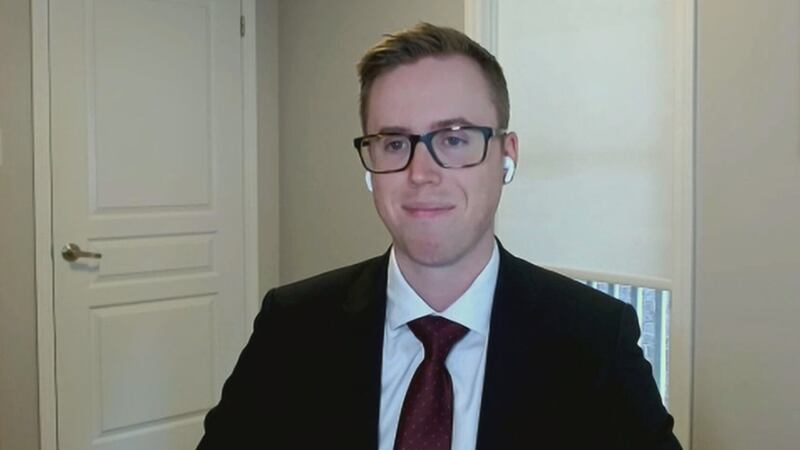
BNN Bloomberg spoke with Kyle Taylor, wealth advisor and portfolio manager at TriDelta Private Wealth, who discussed the potential impact of upcoming AI IPOs, portfolio positioning in a volatile environment and why investors should focus on quality businesses with durable fundamentals.
Key Takeaways
- Upcoming AI IPOs, including SpaceX, OpenAI and Anthropic, could become a major test of investor appetite for high-growth technology companies.
- Investors should be cautious about assuming current AI-related growth rates and valuations can be sustained indefinitely.
- Geopolitical tensions, inflation, tariffs and shifting interest-rate expectations remain significant sources of potential volatility.
- Selective stock picking may be more important than broad sector or regional exposure as market leadership becomes narrower.
- Companies with strong balance sheets, recurring revenue and durable competitive advantages may be better positioned if sentiment weakens.
Read the full transcript below:
ROGER: U.S. stock futures trending lower after U.S. President Trump signaled that Iran negotiations are taking too long. Chip stocks also under pressure. Let’s get perspective from Kyle Taylor, wealth advisor & portfolio manager at TriDelta Private Wealth. And Tyler, or Taylor, Kyle, it’s been a long morning already, and it’s just starting. Kyle, how are you? Thanks for joining us.
KYLE: I’m good. Thank you so much for having me.
ROGER: Appreciate you joining us today. Okay, can we throw in the inflation numbers as well? Your thoughts on everything that is unfolding right now?
KYLE: Yeah, I mean, well, there’s certainly no shortage of it. I mean, ultimately, 2026 earnings did a lot to put the markets on good footing, but as that constant earnings news has rolled off, I think the market is looking to other headlines, other narratives that could signal what the rest of the year holds. There’s no shortage of potential sources of volatility that investors will be grappling with, whether that’s rising inflation and how the central bankers react to that or, you know, the wave of AI IPOs this summer, the stumbling that’s currently being seen with some of the AI and chip names, maybe a reassessment on some of the value that people have seen grow over the past couple of months. And then you have tariff drama and, you know, everything to do with the Middle East war and the associated impact on energy markets. It’s one where I think investors need to be very deliberate in what they’re owning. I certainly wouldn’t say that I’m in the, or was in the, sell-in-May-and-go-away camp, but I think that the opportunity is in individual names rather than in general sectors or even regions, for that matter.
ROGER: There is so much for a nice quiet summer. It is shaping up to have a lot on the plate. There’s a little bit of everything for everybody that you can worry about. Pick what you want to worry about. Let’s talk first. Sorry, go ahead.
KYLE: Well, I was going to say one of the ones that I think is, you know, and most investors are pretty aware of today, is just around the SpaceX IPO, which is coming out on Friday, and the expectations for OpenAI and for Anthropic later this summer. I think that’ll be interesting and very telling into what the AI theme has in store for investors for the remainder of the year, and it’ll be a big, big test for the, call it the Elon Musk premium around retail investors and buying into this IPO. One of the parts that, you know, I’ve been mentioning to clients is the fact that buying into an IPO used to feel like you were buying into the ground floor of a new and upcoming business, and now today it’s more like parachuting onto the roof of a skyscraper while the pre-IPO investors, the insiders, take the elevator down and walk out the front door. So, I think that’s something that people need to be keenly aware of, and I think it’ll be certainly a big news day on Friday.
ROGER: Now, and did I hear how many times over? Did I hear four times over, so?
KYLE: Yes. I mean, one of the interesting things I was reading just yesterday was the fact that typically with IPOs, about five to 10 per cent of the allocation is carved out for retail investors. And Elon Musk, I mean, he knows what he’s doing. He’s playing into, I think, the retail side of things that he’s been so successful with, with Tesla and some of his other notoriety. And I think they carved out around 30 per cent for retail investors. So, you know, it’s one of those things where I understand why people want to participate. I think it’s an interesting business, but it’s been a $1.8-trillion valuation on a business that’s earned, I think, $18 billion last year and has never earned a quarterly profit.
ROGER: So, I’m going to guess you’re staying away from it, is what you’re telling me.
KYLE: You know, I can’t say I’m investing in it personally, but I do have, you know, several people in mind who I know are very keenly looking to participate, and, you know, I think there will be others like them.
ROGER: And is there anything you’re going to be looking for with this IPO that may say, oh, things are looking good, or things, or go, oh.
KYLE: Well, I think what will be most interesting is just the price action that we see in those first few days and weeks. I mean, there’s been plenty of stories over the years around stocks that had notable IPOs and rallied at first and sold off over the next few months before kind of getting their footing around profitability. I think one of the interesting things that people may be looking at is just a case study with Tesla. I mean, Tesla was unprofitable for years. I mean, I still don’t think their valuation makes much sense, but Elon Musk has this inherent talent of raising capital and being able to use that notoriety in order to fund their operations and one day achieve profitability. And I think people will be looking to apply that to SpaceX.
ROGER: And we haven’t talked about this for a long time. Bubble talk. Time for bubble talk, everybody.
KYLE: Yeah, I think...
ROGER: Are we bringing that back there? It’s been put away for a while.
KYLE: Yeah, well, I think those voices will get louder as the summer rolls on, depending on the success of these IPOs with Anthropic and OpenAI in particular. I mean, the more success the AI theme has, I think those voices will get louder. I think Q1 earnings did a lot to settle some of those concerns, just in demonstrating that profitability is real and, you know, there is a lot of cash flow to back up these names. One of the things that I think has been really great to settle some of those concerns is a lot of what came out in Q1 around some of the companies that are looking to secure longer-term, multi-year contracts for their products. Micron was a really great example of that, looking to sign five-year-plus deals with their customers around their products, and I think that did a lot to add to visibility and ease some of the concerns around the durability and cyclicality of some of these names.
ROGER: All right, let’s get to a couple of stocks that have got your attention right now. Chewy, not Chewbacca, but pet food, or pet treats.
KYLE: Yeah, Chewy actually reported earnings just this morning, and relatively in line with expectations, maybe on the lower end of guidance, which we were largely expecting. They’re maybe a bit more of a household name in the U.S. than in Canada. They’re pretty recent into Canada, but they’re the largest pure-play online retailer in the U.S. for pet products and food, with 21 million active customers across 3,200 brands and 130,000 products. It’s a growing market, but it’s also one that hasn’t really seen the online adoption that maybe some of the other products in the e-commerce space have seen. They’ve got a lot of really great long-term growth drivers, including just sector growth, pet pharmaceuticals and services, and international expansion. One of the things that I think investors have been really glad to see from Chewy is the fact that they’ve invested into some more brick-and-mortar vet clinics and the cross-selling opportunities that provides them. The challenges of late for Chewy have been more around the deteriorating consumer outlook, and the share price over the past few months largely reflects some of the macro concerns that have been seen there. I think the pet sector at large can be one that is very narrative-driven, just in terms of pet adoptions, and I think even if you just look at the stock chart from COVID, that’s pretty demonstrative of that reality. But management has made some really great decisions in diversifying revenues. The fundamentals are good, and even though I think Amazon can be seen as a natural competitor for them, Chewy actually has a lot of great discounts for Autoship, which is about 85 per cent of their customer base, which tends to be rather sticky. And about two-thirds of their customers are actually estimated to have Amazon Prime memberships already, but still order from Chewy, largely because their products are kind of between three and 16 per cent cheaper with still two-day shipping. So, I think it’s one that has a lot of durability. It’s one that became pretty attractive to us from a growth standpoint, given where prices have fallen, and I don’t think you could look at many businesses today that have a better balance sheet than Chewy. I mean, they have no long-term debt today, and the cash flow that they’re generating is enough to sustain themselves and grow their product base and continue to expand into new international markets.
ROGER: All right, we’ve got to wrap up there. We’re out of time. The other one you liked was Paychex. We’ll have to talk about it next time. Kyle, thank you, as always, sir, for joining us. Appreciate it.
KYLE: Thank you.
ROGER: Kyle Taylor, wealth advisor & portfolio manager at TriDelta Private Wealth.
---
This BNN Bloomberg summary and transcript of the June 10, 2026 interview with Kyle Taylor are published with the assistance of AI. Original research, interview questions and added context was created by BNN Bloomberg journalists. An editor also reviewed this material before it was published to ensure its accuracy and adherence with BNN Bloomberg editorial policies and standards.

