Lower oil prices and expectations for a gradual de-escalation in the Middle East are helping broaden investor interest beyond the technology sector, supporting parts of the U.S. equity market that are more tied to economic growth.
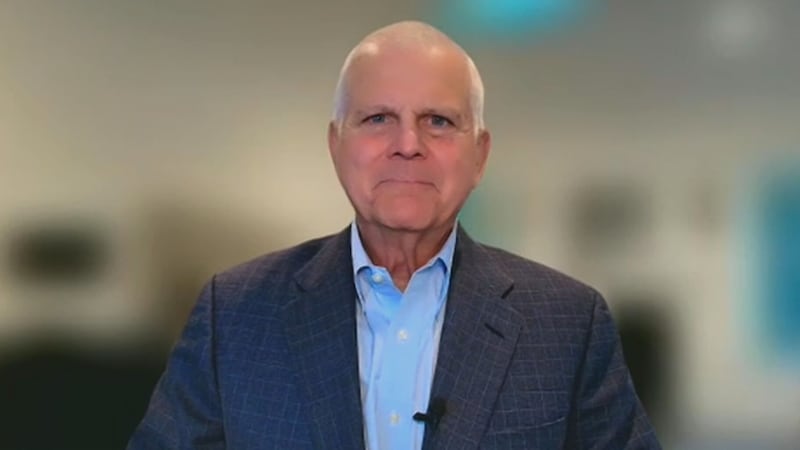
BNN Bloomberg spoke with Scott Chronert, U.S. equity strategist at Citi Research, who discussed the firm’s higher S&P 500 target, the impact of falling oil prices on sector leadership, and whether a new wave of major IPOs can be absorbed by investor demand.
Key Takeaways
- Citi expects a gradual wind down of the Middle East conflict and sees lower oil prices supporting broader participation across U.S. equities.
- Consumer discretionary, financials and small-cap stocks could benefit most if energy prices continue to ease.
- Citi raised its year-end 2026 S&P 500 target to 8,100 based on stronger earnings expectations and continued AI-driven growth.
- A surge in IPO activity is reversing years of shrinking public equity supply, creating a new dynamic for investors.
- Future demand for major IPOs will depend on sustained earnings growth and evidence that AI-related investment can generate long-term returns.
Read the full transcript below:
LINDSAY: As you just saw, stocks are rallying and oil is slipping after the U.S. president announced a potential peace deal with Iran to reopen the Strait of Hormuz. Here to talk about that and more is Scott Chronert, U.S. equity strategist at Citi Research. Good morning. It’s great to have you join us.
SCOTT: Hey, Lindsay. Great being here.
LINDSAY: So what’s your take on the direction of the markets in the pre-market, I guess, that we’re seeing today? Do you think this really is hinging on yet another potential deal between the U.S. and Iran?
SCOTT: Well, I think we’ve been back and forth in terms of the on-again, off-again ceasefire, if you will, but it looks like this probably has some staying power. U.S. equity markets have already begun to anticipate a gradual wind down, and even though you don’t specifically see it in the Nasdaq, you have seen it in other parts of the U.S. market, such as your equal-weighted index and your small caps as well.
So the broadening playbook that comes with an end to the conflict and potentially lower oil prices is something that has begun to get priced in. The market looks like it probably has some more room to go, though, in our opinion.
LINDSAY: Do you think that’s appropriate, to be pricing in an end to the conflict at this point, especially as you were saying, we’ve seen this so many times before, this back and forth?
SCOTT: Yeah, I’d say we keep a really close eye not just on spot oil prices, but where the futures curve has taken us. I think it’s been downward sloping for several weeks now, and so it’s just a matter of how you get there and when you get there.
It does look like there’s a bit more staying power this time around, just because of the resolution, or the desire to get to an end of this conflict, certainly by the U.S. administration. So we’re very comfortable with seeing some fits and starts on this, but we do think that we’re gradually pricing in a wind down.
LINDSAY: Do you think there are any sectors in particular that will really favour the Strait reopening?
SCOTT: Obviously, what ends up happening here is going to be negative for the energy sector as you get oil prices coming down. We’ve been underweight energy this quarter, so no surprise there.
The broadening playbook that I referenced earlier is important here. Tech is kind of beating to its own drummer around the AI narrative, but where you potentially get some follow-through to the upside is going to be areas like consumer discretionary and financials as well, which we think are fairly straightforward beneficiaries.
I’d throw industrials and materials in there as well, but the industrials playbook also has this AI association that’s a little bit distinct from this. I think the more direct response would be some combination of consumer discretionary and financials. And don’t underestimate the action in U.S. small caps, which are typically more economically sensitive, have a better valuation starting point and have been showing pretty good earnings growth thus far this year.
LINDSAY: Okay, I want to switch gears now and talk about the mega SpaceX IPO that we saw on Friday. I’m wondering, what’s your take on what we saw Friday when it was listed? Is there a turning point for equity supply now, do you think?
SCOTT: Well, I think this equity supply narrative is something that’s getting a lot of traction and focus right now, and certainly this is going to be an important storyline as the second half unfolds.
We’ve been living in this era where, for the past several years, every year the S&P has reduced its fully diluted share count by a percentage point or so. This is going to begin to change that dynamic, and so we have to be prepared that there’s going to be an ongoing flood of issuance, whether it’s going to be big IPOs or other companies looking to tap the public markets for additional funding as they can.
This is going to be an issue to navigate. It doesn’t have to be the end of the story for U.S. equities. It simply means that you need to have the underlying fundamental support for these equity raises, which I think ultimately attracts a lot of liquidity toward the U.S. market.
LINDSAY: We are watching for other big IPOs, obviously, like Anthropic and OpenAI. Is there enough demand from investors to meet that supply that we could see soon?
SCOTT: Yeah, so I think what this keeps coming back to is that the AI playbook and tailwind are pretty well understood. The infrastructure buildout is also a very well-known story.
The market, in our view, has been responding to the upside earnings surprise from this corner of U.S. equities thus far this year. What we think is happening here, and this gets to your question, is that the market is certainly pricing in a lot of the earnings strength right now, probably out through 2027, but beyond that is still sort of a question mark.
Our in-house view is that AI capital expenditures can persist out to the end of the decade. Where I’m going with this is that for this new supply to be absorbed, and for the AI playbook to continue to work in equities, it needs two things. It’s going to need continued near-term good news, with a positive beat, if not a raise.
Ultimately, what investors are going to be looking for is the persistence of the fundamental tailwind out through the end of the decade, certainly beyond 2027.
LINDSAY: Do you think we’re starting to see a bit of a reversal in a cycle where companies aren’t staying private for as long now?
SCOTT: I think it’s a really good question. I think it’s a mixed answer.
To the degree that you can stay private and obtain sufficient financing to support your operations, and give your employees and other investors some form of occasional liquidity, staying private certainly makes a lot of sense.
I think ultimately going public is another form of capital raising, certainly an exit strategy as lockups expire for another wave of investors. But it’s also the natural progression of where this is going.
To me, it always comes down to what’s the long-term growth trajectory here? Are the funding needs being met by either private or public fundraising? Ultimately, that’s where the storyline goes.
It’s going to be an ongoing discussion point, certainly among U.S. investors, but I’m going to keep coming back to the idea that, as long as the fundamentals are supportive, there’s probably going to be sufficient liquidity to absorb this.
LINDSAY: When it comes to SpaceX, Elon Musk said revenue might be able to top US$1 trillion in 2030. That’s not too far from now. How realistic do you think that expectation is?
SCOTT: Unfortunately, I can’t talk specifically to that one. But what I would say is that, with any of these projections, you’re doing your best job in terms of putting them out there. Ultimately, time will tell. Unfortunately, I can’t speak specifically to that one.
LINDSAY: Okay, we’ll leave it there. Scott Chronert, U.S. equity strategist at Citi Research. Appreciate your time this morning. Thank you.
---
This BNN Bloomberg summary and transcript of the June 15, 2026 interview with Scott Chronert are published with the assistance of AI. Original research, interview questions and added context was created by BNN Bloomberg journalists. An editor also reviewed this material before it was published to ensure its accuracy and adherence with BNN Bloomberg editorial policies and standards.

