Stocks rose and oil prices fell as investors reacted to signs of a potential ceasefire agreement between the United States and Iran. While the initial response has been positive, questions remain about whether the rally can be sustained once geopolitical headlines fade.
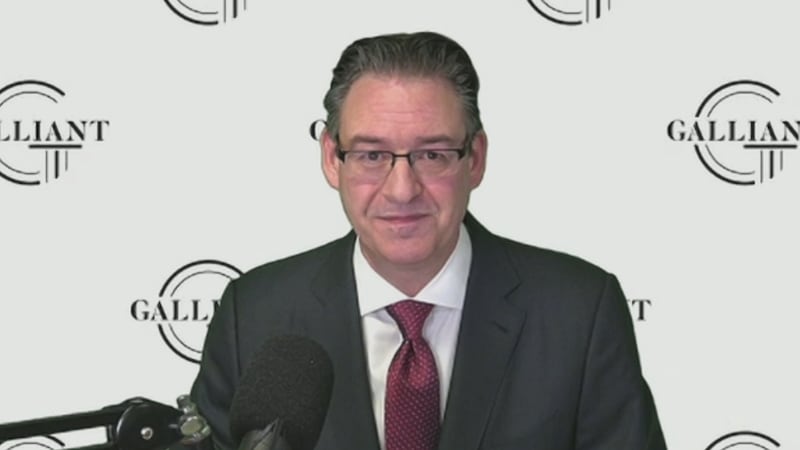
BNN Bloomberg spoke with Ian Shaffer, president and chief investment officer at Galliant Advisors, about improving market breadth, the outlook for semiconductor stocks, historical trends around U.S. midterm elections and several stock-specific opportunities.
Key Takeaways
- Investors welcomed signs of a potential U.S.-Iran ceasefire, though the durability of the rally will depend on developments in the weeks ahead.
- Market leadership is beginning to broaden beyond semiconductors, a trend that could support healthier equity performance over the longer term.
- Semiconductor stocks may continue to benefit from AI spending, but their pace of outperformance appears unsustainable after recent gains.
- U.S. midterm election periods have historically been supportive for equities, particularly in the year following the vote.
- Honeywell, Take-Two Interactive and AerCap were highlighted as opportunities tied to corporate restructuring, product catalysts and long-term industry tailwinds.
Read the full transcript below:
LINDSAY: As you just saw, the S&P 500 is seeing some gains, and the price of oil slipped after news of a potential ceasefire agreement between the U.S. and Iran. For more on how markets are responding, we’re joined now by Ian Shaffer, president and chief investment officer at Galliant Advisors. It’s great to have you join us. Good morning.
IAN: Good morning. Thanks, Lindsay, for having me on.
LINDSAY: For sure. So, we’re seeing the direction of the markets this morning seems to be going up. I wonder what you think the key drivers are here. In particular, is it what’s happening and potentially happening in the Middle East, or is it tech stocks? What do you think the main drivers are?
IAN: Well, you know, we saw the pullback earlier in the year on the headlines for the Iran war, so obviously I think a lot of people were positioning and saying, “I don’t want to be short the market,” or, “I want to be long the market once the headlines cross that there’s going to be a deal.” So I think that’s what we’re seeing.
This is the knee-jerk reaction, which is, okay, it is safe to buy the market because the geopolitical risks are waning. And I can’t say they’re over. I don’t think you can ever trust the IRGC to completely follow through on the deals that they sign, but I think it’s a sigh of relief where people are saying, “Okay, this is safe. I’m going to look to some beaten-down sectors to buy those stocks or cover my shorts,” which, in turn, also sends stocks higher.
So this is definitely a positive response, but I think it’s a knee-jerk reaction. The real test is going to be in the weeks ahead.
LINDSAY: For sure. Do you feel also as though maybe the markets have been pricing an end to this conflict for some time now?
IAN: I think so. The way I look at it is I’m always taking a look at not just the market, but basically how oil is trading.
Sometimes you’ll see that Israel may have sent a missile to Lebanon, or vice versa, and you’d see the market go down, but oil wasn’t really going up. I think the oil market was smarter, and it was saying, “I don’t really think this is the beginning of a new engagement. I think this is still waxing and waning, leaning toward a deal,” and they’re finally getting the deal.
So it seems like the prognosticators really had it right that this was going to be a short war. I think the ceasefire talks lasted longer than we thought, but again, I think this is just a sigh of relief and an early short-term reaction to a positive development, no doubt.
But is it securing long-term peace? We don’t know.
LINDSAY: U.S. midterm elections are coming up in the fall, and it will unfortunately be here before you know it. In terms of the fall, how has the S&P 500 reacted historically to midterms? And do you see a pattern like that happening again this time around?
IAN: Well, historically, the markets do well in the 12 months following the midterms.
But if you look away from the data, your sitting president wants the Republicans to do well in the midterm election. So obviously Trump’s agenda would be to get the war solved, start delivering on the promises that he made to the American people two years ago and make sure that he’s getting a fair shake on the election results that are upcoming.
So I would think, if he can possibly get interest rates lower — I don’t think he will — but let’s just say a victory for him would be if they don’t raise rates despite the inflation that we’ve seen.
And now you have an excuse. People could say we can look through the short-term inflation because of the fact that you have a deal on the table. So even if inflation has not passed through the system yet, it will in short order, barring any new tariff announcements that might come.
I think the market has already priced in what’s already gone on there, but we don’t want anything new. So his agenda right now is to put the Republicans in the best position to do well come November.
LINDSAY: You mentioned semiconductor stocks have led to most of the recent gains that we’ve seen on the S&P. Do you think that trend will continue long term?
IAN: Semiconductors have been a major surprise. I mean, that group did well last year, and it’s an easy first mover when you think about the move that Nvidia has made over the years.
Then you say, okay, so many people are trying to come and take a piece of that pie. So I can understand that semiconductors would do well because there’s a catch-up play, possibly on the earnings and valuations of the other makers.
But to see every single semiconductor stock going up what seems like five to 10 per cent a day, I think that’s excessive.
So I wouldn’t be surprised. I don’t think there’s danger necessarily for tech stocks, but if there’s one area of tech stocks that I could see give way a little bit, if there’s a little change, I would see semiconductors possibly trade in line with the market but maybe not outperform the market.
Other areas that have lagged, maybe the mega-cap stocks, I could see doing better in the run into the end of the year.
LINDSAY: Okay, you do have some stocks that are on your radar at the moment. I want to go through those. The first one is Honeywell. You say it’s got some significant restructuring happening right now. What is it that you like about Honeywell, or what is it that you’re watching for, I guess?
IAN: Well, they’re taking the GE playbook, where GE split itself into multiple different businesses, and Honeywell is doing the exact same thing.
By the end of the month, Honeywell’s core business is going to be spinning out into a pure-play aerospace business called Honeywell Aerospace, and then you have the remaining business, which we can call Honeywell, becoming a pure-play automation business, similar to Rockwell Automation.
Lastly, Solstice was a company that they’ve already spun out to investors, meaning investors who held Honeywell stock received a piece of a new company.
More recently, they also had an IPO of Continuum, their quantum computing piece. While investors have not yet received a stake in that quantum computing business, we expect that down the road, when Honeywell divests the rest of its shares, it probably will spin out.
So you might actually get four pieces of Honeywell.
What they’re trying to do is unlock value. They’re trying to get analysts on Wall Street to say, “Okay, well, I couldn’t value all of Honeywell,” similar to how I can’t value all of Berkshire Hathaway.
But if Berkshire Hathaway or Honeywell split into three or four different businesses, I could say, “Here’s the insurance business for Berkshire. Here’s the aerospace business for Honeywell.” I’ll map that against GE or another aerospace company. Then I’ll map the automation business against Rockwell Automation.
Now you have these different pieces where analysts can do their homework and say, “Okay, what’s a proper valuation for that piece?”
We think the sum of the whole is way greater than where the stock is right now. So for investors who are looking to benefit from the spinoff, I think they should be getting into Honeywell stock before the end of the month, as the spinoff date is June 29.
LINDSAY: Okay. Take-Two Interactive Software is another one you like right now. Why is that?
IAN: Unfairly beaten down in the software trade, where people were saying semiconductors win, AI wins, software loses.
A few of the companies that have suffered in this have been Netflix, which we have yet to see hit the numbers, and Take-Two, which has its own catalyst for the end of the year with the release of Grand Theft Auto VI.
It hasn’t been released in over a decade, and the old titles are still making Take-Two a lot of money, but this is going to be a huge catalyst.
There’s going to be a summer marketing campaign in the next couple of months, probably about a month away, and there’s going to be a third trailer coming out.
I think those are going to be positive catalysts for the excitement that’s going to build going into November. That’s where investors, and ourselves at Galliant, where we own a stake, think we’ll get some real nice appreciation into November as that release approaches.
LINDSAY: Lastly, AerCap. You say this company is benefiting from secular tailwinds. Can you tell us more?
IAN: Yeah. Especially now with the Iran war seemingly nearing its end, this is a boring company that leases aircraft.
The interesting thing that it does is buy back a lot of its shares. Typically, on average, it’s been buying back 10 per cent of its shares outstanding.
Now, when you think of a stock split, you’ll get double the shares on the day of a stock split, but the stock will go down in price. This is almost like a 10 per cent reverse stock split.
When a company buys back its shares, the market doesn’t automatically reprice those shares, but over time, you should think of it this way: if there’s a 10 per cent buyback per year, your stock should appreciate, all things being equal, by 10 per cent per year.
Plus, you have a nice business, so there are a lot of tailwinds. And now that the Iran war could be in the rear-view mirror, there are additional tailwinds for the stock to move higher.
LINDSAY: Okay, we’ll leave it there. Ian Shaffer, president and chief investment officer at Galliant Advisors. It’s really great to have you. Thanks so much.
---
This BNN Bloomberg summary and transcript of the June 15, 2026 interview with Ian Shaffer are published with the assistance of AI. Original research, interview questions and added context was created by BNN Bloomberg journalists. An editor also reviewed this material before it was published to ensure its accuracy and adherence with BNN Bloomberg editorial policies and standards.

