The reopening of the Strait of Hormuz could help ease energy-driven inflation pressures, but it is unlikely to influence the U.S. Federal Reserve’s immediate policy decisions. Investors are instead focused on the central bank’s messaging and whether policymakers adjust their outlook for future rate moves.
BNN Bloomberg spoke with Phil Orlando, chief market strategist at Federated Hermes, who said the U.S. Fed is expected to leave rates unchanged while monitoring inflation, labour market strength and broader economic conditions for signs of its next policy move.
Key Takeaways
- Orlando expects the U.S. Fed to leave interest rates unchanged, arguing recent inflation pressures have been largely driven by energy prices.
- Lower oil prices and a potential reopening of the Strait of Hormuz could contribute to more benign inflation trends over the coming months.
- Investors will closely watch whether the U.S. Fed adopts a more neutral policy stance rather than signalling its next move is likely a rate cut.
- The U.S. Fed’s updated Summary of Economic Projections will provide insight into how policymakers view inflation, growth and interest rates.
- Strong U.S. employment data reduces the urgency for rate cuts and supports the case for the U.S. Fed to remain patient.
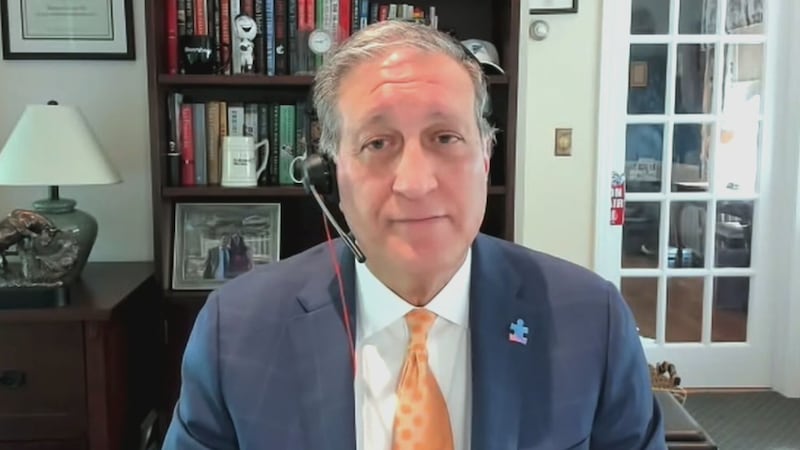
Read the full transcript below:
LINDSAY: All eyes will be on Kevin Warsh at the Federal Reserve meeting tomorrow as investors look to see how he will handle competing pressures from rising inflation and the prospect of lower energy inflation as the Strait of Hormuz reopens. Joining us now is Phil Orlando, chief market strategist at Federated Hermes. It’s great to have you join us. Thanks so much.
PHIL: Lindsay, good morning, and thank you so much for having me back.
LINDSAY: So, if we do see the Strait of Hormuz actually reopen, how do you think that will factor into the Fed’s rate decision tomorrow?
PHIL: It should have no impact on the Fed’s rate decision tomorrow. The Federal Reserve, in our view, will do absolutely nothing from a policy standpoint, which should be the appropriate course of action, and the reason for that, very simply, is take a look at what’s been going on with energy prices just over the last month. In the middle of May, crude oil, WTI, was sitting at US$110 a barrel. Right now, crude oil is down at US$77 a barrel. We’re down about 30 per cent, in part based upon the expectation that we’ve got a peace deal with the U.S. and the Israelis and the Iranians. Now, so there’s been a pretty significant increase in inflation in the U.S. over the course of the last three or four months, but that’s been all energy. So, if the Strait of Hormuz is open, if we’ve got a peace deal with Iran, we’ve already started to see energy prices sort of front-run that agreement. That suggests that inflation ought to come down pretty rapidly over the course of the next three or four months, and as a result, I think the Federal Reserve will appropriately look through this spike that we’ve suffered through the last couple of months and literally do nothing here. Be patient and allow the decline in inflation over the next couple of months to sort of play out in real time.
LINDSAY: Do you think there is a sense, though, that maybe this, because we’ve heard this before, that a peace deal is being reached between the two sides, the Strait of Hormuz will open, and we’re still within this conflict? So, do you think there is a factor of pricing in the fact that maybe the Strait of Hormuz won’t be opening this week as promised?
PHIL: Lindsay, that is a great question. We’ve seen this movie before, we know how it ends, and the Iranians are very tricky, very savvy negotiators, and it’s entirely possible that this latest peace deal is just an attempt to drag their feet, get the United States and Israel to stop bombing them, and sort of play for time, and that when push comes to shove, they start pushing back on different elements within the negotiation, enriched uranium, the utilization of future nuclear engagement, et cetera. So, if that were the case, do we see more military activity in the future and energy prices reverse themselves and start to go back up? That’s entirely possible, and I think the market, as you pointed out, has rallied pretty strongly. The S&P hit an all-time record high just within the last couple of weeks. Certainly, that could reverse itself if the Iranians prove to be untrustworthy here and this military engagement reoccurs.
LINDSAY: Okay, so going back to the rate decision tomorrow, what else will you be watching for? And what will you be listening for from Kevin Warsh in particular?
PHIL: Well, Kevin Warsh’s first press conference as the new chairman, certainly. How does he handle the media? How does he handle the announcement? Are there any dissents in the policy decision, which again we think will be zero. I think the most important element might be what happens in terms of the Fed’s bias statement. Up until now, the Fed had been biased toward a potential rate cut. I think that Warsh will neutralize that statement, along with the rest of the Federal Reserve, and that what we’ll look at is an equal chance in future meetings that the Fed may either cut interest rates or raise interest rates based upon the economic data. So, I think the neutralization of the Fed’s bias statement, and certainly, what are the changes in the new SEP, the Summary of Economic Projections, which we’re going to get in June, one time in March. So, this will be the Fed’s first opportunity to reflect the war, the changes in inflation, in terms of what the Fed’s outlook may be.
LINDSAY: What about the recent jobs data from the U.S. for the month of May? One hundred seventy-two thousand jobs added. Will that factor into the decision tomorrow, do you think?
PHIL: Absolutely. I mean, that’s a fabulous question. The labour market in the U.S. has strengthened considerably so far this year. In the last three months, non-farm payrolls have risen by an average of about 180,000 jobs. Last year, calendar 2025, jobs increased at an average of about 100,000 jobs a month. So, the labour market is materially stronger today than it was a year ago, and for that reason, the Federal Reserve has really no reason to be thinking about cutting interest rates now to support the labour market, because the labour market is pretty strong. You’ve got the upper band of the fed funds rate sitting at 3.75 per cent right now. Two-year Treasuries are yielding about 4.05 per cent. That would suggest that the market doesn’t believe that the Fed is going to cut interest rates here, nor should they cut interest rates here. So, if they were to cut interest rates, which we think is probably, there’s zero chance of that happening, but that would be a huge surprise given the strength we’ve seen in the labour market here.
LINDSAY: Okay, before we wrap up, I do want to switch gears and ask you about SpaceX, because SpaceX is up about 30 per cent since the IPO on Friday. What do you think so far of what you’ve been seeing, and do you expect that momentum to continue for the company?
PHIL: Well, it’s a very long-term bet on the vision of Elon Musk and space exploration, the next frontier. Are we going to be building data centres throughout the universe? There’s a lot of hope going on here in the stock market with SpaceX. It certainly reflects that. Might we see some pullback from these euphoric levels in coming months and quarters as the company gets into the day-to-day operations? That’s certainly possible. I think the longer-term outlook for SpaceX is extraordinarily bullish, based upon the vision of Elon Musk, but given how well this IPO went and how elevated the stock price is, who’s to say that you don’t see some near-term profit-taking? So, if you missed the opportunity again on the IPO, you may get a second bite at the apple at some point over the next couple of months if you’re patient.
LINDSAY: Okay, we will leave it there. Phil Orlando, chief market strategist at Federated Hermes. Really great to have you join us this morning. Thank you.
---
This BNN Bloomberg summary and transcript of the June 16, 2026 interview with Phil Orlando are published with the assistance of AI. Original research, interview questions and added context was created by BNN Bloomberg journalists. An editor also reviewed this material before it was published to ensure its accuracy and adherence with BNN Bloomberg editorial policies and standards.

