A proposed agreement to reopen the Strait of Hormuz has helped push oil prices lower and eased concerns about a major supply disruption. However, investors may still want to maintain some exposure to energy as geopolitical risks remain elevated and oil markets adjust to a shifting supply outlook.
BNN Bloomberg spoke with Chhad Aul, chief investment officer and head of multi-asset solutions at SLGI Asset Management, about the outlook for oil, expectations for the U.S. Fed, sector positioning and what the latest wave of mega-cap IPOs could mean for investors.
Key Takeaways
- Oil prices have fallen as investors price in the potential reopening of the Strait of Hormuz and increased supply from Iranian exports.
- Energy exposure may still serve as an effective portfolio hedge because geopolitical risks and supply disruptions remain possible.
- The U.S. Fed is expected to leave interest rates unchanged as policymakers assess mixed signals from inflation and labour market data.
- Defensive sectors such as consumer staples, health care and real estate are preferred, while technology and consumer discretionary remain less favoured.
- Recent mega-cap IPO activity has not yet reached the levels historically associated with major valuation peaks or excessive market froth.
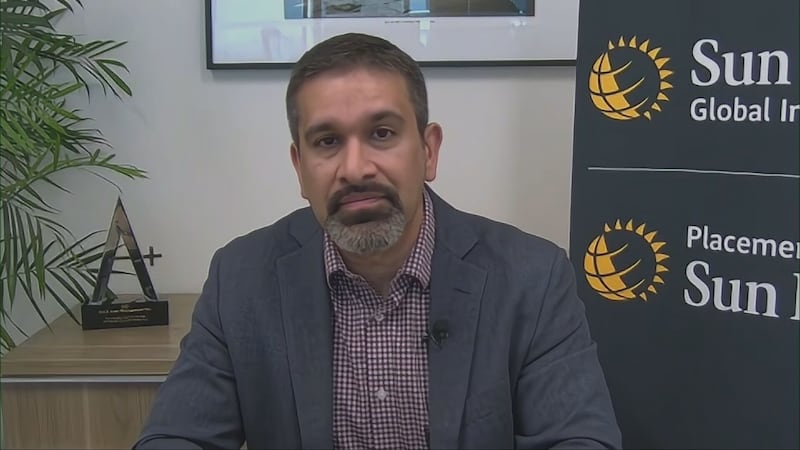
Read the full transcript below:
LINDSAY: A tentative deal between the U.S. and Iran to reopen the Strait of Hormuz is easing immediate fears of a major supply shock and sending oil prices lower. But with tensions still simmering in the region, the energy story is far from over. So, for more, let’s bring in Chhad Aul, chief investment officer & head of multi-asset solutions at SLGI Asset Management. Good morning. Thanks for joining us.
CHHAD: Great to be here.
LINDSAY: So, we’re watching for that interim deal to potentially be signed on Friday. If it is, do you expect markets to really react, or is it kind of already priced in?
CHHAD: Yeah, I mean, from the perspective of oil prices, I think a lot of the positives and the positive potential of the deal is priced in. I mean, on the face of it, certainly we could actually have more supply than we did prior to the crisis, as you’ve also had, as part of the deal, lifting some waivers placed on Iranian oil that was sanctioned, of course, before the crisis. And reopening the Strait all looks like a lot of positives for the supply side. But there are still risks, many risks that remain: just how long it could take to open the Strait, rebuilding of trust to get shipping back through those lanes, and then, you know, even through this period of the next couple of months of negotiations, plenty of possibilities for things to run off course. And, of course, it’s now been demonstrated how easily the Strait can be closed once again. So, there’s going to be a permanent risk premium baked into the oil price. And from a total portfolio perspective, I think keeping some exposure to energy — and certainly now could be a good time to add as well, given the fall in prices — is still just a really great hedge against ongoing risks of further flareups in the region.
LINDSAY: I want to go back to what you said about this deal could maybe allow for greater oil supply than before the war began. What would that do for oil prices?
CHHAD: Yeah, and that’s, I think, why you’re seeing, even given some of the risks, why oil prices are now, you know, sitting well below US$80. So, with that greater supply, I mean, first, there is that aspect, of course, that a lot of the reasons why we’ve sort of bridged the gap globally from an energy perspective is many, many countries — the U.S., China, some of the biggest examples — have really drained their emergency reserves to help bridge this gap where a significant portion of global supply was not coming from the Middle East. So, those reserves are going to have to now be rebuilt, right? So that’s going to immediately suck up some of this excess supply again. If the deal holds and trust is rebuilt over some significant amount of time, I think oil prices will remain lower. And again, that’s going to be really positive for a lot of parts of your portfolio. From an economic growth perspective, equities, etc., will respond quite favourably. But, like I said, the risks that still remain really warrant holding that energy position as a hedge from a total portfolio perspective.
LINDSAY: Right. Because, as you said, there are so many possibilities for this to still run off course. And then I wonder if there’s maybe too much optimism still in the oil market with oil prices, given that there are just so many factors here and so many risks, as you mentioned.
CHHAD: Yeah, so some of that optimism, again, is warranted, right? If you look at that net total picture, where you could actually have greater supply, I think it’s reasonable. And, you know, the futures market will always run a little bit ahead, right? But from this point, I think things are probably pricing in a lot of the positives, and it’s a reasonable point to actually build up some of that protection in the portfolio, build up some of those hedges by adding to an energy position for investors who don’t have much of that in the portfolio, allowing you to again participate in the upside if a lot of the positivity that’s still going on in the equity market continues. It allows you to kind of hold both positions if you’ve got that hedge by being long energy stocks or oil prices directly.
LINDSAY: Okay, let’s move on because, of course, we’re waiting for the U.S. Fed rate decision today. You say you expect no change in rates. Can you elaborate on why you think that?
CHHAD: Yeah, I think that we’re kind of in a position, of course, with a new Fed chair coming in. I think the most interesting thing is going to be watching to see how the new Fed chair kind of starts to build consensus amongst the committee. But if you just look at the two competing factors that the Fed is facing in terms of inflation and the labour market, on the inflation side, certainly we’ve seen a surge here with higher oil prices, and we’re kind of watching to see how that might filter into other prices across the economy. But at the same time, with the deal, we’ve seen oil prices beginning to fall, which gives a little bit of breathing space, let’s say, for the Fed on the inflation side of the mandate. And then on the labour side, again, broadly speaking, we had been seeing cooling trends in the labour market that might argue to actually be a little bit dovish, leaning towards rate cuts, which, of course, the Fed chair leading up to his nomination was actually more of a dove. But now we had that one job print in May that was far beyond expectations, looked quite strong on the face of it. The detail is a little bit narrow, so I think, again, it takes a bit of a wait-and-see approach to see the next couple of job prints and whether there’s some sustained strength in the labour market. So both sides of the mandate warrant a wait-and-see approach, that sort of data-dependent approach. Plus, you throw in the factor of a new Fed chair trying to build consensus amongst the committee. I think you’ll see a pause. And then the most interesting thing to see is going to be, of course, in the press conference, the new chair setting the direction and maybe offering some hint of whether he’s leaning a little bit more dovish, as he was leading into his nomination, or whether the balance of some of these factors we talked about has him stepping back to a more neutral line, or even to a bit more of a hawkish stance.
LINDSAY: Yeah, so lots to watch there, a lot of factors to consider, considering everything that’s going on right now. I want to talk a little bit about the sectors you like and some of the sectors you don’t. Let’s start with some of the sectors you prefer right now. What are they?
CHHAD: Right now, we’re leaning to a consumer that’s maybe facing a bit of pressure here, right? So from that perspective, we like consumer staples, we like health care. Costs are still rising, discretionary items might begin to be substituted for those areas, and again, their valuations look a little bit cheaper. We’ve seen bouts of a rotation away from the much-loved technology sectors of the equity market, and we may be ready to go through another one of those at this point in time. We also like real estate as another area. Again, we think that the peak in yields, at least in the near term in the bond market, has probably been put in, and that’s typically pretty good for real estate stocks, which offer a competing source of income. So those are kind of the areas that we like right now, taking the foot off the pedal a little bit on the tech area for the time being as we look for a little bit of a rotation.
LINDSAY: Okay, let’s talk about that a little bit more. Tech — you’re underweight technology and discretionary sectors. What are you watching for in the tech sector right now?
CHHAD: Yeah, and again, I think we’ve just had a really strong run after, you know, we had a bit of a wobble earlier this month and then a lot of strength in the last week or so. I think there is an opportunity here for a little bit of a pullback or relative rotation, let’s say, into some of these less-loved parts of the market. I think the semiconductor and chip stocks, again, have been a really great story this quarter, really since the month of April, this exceptionally strong run. And there are a lot of positive factors supporting that AI infrastructure buildout. But I think things have moved quite quickly from that perspective. So I do think that there will be a little bit of a pause here, creating opportunity for some of these sectors outside of that tech area.
LINDSAY: And before we wrap up, I did want to ask you about some of the mega-cap IPOs. One has already been listed, SpaceX. We’ve got two more to go. You say prior periods of large IPO activity have coincided with markets approaching peak valuations. Do you expect that this time around, once again?
CHHAD: Yeah, certainly. I mean, if you look back at some of the real peaks in total IPO activity — the year 2000, 2007, 2021 as well — they kind of coincided with certainly very high valuations for the market, which makes a lot of sense, right? Companies are going to float their stock when they can get the maximum multiple on their earnings or whatever valuation metric you might want to use. They’re going to try to gain as much valuation as possible. But those have often been high points for the market at the same time. Now, this time around, there’s been a lot of concern. Are we, with these three very large IPOs, approaching similar levels? Actually, when you take SpaceX, which again, the IPO has gone relatively well, you haven’t seen that draining of liquidity that some people were concerned about that would bring the rest of the market down to fund the SpaceX IPO. You haven’t seen that at all. And then we’ve got the potential for OpenAI and Anthropic coming up later this year. Even if you were to add all three of those together, the total activity is still well below a quarter of some of those peaks that we saw that I mentioned earlier. So we’re still not quite at that level that has signalled really frothy valuations and topping markets. So this looks to be still quite a reasonable story, very well-established companies as well that are now going public, certainly have been around for a long time and have business models and growth stories that the market can get comfortable with. So this time around, we’re not quite at those sort of frothy IPO levels.
LINDSAY: Okay, we’re going to have to leave it there. Chhad Aul, chief investment officer & head of multi-asset solutions at SLGI Asset Management. Always great to have you on. Thanks so much.
---
This BNN Bloomberg summary and transcript of the June 17, 2026 interview with Chhad Aul are published with the assistance of AI. Original research, interview questions and added context was created by BNN Bloomberg journalists. An editor also reviewed this material before it was published to ensure its accuracy and adherence with BNN Bloomberg editorial policies and standards.

