The G7 summit in Evian highlighted a growing emphasis on economic security, supply-chain resilience and critical minerals as member countries respond to geopolitical uncertainty and strategic competition. Leaders also discussed reducing dependence on concentrated supply chains while strengthening trusted partnerships.
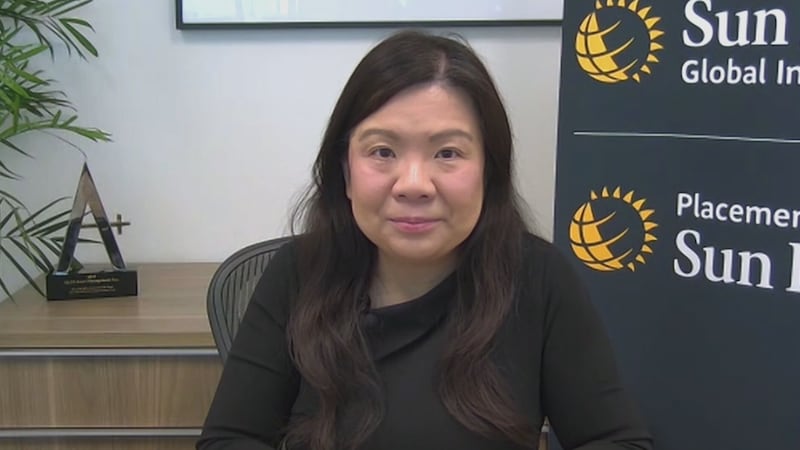
BNN Bloomberg spoke with Christine Tan, portfolio manager at SLGI Asset Management, who discussed Canada’s strategic position in critical minerals and how new U.S. Federal Reserve Chair Kevin Warsh may reshape monetary policy through changes to Fed communications, data analysis and decision-making processes.
Key Takeaways
- The G7’s role is evolving from broad global coordination toward managing economic security, supply-chain resilience and geopolitical risks.
- Critical minerals emerged as a major priority as countries seek to reduce dependence on concentrated processing and refining capacity.
- Canada is well-positioned as a trusted supplier of critical minerals, energy and other strategic resources needed by allied economies.
- Building alternative rare-earth refining and magnet-production capacity remains difficult due to environmental, technical and economic challenges.
- U.S. Fed Chair Kevin Warsh signalled a shift toward more data-driven policymaking and less reliance on forward guidance and rate forecasts.
Read the full transcript below:
MATT: Well, the G7 summit in Evian has wrapped, highlighting a more fragmented global economy with a clear shift toward economic security, tighter supply chains and critical minerals. Meanwhile, the U.S. Federal Reserve held rates steady yesterday but hinted at a more data-driven path ahead. For more, let’s bring in Christine Tan, portfolio manager at SLGI Asset Management. Good morning, Christine. Thanks for being here.
CHRISTINE: Good morning, Matt. Good to be here.
MATT: Give me your sense, too. It was interesting to see with the G7 and where things stand and how things are evolving. It certainly is not the same as it has been the past couple of decades. Give me your sense as the summit wrapped up and what we were looking for and then coming away from these world leaders, at least at this point.
CHRISTINE: I think the way you positioned it was perfect. The G7’s role has certainly evolved as a lot of other countries in the world are starting to grow and take more of their seats at the table, if you will. But this particular summit shows that the G7 still does have a role.
You referenced some of the key points. Some of the key topics that were discussed were how it’s clear that economic security and national security are tightly intertwined. As part of that, leaders are thinking about resilience when it comes to key components of the economy, whether it’s technology or resources. Then, of course, defence is certainly one of the key topics that was discussed in both formal meetings and formal lunches, as well as side conversations.
The third piece was really around this whole thought around critical minerals, the importance of trying to diversify away from China. China does 90 per cent of the refining. Just to be clear, even though they’re called rare-earth minerals, there’s actually a lot of rare earths in the world. Canada has a lot of it, obviously. Greenland, even the U.S., Australia and several countries in Africa have a lot of rare earths. The challenge really is in the processing and the downstream production into magnets.
MATT: Yeah, which is interesting too, because that diversification away from China is not necessarily something new we’ve seen. But as we talk about critical minerals, it is becoming such a vital part of what we’re going to see in the near future.
Do you believe that Canada and others are going to be able to increase that processing as they look toward that? How attainable is that goal? Leaders did set goals in some of these sectors and put caps on how much they are going to be dealing with China.
CHRISTINE: Yeah, and to your point, you referenced the cap. The goal is to reduce imports from any non-G7 country to a maximum of 60 per cent by 2030. They didn’t specifically call out China, but obviously China is the dominant player.
Even the U.S. currently imports about 70 to 71 per cent of its rare earths and magnets from China.
To your question on feasibility, it’s complex. What you’re really asking is, if it’s so important, why aren’t countries doing it? It’s because there are a lot of environmental challenges. Rare earths are highly available, but they’re highly diffuse throughout the resource. The actual production and leaching process requires a lot of chemicals, which has a large environmental footprint.
Permitting is difficult, and the cost of building that capacity is quite high. Then you also need the downstream process of converting refined material into magnets. That’s something China has built scale in over decades, not years.
That’s really the challenge. In China’s case, because there’s such a strong vertically integrated supply chain and strong government support, the industry has been able to build that capacity. What will be required for other countries is a similar approach, almost an industrial policy at the government level to encourage refining and magnet-producing capacity.
MATT: Yeah, going to be interesting moving forward.
I want to get your take as well on what we heard from new U.S. Fed Chair Kevin Warsh yesterday. It was largely expected to be a hold, and it was a hold, but some of the language we heard coming out of it was interesting.
Give me your sense of what you heard from the new Fed chair and what it could mean for monetary policy through the fall.
CHRISTINE: The hold was not a surprise. I think that was probably the most expected decision, and it was unanimous, so even Kevin Warsh himself voted to hold.
What was interesting was that we were really focused on trying to understand how he was going to transform the way the Fed communicates and the way the Fed intends on making policy.
Kevin Warsh used to be a governor, so he’s had a lot of experience. He’s been quite outspoken in saying that the Fed overcommunicates. He doesn’t like forward guidance and doesn’t really like dot plots. He believes they lock the Fed into decisions and don’t allow policymakers to react to data the way they should.
The other thing he talked a lot about is whether the data the Fed is currently using is fit for purpose and accurately reflects the realities of the underlying economy.
We were wondering how he was going to accomplish these changes. The five task forces he announced were a bit of a surprise, but not entirely, given that he has a pretty ambitious agenda.
One task force will focus on Fed communications, another on inflation, another on labour and productivity, another on forward guidance and communications, and another on the balance sheet.
He’s talked about artificial intelligence being a productivity-enhancing factor that should change the way the Fed looks at employment.
What was particularly riveting to me during the Q&A was a question about whether rates are restrictive. He was very nuanced in his response. He said rates are clearly restrictive for housing, but financial conditions across much of the rest of the economy remain quite loose.
What he’s getting at — and he’s been quite outspoken about this — is that the Fed’s balance sheet remains quite large. You can see that reflected in credit spreads that are near multi-decade lows and equity markets trading at relatively high valuations.
He’s really focused on the transmission mechanism of monetary policy and may be preparing us for more activity around the balance sheet.
Again, the decision itself was not the surprise. We were watching to see what changes he might make, and the task forces were the one thing we weren’t fully expecting.
Perhaps it’s a politically savvy decision because it’s a way of building consensus. Instead of coming in and saying, “This is what I think we should be doing,” he’s creating five independent groups to study these issues and come back with recommendations.
We’ll watch closely to see how independent those task forces are and whether he seeks to guide them toward his own thinking.
MATT: Yeah, and we’ll see what happens with the possibility of a rate hike in the fall. Christine Tan, portfolio manager at SLGI Asset Management, appreciate your time today.
CHRISTINE: Thank you so much.
---
This BNN Bloomberg summary and transcript of the June 18, 2026 interview with Christine Tan are published with the assistance of AI. Original research, interview questions and added context was created by BNN Bloomberg journalists. An editor also reviewed this material before it was published to ensure its accuracy and adherence with BNN Bloomberg editorial policies and standards.

