Oil prices have fallen sharply following the signing of a memorandum of understanding between the U.S. and Iran and the anticipated reopening of the Strait of Hormuz, but uncertainty remains around supply disruptions and the longer-term direction of crude prices.
BNN Bloomberg spoke with Jerome Hass, portfolio manager and partner at Lightwater Partners Ltd., about competing views on the oil market, the implications of U.S. Federal Reserve policy and investment opportunities in energy services companies.
Key Takeaways
- Oil prices have fallen about 30 per cent from recent highs, with much of the geopolitical risk premium already removed from crude markets.
- Energy specialists remain focused on tight supply conditions and potential disruptions that could support higher oil prices over time.
- Macro investors are increasingly concerned that higher interest rates and slower economic growth will weigh on oil demand.
- Hass said the U.S. Fed’s hawkish outlook has become a significant factor influencing investor sentiment and commodity markets.
- Energy services companies may offer investors exposure to the sector without the same direct sensitivity to fluctuations in crude prices.
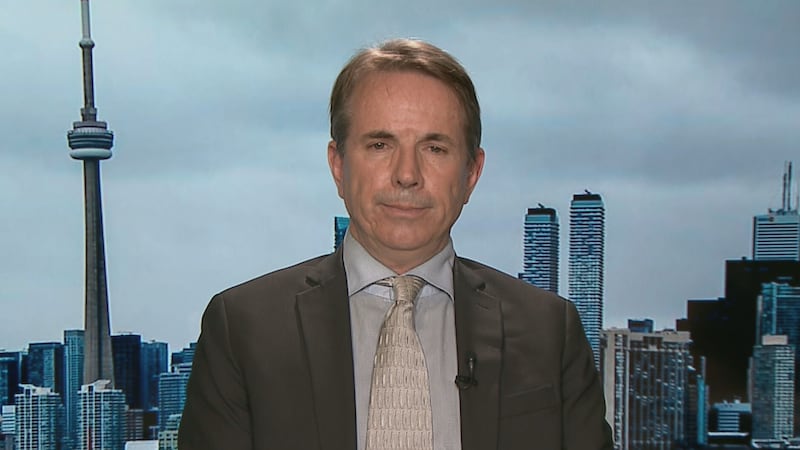
Read the full transcript below:
MERELLA: The U.S. President has already signed that memorandum of understanding with Iran. It was supposed to be signed on Friday. We see the price of oil here, which is the July contract, down to $74.21, so down more than 3.4 per cent, with an understanding now that the strait will reopen to traffic. Let’s go to Jerome Hass on this. He’s portfolio manager and partner at Lightwater Partners. Thanks for joining us today.
JEROME: Thanks for having me.
MERELLA: So, clearly a lot of optimism that the agreement will, first of all, hold. Where do you see oil settling once the initial reaction is over?
JEROME: Well, it was interesting. If you asked me two weeks ago, I would have said $75, or $70, would probably be the bottom we’d see in 2026 for the remainder of the year. We’re already at $74.20 today, so I think we’re pretty close to what a lot of people would think is the bottom. But it’s a question of whether we overshoot. I think if you look at pre-crisis, people were saying $60 or $65 would be the November election bottom. We’re not too far off that. We’ve fallen about 30 per cent from our peaks in April, and we’re only 11 per cent, I think, above where we were prior to the war. So there’s not a lot of the war impact being priced into crude oil right now.
MERELLA: Okay, so you mentioned perhaps we could have overdone it. Investors have overdone it. Do you think they’re factoring in the fact that traffic through that strait might be very slow? We don’t know about underwater mines. We don’t know how much backup still exists. Does all of that, you think, need to be factored in as we move along?
JEROME: Yeah, I think there are sort of two camps looking at the situation. You have the industry specialists who are saying even if everything goes according to plan with the MOU, it’s still going to take a lot of time to bring supply back into the market, and so there will continue to be disruptions in the physical market.
On the other hand, you have the generalists, who are more the macro investors, looking at it from a different perspective. Again, this reflects more the financialization of the oil market. What they’re saying is, especially after yesterday’s U.S. Fed meeting, rates are clearly going to be going up. Inflation remains a problem, and as a result, the overall economy is likely to slow, and so will demand for oil. As a consequence, that’s why we’re seeing the selloff today and yesterday, and the oil price continuing the trend we’ve seen since Monday.
MERELLA: Yeah, so the U.S. Fed held rates yesterday, but there were nine who thought there could be a hike by the end of the year. How do you think this signing of the memorandum changes things for the U.S. Fed, if you think it does?
JEROME: Well, it makes it easier for them, to be sure. But Kevin Warsh was quite specific in his comments, saying they wouldn’t set policy based on commodity prices, or at least first-order commodity prices. But they certainly have to be aware of the second-order effects, which is the overall impact on the American economy.
As you said, nine of 19 U.S. Fed members had at least one rate increase for the remainder of this year, and I think that has spooked the market. It was one of the reasons there was that big selloff in the overall market yesterday.
MERELLA: Okay, let’s talk about a couple of stocks that you like right now that are connected to energy but not necessarily affected by the changing price of oil. Phoenix is one we’ll start with. It’s a drilling service.
JEROME: Yeah, so PHX is a drilling services company, and they are the largest independent directional drilling company in Canada. They really specialize in lateral wells, in particular a new methodology that’s come out called the fishbone.
If you think about the shape of a fish on your plate after you’ve eaten it, with all the ribs sticking out, that’s literally where the fishbone methodology comes from. What it does is really improve the efficiency of drilling from a single pad.
What’s been interesting over the last decade is that despite rig counts falling, we’ve actually been able to increase output from drilling, and that’s because of the efficiency gains we’ve seen. PHX is one example of that. It’s about a $500-million company. It’s got a nice 7.5 per cent yield on it, which should appeal to a lot of retail investors, and it trades at about four times EBITDA, which we think is a pretty cheap valuation for a stock like that.
MERELLA: All right, let’s get to Total Energy Services. They also drill, but they do rentals as well. What’s the biggest part of their business?
JEROME: Well, they have four verticals, so drilling is a part of that. They also have compression, well servicing and rentals, so they’re a little more diversified than PHX.
But we really love the way the company is managed. They’ve got tight fiscal discipline. One of the things we like about the energy services sector is companies haven’t been bumping up their capital expenditures when oil prices have risen, which is a change from what’s historically happened in the energy patch. It’s that fiscal discipline that we like.
Total Energy Services trades at about 3.5 times EBITDA for a company that’s going to be growing at least 15 per cent this year. We think it’s a nice combination of cheap valuation, growth, a rock-solid balance sheet, and you get about a 2.2 per cent yield on it.
So, if you’re concerned about falling crude prices, we think this is an alternative way to play it so that you don’t have direct exposure to crude oil prices.
MERELLA: All right, I’m going to leave it there. Jerome Hass, appreciate your time. Thanks for joining us. Jerome Hass, portfolio manager and partner at Lightwater Partners.
---
This BNN Bloomberg summary and transcript of the June 18, 2026 interview with Jerome Hass are published with the assistance of AI. Original research, interview questions and added context was created by BNN Bloomberg journalists. An editor also reviewed this material before it was published to ensure its accuracy and adherence with BNN Bloomberg editorial policies and standards.

