Canada’s April retail sales rose modestly, but underlying spending volumes remain weak, raising concerns about the strength of consumer demand and the broader economy.
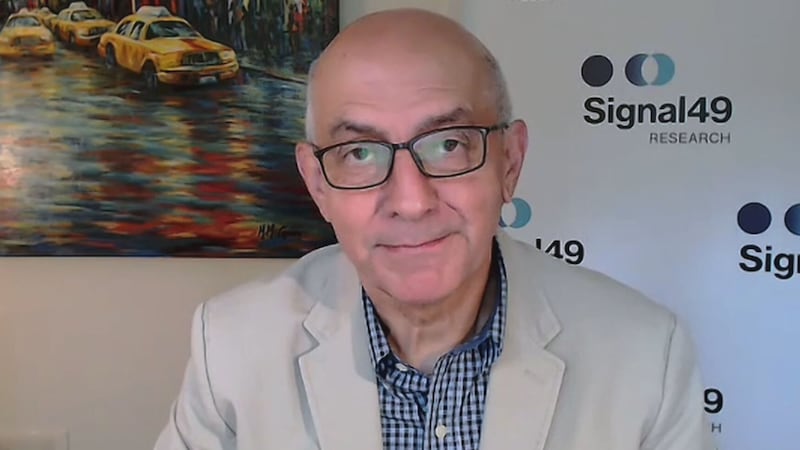
BNN Bloomberg spoke with Pedro Antunes, chief economist at Signal 49 Research, who said consumer spending has been one of the few areas supporting economic activity as households face higher debt servicing costs, weak employment growth and slowing business investment.
Key Takeaways
- April retail sales rose 0.5 per cent, but much of the increase reflected higher prices rather than stronger consumer demand.
- Retail sales volumes were largely flat, suggesting Canadians are purchasing fewer goods despite higher spending totals.
- Higher mortgage renewal costs and debt servicing expenses are putting pressure on household disposable income.
- Consumer spending has been one of the main supports for economic activity as business investment and trade remain weak.
- Antunes expects the Bank of Canada to remain on hold unless inflation reaccelerates or economic conditions deteriorate significantly.
Read the full transcript below:
LINDSAY: Statistics Canada released April retail sales data this morning, which rose 0.5 per cent month over month, falling just below estimates. Here to help us unpack the numbers and what they signal for the broader economy is Pedro Antunes, chief economist at Signal 49 Research. Good morning, great to have you join us.
PEDRO: Good morning, Lindsay.
LINDSAY: So, what’s your reaction to the latest retail sales data? Did this also fall slightly below what you were expecting?
PEDRO: Well, in fact, not really. I think when we look at the value of retail sales, they did increase, and it’s largely on inflation pressure. So, it’s the price of goods, especially gasoline prices, that are driving up the kind of nominal value of retail sales. But when you dig below the surface a little bit and you look at the volume — in other words, the quantity of stuff that people are purchasing at a base price — that is actually very, very flat, and the consumer is generally fairly weak.
But in fact, it’s the consumer that’s been more or less holding up the economy in the last year, and so we’re worried about where we’re headed going forward. If consumer spending does ease up any further, it’s the last bastion holding up our fairly weak economy, as we know.
LINDSAY: I definitely want to talk about that moving forward, but just to go over some of the data that we saw today first, where are Canadians choosing to spend right now?
PEDRO: Yeah, well, what we saw is core spending actually down. Core spending is things that are necessities in life, like food and essentially all of those consumer goods that are staples. That’s actually weak.
The one bright light here, aside from gasoline, which is just more costly, has been in building supplies and construction materials, and that is seasonally adjusted data. So it does suggest that there’s a little bit of activity going on that’s positive.
But generally speaking, again, when we look at the volume, it’s fairly weak. There’s an advanced indicator now for May, and that isn’t essentially showing a lot of strength either.
LINDSAY: And you say consumer spending has really been holding up our economy in Canada. I wonder, what does this data tell us about the health of the economy as we move into the second half of the year?
PEDRO: Well, again, I go back to the volume, the amount of stuff. When we look at the last year, as you know, Statistics Canada told us we were in a technical recession over the last two quarters.
What had held up consumer spending, certainly in the last quarter and in the first quarter this year, had been consumers, but that happened with a drawdown in our aggregate savings. We can’t keep going at that pace. We need stronger employment, stronger income growth and less inflation to help consumers get through.
The one bright light, I would say, in the news that we’ve had recently is that at least it seems that oil prices are coming down. Hopefully that holds up and we see inflationary pressures ease. The rest of the economy doesn’t seem all that strong right now.
LINDSAY: Advanced estimates for May show a rise of about one per cent when it comes to retail sales. I’m not sure if you agree with that, but if we see gas prices ease, as you were just talking about, could that free up household budgets for more discretionary spending moving forward?
PEDRO: Yeah, that would be the better news, that we do see inflationary pressures come down, especially on the gasoline side, because we’d see that almost immediately at the pump. Just as we saw it on the way up, we’d see it almost immediately at the pump.
So that would be good news and hopefully, as I said, hold up the volume of consumer spending on other things, especially on those core products that have been suffering in recent months.
LINDSAY: What else could help really hold up consumer spending? If energy prices easing is one thing, what other factors would you like to see?
PEDRO: Well, I think it’s more the opposite. Part of the problem here, first of all, is there’s a big dichotomy in how households are being hit by the current economic conditions.
One of the big factors is that a lot of households that are younger and lower income are highly indebted, and they’re turning over or renewing mortgages that they first took on during the pandemic in 2020 and 2021. Those mortgages are being renewed at much higher rates right now.
So that is still happening in the economy, and that is still essentially eroding or eating away at household disposable income, excluding those forced debt payments.
The cost of debt servicing is actually increasing. As I mentioned, aggregate savings rates are declining, or at least they declined quite substantially in the last quarter. So if the consumer is kind of dying out, we need either trade to do better or business investment, and none of those components, as we know, are doing well right now.
LINDSAY: And I wonder what all of this could mean for future interest rate policy announcements moving forward. Seeing these numbers today, how much of an effect do these numbers alone have on what the Bank of Canada is looking at?
PEDRO: Yeah, I don’t think this will change the view of the Bank of Canada in terms of policy direction right now.
I think what they’ll be very concerned about, or looking at very carefully, is underlying inflationary pressures. As I mentioned, and as we all know, we have seen some relief here in oil prices. That’s what the Bank of Canada is going to focus on.
The Bank of Canada was quite early in reducing interest rates. I talked about the mortgage rates that are still high, but at least short-term rates and the Bank of Canada rate have come down.
I think they’re comfortable with the level of the interest rate right now unless we see something drastically change in the economy, either stronger inflation that persists or a much weaker economy. I think the bank is going to stay where it is in terms of its rate.
LINDSAY: But obviously, as you say, if consumer spending doesn’t hold up, then we will start to see a much weaker economy, right? What would that look like in the second half of the year? What’s the trickle-down effect really from consumer spending?
PEDRO: Well, we all know that the economy has been flat. If you look at the monthly numbers, the monthly pattern we’ve seen is essentially flat GDP — that’s economic activity — and fairly flat employment since the end of 2024.
It’s not been a great year in 2025, and we’ve not started this year with much strength at all.
As I said, most of the pullback in economic activity last year, and even through the first quarter, was business investment and trade more broadly, whereas consumer spending was what kind of held up the fort.
If consumer spending, as we’ve seen and as I just mentioned, starts to ease, then there’s real concern about whether we’ll see business investment. We’re hopeful, but I think it will take time to see business investment or trade improve.
We need a new CUSMA agreement before we see trade picking up as well. So we’re in kind of a standstill here, and I do worry about the next quarter and the next few quarters. I do think we’re going to see an economy that’s really quite flat through 2026 overall.
LINDSAY: Okay. Pedro Antunes, chief economist at Signal 49 Research, we’ll leave it there for today. Thanks so much for joining us.
---
This BNN Bloomberg summary and transcript of the June 19, 2026 interview with Pedro Antunes are published with the assistance of AI. Original research, interview questions and added context was created by BNN Bloomberg journalists. An editor also reviewed this material before it was published to ensure its accuracy and adherence with BNN Bloomberg editorial policies and standards.

