Canada’s inflation rate rose above three per cent in May, driven largely by higher gasoline prices, but underlying price pressures remain relatively contained as oil prices retreat from recent highs and economic growth slows.
BNN Bloomberg spoke with David Onyett-Jeffries, economist and portfolio manager at Guardian Capital LP, who said the Bank of Canada is likely to remain focused on weak growth and the absence of broad-based inflation pressures while investors continue to watch energy prices, AI-driven capital spending and geopolitical developments.
Key Takeaways
- Canada’s inflation rate exceeded three per cent in May, with gasoline and food prices accounting for much of the increase in consumer prices.
- The Bank of Canada is not yet seeing evidence that higher energy prices are broadly feeding into other areas of the economy, reducing pressure for additional rate hikes.
- Slowing economic growth, weak GDP trends and soft employment conditions are likely to keep policymakers focused on supporting growth rather than tightening policy.
- AI-related spending on data centres, semiconductors and supporting infrastructure continues to drive corporate capital expenditures and equity leadership despite concerns about concentration.
- While a small group of large technology companies continues to dominate S&P 500 gains, improving economic conditions could create opportunities in industrial, energy and other cyclical sectors.
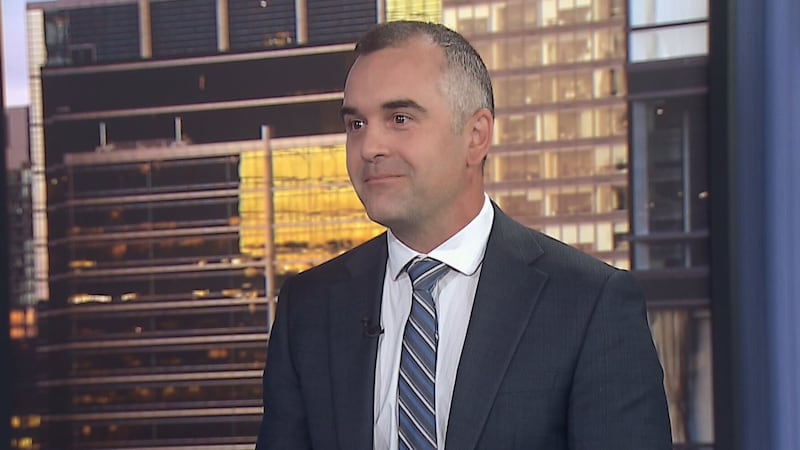
Read the full transcript below:
LINDSAY: Canada’s CPI data jumped by just over three per cent in May, with high gasoline prices pushing Canada’s inflation rate to its highest level since 2023. Here to give his insights is David Onyett-Jeffries, economist and portfolio manager at Guardian Capital LP. Good morning. Thanks for joining us in studio.
DAVID: Good morning. Pleasure to be here.
LINDSAY: The survey for most was expecting a 2.8 per cent year-over-year increase in CPI. It is more than that, obviously. What were you expecting? Were you expecting it to be a little less than what we saw?
DAVID: No, more or less expecting it to be in line with this. We’re dealing a lot with gas prices, and the seasonal adjustment factors can be complicated there. But we’re seeing extremely large movements in oil prices, which are then triggering over to refined products, especially gasoline. So that impacts consumers at the pump.
I think the key here is that, obviously, for everybody in their day-to-day life, quality of life is impacted by a higher cost of living. If we look at this report, it was driven by food and gas prices, which obviously are key components of everybody’s budget.
But from a policy lens and from a market lens, what really matters is that we’re not seeing this broadening out of the price pressures. Over time, when you have higher oil prices, especially because they factor into all modes of production, they’re a key input not just for making products but also for logistics. The big concern of central banks is when you start seeing those oil prices broaden out across the economy, creating upward pressure on prices. At that point, concern starts to rise.
But if we go back two weeks ago, the Bank of Canada made a point of saying that they’re not yet seeing that broadening out of oil price pressures into other areas, and the report this morning seems to echo that.
LINDSAY: Which is interesting. I don’t know what the timeline would be for that broadening out. It’s also kind of like a trickle-down effect of seeing these prices, right?
DAVID: Oh, for sure.
LINDSAY: When do you think we would see something like that?
DAVID: Most estimates tend to be that the way things flow through the production process is about a six-month time horizon.
LINDSAY: Okay.
DAVID: So from the start of the war to maybe the end of the summer is, in theory, where we’d start to see the pressures.
But as you noted there, oil prices have come off a lot since we had the agreement, the initial agreement, with the U.S. and Iran. Oil prices are down roughly 15 to 20 per cent.
That’s one of the things that makes a CPI report like this a little backward-looking because, going forward, we’re not dealing with US$90 oil, barring some sort of escalation or a breakdown in talks. Right now, we’re moving forward with lower energy prices, so there will be less upward impact from oil going forward.
LINDSAY: So you don’t think we would see the impacts of what we’ve been seeing over the last couple of months? We’re not going to feel that down the road if this conflict resolves itself right around now, right?
Because we were talking about the Bank of Canada. Markets are pricing in a further rate hike. Does today’s data support that or not?
DAVID: Going back to two weeks ago, when the Bank of Canada made its announcement, there’s a lot more of a balancing act in Canada because we’re concerned about growth. First-quarter GDP missed expectations. We’re in the midst of a technical recession, which is two consecutive quarters of negative GDP growth.
If we look year to date, overall employment is negative, even though we had a very strong report last month. The concern is that if you start raising interest rates in an environment where growth momentum is slowing, you’re going to exacerbate that problem. At that point, inflation concerns become secondary.
So in this current environment, when you’re not seeing underlying prices broaden out yet and you’re getting progress with respect to oil prices and Middle East tensions, it allows the central bank to be a little more focused on growth.
Even though markets are pricing in, I think this morning, about 40 basis points of hikes by year-end, that commentary assumes things continue on this negative course with high oil prices. We’re just not really seeing that. We think the prospect is lower, and I think the market is getting ahead of itself on the willingness of the central bank to be aggressive in this environment.
LINDSAY: Energy costs and trade uncertainty are still driving headlines, despite what we’re seeing for the time being at least. Is this changing how businesses are choosing to allocate their capital expenditures this quarter? Is this changing how businesses are looking at their strategy moving forward?
DAVID: It impacts more at the margin. I think the big thing when we’re talking about capital expenditures right now is the AI narrative and the AI trade, which is more of a secular than a cyclical story.
Energy prices can have more impact on cyclical spending because if you’re not certain about what’s going to happen with growth, then you’re going to start pulling back.
But when we’re talking about the AI narrative, this is a medium- to longer-term initiative. Companies are realizing that if they want to implement this going forward, they need to start building the infrastructure now. That’s really what we’re seeing in terms of the big buildout in investment spending. It’s just that, at the margin, more cyclical spending is being restrained.
LINDSAY: Right. Okay. When we’re talking about AI-related infrastructure and AI spending right now, a lot of that is still driving markets. How sustainable do you think that is?
DAVID: Realistically, when you have 100 per cent growth, that’s not sustainable over time. You’re going to see that start to taper off.
But if we’re talking relatively near term, you get these great surveys in the U.S. on the adoption of AI technologies. How many companies are implementing it? We’re still only at roughly 20 per cent.
LINDSAY: Twenty per cent of companies are implementing it?
DAVID: They are implementing AI currently. The expectation, based on these surveys, is that it will be 25 per cent within six months.
The likelihood is that as we move forward, and if we do start seeing the productivity gains that result from these technologies, you’re going to see broader uptake.
While 100 per cent year-over-year growth rates are not necessarily sustainable, there is still a lot of scope and capacity for that investment to continue at a fairly robust pace.
LINDSAY: We’ve seen just 10 stocks driving 90 per cent of the gains in the S&P 500. Is that concentration a risk?
DAVID: Oh, for sure.
As markets have moved more and more toward passive investing, a lot of investors don’t realize how concentrated their portfolios are. You’re taught that if you buy the S&P 500 index, then you’re buying the broad market. But increasingly, roughly 40 per cent of the S&P 500’s market capitalization is tied to the AI narrative.
It creates opportunities from an active-investing standpoint. You could have the headline index flatline or start to decline, but that’s not necessarily indicative of weakness across the broader market. It may simply mean investors are realizing they don’t like the concentration risk and want to diversify more readily.
These are giant cash-generating companies. It’s distinctly different from other areas where things are getting bid up. You can argue whether valuations have become detached from fundamentals, but these are inherently strong companies to begin with.
Still, investors could decide they want to scale back exposure and allocate elsewhere. If you look at markets from a valuation perspective, overall things look expensive, and there may be some froth in the most heavily bid-up names. But the rest of the market looks reasonably valued. That’s where opportunities can emerge.
LINDSAY: Are there other sectors that you like, or that you think people should be looking at if they’re trying to diversify a little more?
DAVID: For sure.
I think we’re approaching a point where, especially in the U.S., which tends to guide broader markets, conditions are in place for a cyclical upswing.
We have uncertainties that are restraining things at the margin, but as political uncertainty ebbs and negotiations continue to make progress, that stress could start to fade.
If inflationary pressures subside and interest rates don’t have to move higher because central banks don’t need to respond to energy-driven inflation, then you’re removing some important headwinds.
From a fundamental perspective, consumers in the U.S., Canada, Europe and even Japan remain on relatively good footing. Businesses are looking to spend, especially given the AI narrative, and governments are loosening the purse strings through major stimulus initiatives.
That sets up the potential for a cyclical upswing. Areas of the economy geared toward capital spending—not necessarily just technology, but also industrials and energy, where infrastructure and power grids need reinforcement—could benefit.
LINDSAY: Okay, we’ve got to wrap it up there. We’re out of time. Appreciate you coming in studio, as always. Thank you.
That was David Onyett-Jeffries, economist and portfolio manager at Guardian Capital LP.
---
This BNN Bloomberg summary and transcript of the June 22, 2026 interview with David Onyett-Jeffries are published with the assistance of AI. Original research, interview questions and added context was created by BNN Bloomberg journalists. An editor also reviewed this material before it was published to ensure its accuracy and adherence with BNN Bloomberg editorial policies and standards.

