Markets are pulling back as investors reassess technology valuations following a strong run-up in AI-related stocks, while geopolitical concerns and changing interest-rate expectations continue to influence sentiment.
BNN Bloomberg spoke with Sadiq Adatia, chief investment officer at BMO Global Asset Management, who remains constructive on equities, citing resilient consumers, healthy corporate earnings and continued economic strength in the U.S.
Key Takeaways
- Technology valuations are facing increased scrutiny, but the long-term AI growth story and earnings outlook remain strong.
- The U.S. remains Adatia’s preferred market because of economic strength, healthy consumers and strong corporate earnings.
- Consumer spending has softened somewhat, but household balance sheets remain resilient and continue to support economic growth.
- Canada remains a neutral allocation due to uncertainty surrounding USMCA negotiations and slower economic momentum.
- Equities remain preferred over cash and bonds, while bond allocations face pressure from uncertainty around future interest-rate moves.
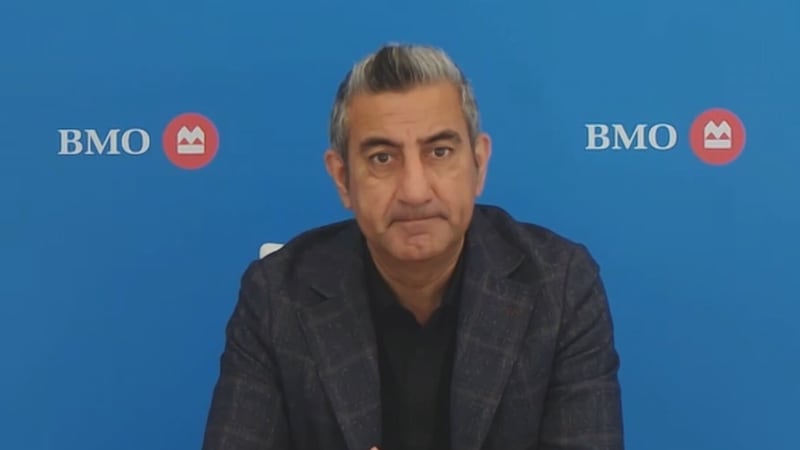
Read the full transcript below:
ROGER: U.S. indices are well into the red this morning, weighed down by a pullback in tech stocks. Despite worries about stretched tech valuations and geopolitical tensions in the Middle East, our next guest says they remain bullish on the global economy through the rest of the year.
Joining us now is Sadiq Adatia, CIO at BMO Global Asset Management. Sadiq, thanks very much for joining us today. Quite the move in the markets right now, though.
SADIQ: Yeah, absolutely. Thanks for having me. We’re definitely seeing a lot of volatility picking up over the last few days, despite the fact that we’re getting some sort of resolution on the Iran situation.
I think a lot of it is tied to the AI story and valuations. Obviously, we had SpaceX come out, and that’s also adding pressure on some of the valuation side.
I think the market is digesting this. A lot of the news on the Iran situation was almost priced in for the perfect scenario. Now that we’ve got resolution, we’re not really seeing a significant upside at the moment. Instead, markets are going back to the other question, which is: Are valuations accurate? Do earnings still matter?
Obviously, earnings do matter, but valuations are something the market is still grappling with, and that’s what you’re seeing today in terms of volatility.
ROGER: Was this — I mean, we’re talking about South Korea. Their market was off 10 per cent today. Is that what’s triggering this, or is it just that everybody was kind of on edge and said, “Oh, here we go”?
SADIQ: Yeah, no. South Korea has done really well because of the AI story, and it’s been one of the areas that we’ve been very bullish on and done quite well in.
But as you get some pressure on AI, areas that have done so well, like South Korea, tend to get hit.
I think you’ll see this become an opportunity at some point if it continues to drop further from here.
When you look longer term, the AI story is still exceptionally strong. Earnings are still exceptionally strong, and demand continues to be there. The question is whether the multiples have caught up with the revenue projections and the full benefits of the AI story. That’s what people are questioning from that perspective.
ROGER: But you still remain bullish on the U.S., though.
SADIQ: Yeah, we’re very bullish on the U.S. We’ve been bullish there for many years now.
When we look at the U.S. economy, it’s the healthiest economy. It’s got the healthiest consumers. If you think about where the strength is in terms of companies and corporations, it is in the U.S.
If you think about the interest-rate scenario, it’s still a healthy interest-rate environment. Yes, we probably are now seeing a potential for rate hikes down the road, but I think for 2026 we’ll likely stay on the sidelines, and that’s still going to be very good for U.S. companies.
Given the fact that we’ve seen tariff conversations and the oil situation, despite all of that, we’ve still seen the consumer do really, really well, not a significant amount of job losses, and earnings continue to be spectacular.
ROGER: I was going to say, are there not some cracks in consumer spending and in consumers in general?
SADIQ: Yeah, that is definitely a fair point.
I think what you’re seeing is some softening on the consumer side, but consumers have been exceptionally resilient.
If you think about their balance sheets, sure, you’re seeing rates potentially go up and higher oil costs impacting them, but at the same time, you’re seeing tax rebates coming through, and you’re seeing net worth improve dramatically, particularly for higher-income earners who have been invested in the markets.
When you put it all together, yes, confidence levels might be coming down, and that might be slightly impacting spending. But generally, when consumers look at their balance sheets, they look very healthy, and that’s causing them to continue to spend more than you might expect.
ROGER: All right. Now, Canada, though — you’re neutral right now.
SADIQ: Yeah. I’d love to be more bullish on Canada, like I am for the World Cup here, but the truth is that Canada still has some headwinds ahead of it.
The uncertainty around the USMCA deal is a big one. It’s causing companies not to spend and not to add labour. The same goes for foreign companies looking to come to Canada. They’re all waiting to see how this plays out.
I think it’ll be a relatively good outcome in the end, much better than what other countries have got, but there’s no urgency at the moment for the U.S. to get this deal done.
The election is around the corner, and it’s obviously dealing with the U.S.-Iran situation. For me, this is still going to be a cloud that lingers for a little while, and that’s the thing holding Canada back from doing exceptionally well. That’s why we’re neutral at this point in time.
Once we get past all this, I think there’s an opportunity for Canada to do quite well.
We do have the benefit of higher oil prices as a potential tailwind. We have a weaker Canadian dollar, which should be helping on the export side of the economy. And if the U.S. remains as strong as it is, that should lift us up as well.
Overall, I’m a little more optimistic about where Canada is going, but just not quite yet. I want to see the USMCA deal, or at least some signs of how it might play out, before I become more overweight on Canada.
ROGER: Okay. Now, you think the Canadian dollar will strengthen. How does that play in with everything you just said?
SADIQ: In the short term, obviously, we’ve seen strength in the U.S. dollar, which is why we haven’t gone overweight the Canadian dollar. For the most part, I’ve actually been more overweight the U.S. dollar. We’re now back to neutral on the Canadian dollar.
A lot of people thought when energy prices soared that the Canadian dollar would do better because they thought of it as a petrocurrency, but that’s not really true anymore because the U.S. is now a net exporter of oil, so that differential is no longer there.
It’s really tied to the economy and the interest-rate environment.
Canada has a higher potential of raising rates than the U.S. does. I hope that doesn’t occur, by the way, but that’s putting some pressure on things.
At some point, we’ll turn around and see the Canadian dollar start to appreciate more over time. Again, the USMCA deal is also something that’s holding it back.
In the short term, I think the Canadian dollar could still soften a little bit or move closer to stabilization. But if I look over the next five years, I think the Canadian dollar starts to appreciate, and the U.S. dollar loses momentum more broadly — not only against the Canadian dollar but against world currencies — as people start looking for other currencies and other ways, like gold, to balance out their reserve holdings.
ROGER: And with bonds, you’re saying underweight. We’re almost out of time, but you’re saying underweight for bonds.
SADIQ: Yeah. Right now, given the uncertainty around interest rates, I think you want to be more in cash than bonds.
But again, if you’re going to take on risk, you take it in the equity market. So we tilt toward equities over cash, and cash over bonds. That’s how we’re looking at risk appetite at this moment in time.
ROGER: All right, we’ve got to wrap it up there, Sadiq, but thanks, as always, for joining us.
SADIQ: Thanks for having me.
ROGER: Sadiq Adatia, CIO at BMO Global Asset Management.
---
This BNN Bloomberg summary and transcript of the June 23, 2026 interview with Sadiq Adatia are published with the assistance of AI. Original research, interview questions and added context was created by BNN Bloomberg journalists. An editor also reviewed this material before it was published to ensure its accuracy and adherence with BNN Bloomberg editorial policies and standards.

