Bank of Canada Governor Tiff Macklem’s warning about growing concentration in U.S. assets is sparking debate over whether investors should reduce exposure to the world’s largest capital market. While concentration risks exist, some investors argue the U.S. continues to attract capital because of its depth, liquidity and favourable business environment.
BNN Bloomberg spoke with Mike Vinokur, portfolio manager at Propellus Wealth Partners with iA Private Wealth, about Macklem’s comments, the outlook for oil prices and inflation, and investment opportunities in gold and technology stocks following recent pullbacks.
Key Takeaways
- Vinokur said investors will continue directing capital toward markets that offer the strongest combination of growth, liquidity and investor confidence.
- While concentration in U.S. assets can amplify the impact of a correction, he argued the U.S. remains one of the world’s most attractive destinations for capital.
- Recent weakness in oil prices could prove temporary, as supply disruptions and replenishment of strategic reserves may support demand.
- Vinokur believes oil prices are approaching levels that may discourage new production and help establish a market equilibrium.
- He sees value emerging in both gold equities and large-cap technology names after significant declines from recent highs.
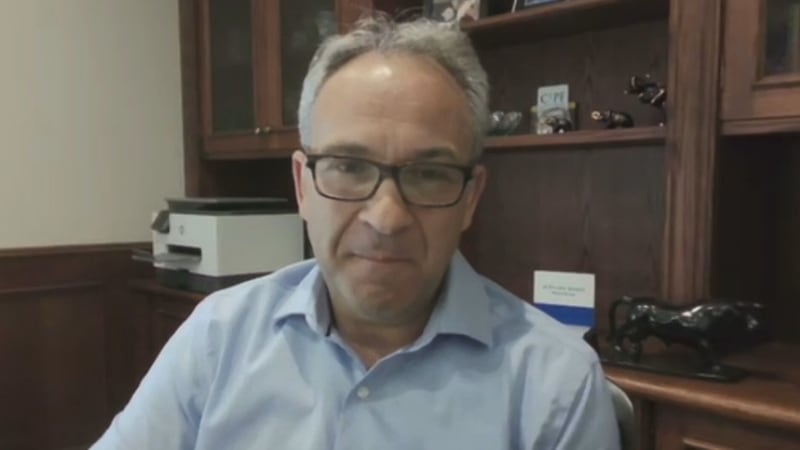
Read the full transcript below:
ROGER: At a speech in Paris yesterday, Bank of Canada Governor Tiff Macklem warned that overinvestment in the U.S. is creating broader correction risks for the global financial system. Here to give us his thoughts on the speech and discuss what it means for managing exposure to the U.S. is Mike Vinokur, portfolio manager at Propellus Wealth Partners with iA Private Wealth. Mike, thanks, as always, for joining us, sir.
MIKE: Pleasure to be here with you.
ROGER: Okay, your thoughts on what the governor had to say?
MIKE: Well, we think that it’s dangerous for governors of central banks to tell investors where their capital is going to be treated best. Obviously, people are going to invest in markets and currencies that they feel comfortable with. There’s a reason, in our view, that the U.S. market has, by and large, outperformed many markets around the world for so long, and that probably has to do with the breadth and depth of companies listed on those exchanges, the thinking that the U.S. dollar is still a great currency to be invested in, the regulatory environment and the tax environment.
So, yes, the comments are well-founded, but at the end of the day, there’s a reason why capital moves freely around the world, and if there were such great opportunities around the world, then capital will most likely find its way there. There’s always two sides to every story.
ROGER: Why do you think he was saying it? Was there a certain audience he was directing that at?
MIKE: Well, as a central banker, they’re probably always worried about imbalances because, to his point, if you have a major market correction and a lot of the world’s capital is invested in a particular asset or country, then the whole world can feel it. That’s absolutely true. There’s no denying that.
But by the same token, investors like us and investors around the world are always going to be putting their money where they think it’s going to be treated best, regardless of what a central banker may or may not say.
ROGER: So I’m going to guess you’re just going to go ahead and do what you feel is right. You still look at the U.S. and think of it as a great opportunity, or a strong opportunity.
MIKE: We have a fiduciary duty to manage risk versus return, or return versus risk, however you want to think about it. To us, the U.S. market is one of the deepest capital markets on the planet.
Love it or hate it, the current administration is deregulating. There’s a lot of capital formation happening in markets, many IPOs, some huge ones as of late, coming out. They are being bought up with fervour. So this is, right now, probably one of the best games in town.
ROGER: And with everything that’s unfolding in the Middle East, we’re seeing oil drop below US$70 a barrel. That should help inflation. Do you see it strengthening or just holding where it is?
MIKE: It’s very important for viewers to understand that the price of WTI and the price of Brent are financial contracts, and there’s a lot of hedging and speculation in those contracts going on. It doesn’t necessarily mean that those are the prices being paid by the actual buyers of crude, which typically are refiners.
There are many different delivery points and many different grades. Having said that, we think that the price of oil right now has probably overshot to the downside because the Strait of Hormuz is not yet fully open, to our knowledge. There’s still going to be a backlog of demand. There are going to be strategic petroleum reserves that need to be replenished, and who knows how long those wells are going to take to come back online and how quickly.
ROGER: And could that potentially, though, could we see a glut at the end of that, assuming this goes through? Because now we’re talking about possibly more Iranian oil coming on. I know we have to rebuild the reserves, but could we hit a point where we could actually see it go the other way?
MIKE: It’s always possible. No one knows for sure. I remember that in 2014, “Drill, Baby, Drill” — everybody thought it was going to be nirvana. Then we looked over our shoulders a year and a half later and we had a glut.
So you’re absolutely right, and your point is well taken. But at the margin right now, we think that there’s been demand destruction for sure, with many countries and governments mandating people to stay home and work from home.
But you’re also still dealing with probably 10 million barrels that have been shut in, so I don’t know how quickly those barrels come back on the market.
The other thing is there’s an idea in economics that supply meets demand at a certain price, and the cost of production in North America, to generate a certain return on investment, probably requires oil at about US$65 a barrel on average. Some basins are lower, some are higher.
So I think that we’re probably coming to a price where you’re going to hit some equilibrium levels and, most likely, in our view, bounce.
ROGER: Okay, let’s get to some picks that you have your eyes on right now. Agnico Eagle first up.
MIKE: Yeah, so the gold companies have been really punished here as of late with the price of gold. I think it hit US$5,400, and I saw it this morning actually below US$4,000 for the first time in a long time.
We’re not gold bugs by any stretch of the imagination, but Agnico Eagle has proven to be one of the best-managed gold producers in the space, with a very strong balance sheet. You get a small dividend while you wait. We think there’s growth in production.
Their cost of production, the last time I checked, was somewhere in the US$1,500 to US$1,600 range, including royalties and all-in costs. So you’re talking about a company that’s still generating roughly US$2,400 per ounce at these prices. That’s a pretty good profit.
We think they’re going to buy back stock and be very good stewards of capital, and we think the risk-reward is definitely there at this price.
ROGER: Okay, Microsoft.
MIKE: Software — what do they call it? The software apocalypse, SaaS-pocalypse. It’s taken down so many companies in the space.
But think about Microsoft. Who doesn’t use Outlook? So many of Microsoft’s properties are embedded in everyday life. We view Microsoft more like a utility. Most companies and most individuals need the base software that Microsoft produces in order to operate their day-to-day lives and businesses.
It’s ubiquitous, it generates a ton of cash flow and it’s got very high margins. At this price, we think there’s a lot of value and a lot of reward relative to risk.
ROGER: Okay, we have to wrap it up there, Mike. Thanks, as always, for joining us.
MIKE: Pleasure. Thank you for having me.
ROGER: Mike Vinokur is portfolio manager at Propellus Wealth Partners with iA Private Wealth.
---
This BNN Bloomberg summary and transcript of the June 24, 2026 interview with Mike Vinokur are published with the assistance of AI. Original research, interview questions and added context was created by BNN Bloomberg journalists. An editor also reviewed this material before it was published to ensure its accuracy and adherence with BNN Bloomberg editorial policies and standards.

