The Bank of Canada’s approach to communicating inflation remains under scrutiny as policymakers weigh how best to explain interest-rate decisions while preparing to renew the country’s monetary policy framework. Clearer messaging could play a key role in maintaining public confidence during a period of heightened economic uncertainty.
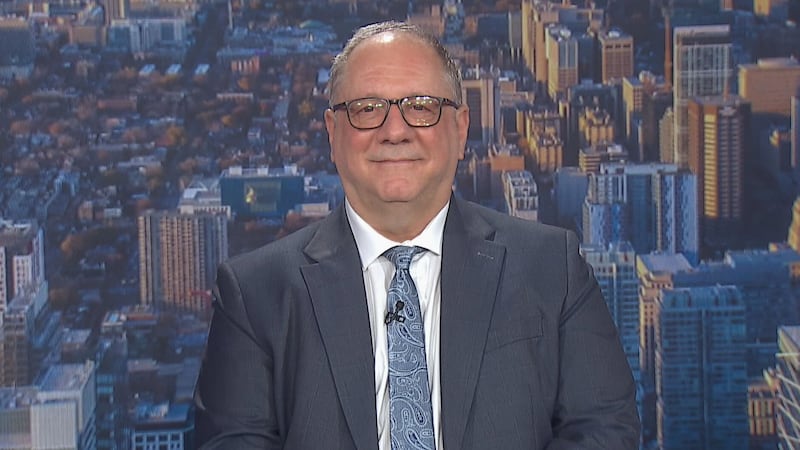
BNN Bloomberg spoke with Tony Stillo, director of Canada economics at Oxford Economics, about the Bank of Canada’s use of headline and core inflation measures, the outlook for interest rates, and the economic risks posed by trade uncertainty and geopolitical tensions.
Key Takeaways
- Policymakers should continue monitoring underlying inflation pressures because headline inflation can be distorted by temporary shocks such as energy prices.
- The Bank of Canada would benefit from communicating one primary measure of core inflation more consistently to improve transparency.
- Stillo expects the Bank of Canada to leave interest rates unchanged unless inflation broadens or economic conditions weaken materially.
- Trade policy uncertainty and geopolitical developments remain the biggest near-term risks for Canada’s economic growth.
- Oxford Economics expects Canada’s economy to strengthen gradually into next year, with inflation returning closer to target and policy rates moving toward neutral.
Read the full transcript below:
ROGER: Well, the Bank of Canada is facing calls to rebuild confidence in its decisions by refocusing on headline inflation. Economists and think tanks warn the Bank that its shifting reliance on technical core gauges has muddied its message and eroded public trust. So, what does that mean for interest rates? Let’s find out with Tony Stillo, director of Canada economics at Oxford Economics. Tony, thanks very much for joining us today in person. To get the three-man show going on here. Is that the way to go for the bank, to stress more about headline inflation, refocus on it?
TONY S.: No, I don’t think so. I think you have to look at underlying inflation pressures. Headline can be distorted. Look what’s happened now with the geopolitical events. You’ve seen energy prices just skyrocket, pushing up headline inflation. What you really want to worry about is what’s happening to underlying inflation, if that’s broadening to other parts of the basket. That being said, the Bank of Canada does have multiple measures of core inflation, and even I get confused at which one is the one that we should be tracking. So, we look at a variety of them when we’re looking at our work at Oxford Economics.
ROGER: What would you like to see them do, then? Like you said, you get confused. Is there a way to simplify it? Not to simplify it too much, but what would you prefer?
TONY S.: I’ve got a great joke. Sorry, I’m gonna start off with a great joke. I used to always say they have CPI excluding items, and they said you do CPI excluding all items, then you have zero inflation, but a little too far. The idea is to not have a variety of measures, but look at and clearly communicate what is the key underlying measure of inflation that is really driving their decision-making, and communicate that. They have a tough time. You think of households, they’re not looking at overall inflation. They’re really determining their expectations of inflation on grocery prices, gasoline prices, and that’s not the full story. Now you have house prices also on their agenda to look at because house prices have skyrocketed and gone out of reach. I know they’ve come down now, but they’re still out of reach for most households. So, there’s a variety of things that the bank is looking at. Asset prices, like housing, is a tough one for them because it’s better suited outside their toolkit, like macroprudential rules, things of that nature.
ROGER: Tony?
TONY C.: With all that said, it seems like they’re just including whatever they can in the basket to delay the interest rate cuts. Now, I’ve been a big fan of cutting interest rates because of the housing market. Canadian banks, about a year ago, put so much money aside for default loans, and the thought was five years later, coming out of COVID, the interest rate lows were in a lot higher interest-rate environment, a lot more defaults would occur. I still think interest rates should drop in Canada. What are your thoughts on that?
TONY S.: I actually think they’re well positioned right now. If you look at where we’re at, they’ll talk about the neutral interest rate, the one that doesn’t kind of drag on the economy or boost it too much, and it’s at two and a quarter now. Their policy rate, that’s, in our estimate, slightly supportive of the economy. So, we’re looking at a situation where, again, the bank has a tough time. They’re dealing with a supply shock, and that’s another thing that a bank has a dilemma with because you can have higher prices from higher energy costs, and also a depressing effect on the economy. So, they’re kind of in a bind, and where they’re situated now is probably, I think, a reasonable place to be, ready to respond in either direction if needed. If the economy turns south, whether it’s because of the upcoming USMCA, or CUSMA turns less favourable, they’re ready to support the economy. If we were to see prices rise and spread to other core items of the CPI, you’d see them hike. I think that they’re in a good place. We think that what’s likely happening is they’re going to stay on the sidelines. Markets have been expecting rate hikes all year. We’ve been kind of stand pat with a boring forecast that they’re going to stay on the sidelines, which is where they’ve been, and I think it’s actually quite appropriate. Keep in mind there’s other things at play, that the bond markets are pushing yields up because of inflation concerns, fiscal sustainability concerns in Canada and elsewhere, and so they can only do so much at the low end. Now they’re talking about buying longer-term mortgage securities, which might help keep the long end of the curve flatter.
ROGER: What might drag them off the sidelines over the next year?
TONY S.: Over the next year, well, we think the Canadian economy is at an inflection point. We’ve got a number of headwinds. The economy was reported to decline slightly in the first quarter. We don’t think we’re in a recession. Clearly weak, clearly sputtering, and we think growth is going to resume in the second quarter. But we’ve got the USMCA review. You talked about that earlier in the show today, and we also think that it’s likely not going to be extended, and it depends how that plays out. Also, how the Iran war plays out. Great first steps with the agreement between the U.S. and Iran, but it’s volatile. It could easily turn, and if it does, then we’re talking about a variety of forces at work that really would affect the global economy and the Canadian economy. So, what we have, our expectation is what we’re seeing now on the geopolitical side, that the Strait of Hormuz gradually opens. Oil prices are already down to pre-war levels, so that inflation shock should abate, but there’ll still be lingering effects of that, and so that’s hopefully in the background, still a risk. On the USMCA side, we were hopeful for some deal that would take place that would reduce tariffs in the third quarter of this year or the second half of this year. That could still happen even without an extension on July 1, but what’s most likely is they’re going to keep tariffs steady. Let’s go back to the assumption that they actually have some kind of reduction in tariffs. That, plus the end of the war, we’ll start to see an uplift to the economy. We also have massive fiscal stimulus that’s in the pipeline, literally, hopefully, too, and so that’s all going to buoy the economy against the headwinds that we have, a demographic shift with the population shrinking. We have highly indebted households, things that you identified. We’re looking for a modest uptick in growth, and then that means the economy will be on a firmer footing next year. Inflation will come back down close to the target range, and we think the Bank of Canada will return interest rates to a neutral stance, from two and a quarter to 2.75, not a tightening cycle.
ROGER: Okay, all right. We give you the last question. We got about 30 seconds. Go for it. You wanted to ask this. It’s Friday.
TONY C.: Totally Canada related. Are they going to draft Gavin McKenna tonight?
TONY S.: I think absolutely they will.
TONY C.: Okay.
TONY S.: I think he’s going to be a great fit with Auston Matthews and other additions they made. We’re not going to talk about planning parade routes yet, but—
ROGER: Okay, we’re gonna hold you to that, Tony. Yeah, Tony, thank you very much for joining us today. Tony Stillo, director of Canada economics at Oxford Economics, and a hockey expert.
---
This BNN Bloomberg summary and transcript of the June 26, 2026 interview with Tony Stillo are published with the assistance of AI. Original research, interview questions and added context was created by BNN Bloomberg journalists. An editor also reviewed this material before it was published to ensure its accuracy and adherence with BNN Bloomberg editorial policies and standards.

