Weakness in AI-related stocks following reports OpenAI could delay its initial public offering is reinforcing a shift in investor leadership rather than signalling the end of the AI trade. Instead, investors are increasingly looking at companies expected to benefit from broader AI adoption.
BNN Bloomberg spoke with Hans Albrecht, equity fund manager at Option Pit, about why AI infrastructure spending remains intact, why leadership is broadening beyond pure AI companies, and where he sees the strongest long-term opportunities across power, semiconductors and the broader economy.
Key Takeaways
- AI infrastructure spending is expected to continue even as competition pressures AI model providers.
- Investors are rotating toward businesses that benefit from lower-cost AI rather than companies producing AI models.
- Equal-weight indexes and smaller companies are showing broader participation beyond mega-cap technology stocks.
- Power, electrification and semiconductor equipment remain attractive areas tied to long-term AI infrastructure demand.
- Oracle faces risks from customer concentration and debt, making it less attractive than other AI-related investments.
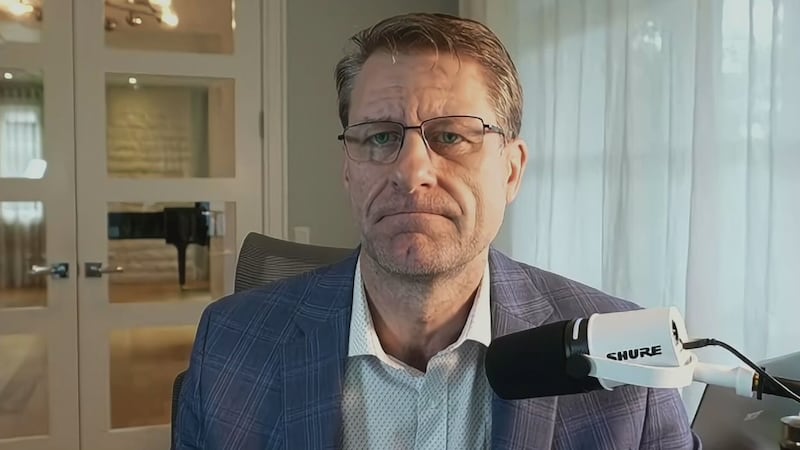
Read the full transcript below:
LINDSAY: We are seeing pressure this morning on a number of AI-linked names. Micron, for example, Advanced Micro Devices and Intel are among the stocks trading lower, as you can see. Adding to the unease, a New York Times report is suggesting OpenAI may be considering pushing its IPO to next year amid broader volatility in AI-related stocks. So, what’s driving the caution, and is this just a pause or something more? Let’s bring in Hans Albrecht, equity fund manager at Option Pit. Good morning. Great to have you join us.
HANS: Good morning, Lindsay. Thanks for having me.
LINDSAY: What’s your take on this? Is this just a pause, or investors may be overreacting here? What do you think?
HANS: Well, I think it’s... I think that’s really important. So lately we’ve seen a number of companies, Uber being one of them, Microsoft more recently, saying they’re starting to cut back on spending. And one of the big, big moments in the last week or two is that Microsoft said they’re going to consider using some of the cheaper open-source models, Chinese models as well. So the writing’s on the wall for these purveyors of AI, and OpenAI happens to be a company that loses a boatload of money. And then, you know, there’s the old saying, “Well, we lose money on every widget that we sell, but we’re going to make up for it on volume,” and that’s not really going to work here as they sort of continue to... In fact, they’re going to be in the midst of a pricing war, of a cost war, basically cutting costs. Anthropic is going to respond, and so it’s a very difficult business that loses a whole bunch of money.
If you think about it, for every $200 or $300 plan, they probably give away thousands, four- or $5,000 in token usage. So they’re really losing money on every single sale, in a sense, and I think that’s very difficult in a world where the compute costs are coming down and people are simply going to switch to other, more affordable options. The whole concept of “good enough” is actually going to be pretty darn good. If you look at some of these models out there, they’re really, really terrific. So we don’t know exactly why they’re delaying fully, but I think they’ve got some serious challenges ahead of them.
LINDSAY: So then, do you think it sounds like maybe not a rotation, the beginning of a rotation out of AI, especially when you factor in OpenAI and that IPO potentially being delayed? Uncertainty may be highlighting some of the challenges that the sector is facing right now.
HANS: I don’t think it’s a rotation out of AI really at all. It’s just the texture of AI investing is going to change because we’re seeing, in fact, some broadening happen across the board. If you look at the RSP, which is the equal-weight S&P 500, doing very well, the small caps doing very well despite having quite high rates at the moment. And so there is a lot of evidence that people are shifting from the purveyors, as I say, maybe some of the builders of AI, the pure AI plays that are going to be facing margin compression, a heck of a lot of competition.
This is the world of digital, which is very, very easily disrupted, and they’re switching into some of the real world again. So we’ve seen things, you know, the real world out there, Live Nation, Madison Square Garden, some of the things that people know can’t be replicated. AI is not going to code me another New York Knicks anytime soon, and so they’re switching into things like that, but also the broader market, which is now going to be the beneficiary of this sort of price war out there as people have geniuses in their pocket, right? AI in your pocket or on your laptop or your computer, and the benefits of that accrue to the broader economy.
We’re seeing business formation numbers absolutely explode. People are excited to use this. It’s cheap, and it’s subsidized. You get it for an 80 or 90 per cent discount. And so we’re seeing people move into other parts of the AI world, more of the beneficiary side.
LINDSAY: When we’re talking about these mega IPOs, though, if you had to choose one, I’m not sure whether you feel like you do, but you say that you would choose SpaceX over OpenAI any day of the week. Is that right? Why do you feel that way?
HANS: Any day of the week. Look, it’s very aggressively priced. We’re having to buy into Elon’s moonshot dreams, quite literally. But some of it’s becoming a reality, starting to take market share away from, on the compute side of things, from some of the competitors out there on Earth, in a sense. And I think there’s a total addressable market, which we can exaggerate. We’ve seen probably exaggerations of $28 trillion to $30 trillion, but the reality of it is that there are many, many spokes to that particular business, and he’s very much in the lead.
SpaceX is in the lead in many of those areas. They can do launches for 30 per cent of what anybody else pays. There is really a very large addressable market that he is unquestionably going to be moving into and taking share from others. OpenAI and Anthropic have a lot of work to do. How are you going to basically turn something that is getting commoditized as these models converge toward pretty similar capabilities? There’s always going to be something a little bit better, a little bit worse, but we’re converging in capabilities, and people are not going to pay those costs.
So what else do those companies have? They have to figure out a way to really ingrain what they do into an ecosystem like Google does. Hey, they don’t have to necessarily make money on Gemini because there’s going to be compression there, but they’ve ingrained themselves in your personal life, your business life and the ecosystem they’ve created. I don’t see those other two companies with the ecosystem yet. I’m sure they’re working on something, but it’s much, much too easy to switch. We’re seeing some terrific performances out of these Chinese models, the GLM 5.2, Kimi K2, all these ones that are really, really great at about five to 10 per cent of the cost.
LINDSAY: Okay, we’re running out of time, but you do have some stock picks today and your top conviction sectors, and those stock picks within them. So I want to get to as many of those as we can. Your first sector, power and electrification. Your pick is GE Vernova. What is it that you like there? What opportunities are you seeing?
HANS: So this is part of the buildout, Lindsay, that still makes sense, right? So it doesn’t matter whether we build the AI economy on Earth or in space, you’re going to need power. And so gas turbine suppliers, two of them are basically sold out. Some of these turbines are sold out through 2028, pushing into 2029. That’s GE Vernova’s lane, and so that order book is full. It’s very difficult to substitute. This is the real thing, right? Boots on the ground, real stuff that you can touch and feel. So I really love that supplier, and power demand isn’t going away. It’s only ramping up.
LINDSAY: And with memory and semicap, you’ve got ASML Holding. What’s your investment case there?
HANS: Yeah, so this is the only company on Earth that makes EUV lithography. So every leading chip designer and maker on the planet, whether it’s Nvidia, AMD, Apple, etc., they print on this machine. There’s no second supplier. China’s basically tried to compete. It’s been very difficult for them. So these are machines that ship in pieces. They’re something like $150 million to $200 million. It takes months and months and months to install them.
This is a very important part of, especially in a world that is getting a little bit less globalized, right? A little bit of de-globalization. People need these machines, and they’re very agnostic to who wins. Everybody needs these sorts of things. So that’s a really great place to focus on in that semiconductor area, but more of a builder of semiconductors.
LINDSAY: And just lastly, if you can explain this very quickly, you would avoid Oracle right now. Why would you do that?
HANS: Oracle is just in a difficult, difficult spot. They have a massive, massive customer in OpenAI, and so it really is one of those areas where it’s all about debt, and it’s all about very, very few customers being able to deliver on what basically they need. So they put themselves in a very difficult position here as far as data centres are concerned. So that’s one that I would steer very clear from, maybe some of the other sort of neo-clouds as well, but that’s one area that I think continues to be very challenged.
LINDSAY: Okay, Hans Albrecht, equity fund manager at Option Pit. Always great to speak with you. Thanks for joining us.
---
This BNN Bloomberg summary and transcript of the July 26, 2026 interview with Hans Albrecht are published with the assistance of AI. Original research, interview questions and added context was created by BNN Bloomberg journalists. An editor also reviewed this material before it was published to ensure its accuracy and adherence with BNN Bloomberg editorial policies and standards.

