Shipping through the Strait of Hormuz is recovering after months of disruption, helping push oil prices back toward pre-war levels even as geopolitical risks remain.
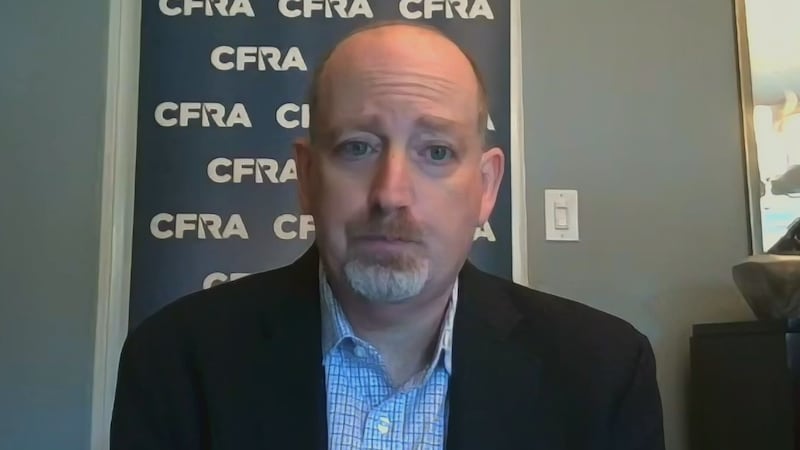
BNN Bloomberg spoke with Stewart Glickman, director of equity research at CFRA, about how improving shipping activity is affecting crude prices, why volatility could persist through the rest of 2026, and why he expects lower oil prices in 2027.
Key Takeaways
- Shipping through the Strait of Hormuz is recovering but remains well below pre-war levels, leaving the risk of further supply disruptions.
- Oil prices could remain volatile through the second half of 2026 as shipping conditions stabilize and geopolitical tensions continue.
- Global oil supply is expected to outpace demand in 2027, putting downward pressure on crude prices.
- China’s drawdown of domestic oil inventories helped limit upward pressure on crude prices during the conflict.
- Energy producers remain highly exposed to swings in commodity prices because they have little control over the price of oil.
Read the full transcript below:
LINDSAY: Shipping through the Strait of Hormuz has reached its highest level since the Iran war broke out in late February, and as a result, oil prices are hovering near pre-war levels. Let’s get more now from Stewart Glickman, director of equity research at CFRA. It’s great to have you join us. Appreciate your time.
STEWART: Thank you, Lindsay. Happy to be here.
LINDSAY: So, traffic flowing again through the Strait, obviously not to the extent it was before the war, but are we seeing enough traffic flowing through the Strait of Hormuz to solve the problem of potential oil supply disruption again?
STEWART: It’s a good question. So, we’re still nowhere close to square one, but we’re definitely moving in the right direction. To put it in context, before the launch of the war between the U.S. and Iran back in late February, the Strait of Hormuz was averaging roughly 138 vessels per day. That’s a combination of cargo vessels and oil tankers transiting the Strait one way or the other. We went to basically zero or low single digits for most of the last three months, but in the last few days, the transit volumes are way up. Today, or the last day we looked at, which I think was June 24, was 54 total vessels: 30 cargo tankers, 24 oil tankers. So, we’re definitely moving in the right direction, but we still have a long way to go.
LINDSAY: Still a long way to go. The latest sell-off we’re seeing, though, is that overstating the true, like, near-term fundamentals of what we’re seeing right now?
STEWART: So, I think what’s happening is, I think the market is kind of looking, honestly, is looking past whatever agita is going to happen between now and getting back to Hormuz stability, and thinking about what happens next year, where you’ve got probably a demand story of maybe an incremental 2 million barrels a day of demand, but probably an incremental 8 million barrels a day of extra supply, at least according to the projections from the International Energy Agency. So, the next six months, I think, are setting the stage for probably pretty volatile numbers because, to your point, you could, you know, run the risk again of the MOU falling apart, of Hormuz traffic going far down again, and then, you know, you’re probably going to get a bump in oil prices. But if we do get one, I don’t think it’s going to be long lasting.
LINDSAY: I mean, that’s the thing, right? As you say, like, there’s still so much uncertainty as to what could happen next between the two sides. Nothing is concretely signed or done yet in terms of a deal, and then you wonder what that would do to oil prices in the meantime, right?
STEWART: Right. So, you know, you have to have kind of a cast-iron stomach to basically get involved in energy investing. All of these E&Ps are price takers. They really have very little influence over, you know, spot prices day to day, week to week, month to month. So, the best you can do is kind of plan for all scenarios, and what that likely means is planning around a worst-case scenario. Some firms are better able to do that than others by virtue of their cost profiles.
LINDSAY: There are reports, too, that suggest there still exists the possibility of mines in the area, like within that passageway. Is that a concern, do you think?
STEWART: Yeah. So, you have to have vessels that are going to come along and kind of evaluate where these mines may be located. Keep in mind there’s two routes, right? There’s the northern route, which is the Iranian-controlled section, and then you have the southern corridor, which is more Omani-controlled. But even then there’s still friction because Iran is trying to dictate terms for the entire Strait of Hormuz and arguing that if you don’t use their approved routing, then you’re subject to military action, which is what we actually saw the other day, where a Singaporean cargo vessel came under attack by the Islamic Revolutionary Guard Corps. So, there’s so many different moving parts to this, and there’s definitely room for a setback. I think, you know, you have to think about what this looks like in 2027, when I think the picture is a little bit clearer.
LINDSAY: Okay, because I was wondering, too, like, how much has the world managed to change and adapt since this war broke out a couple of months ago. Obviously, oil is a key commodity, and people need it quickly, and they need it when they need it. So, are we seeing signs that demand is maybe softening when it comes to oil coming out of the Middle East at all?
STEWART: Yeah, that’s a really interesting question, and I think it’s one of the major surprises from this war, is that China, in particular, has been almost sort of a demand safety valve for the market because, rather than continuing to import as much crude as they had and driving prices up materially, I think the reason the prices didn’t move up quite as much was that they were tapping into their own inventories. We don’t have a great look at how much oil remains in inventory in China, but China did slash its oil imports dramatically, and yet their economy is still able to keep going. So, I think what that tells you is that they were kind of saving for a rainy day in a very large way, and that probably came to everyone’s benefit this time around when the Hormuz warfare began.
LINDSAY: Interesting. You yourself have downgraded energy to underweight. What’s behind that decision?
STEWART: Yeah. So, we thought two things. One, looking at 2027, we’re concerned about supply growth being significantly higher than demand growth. That’s what we thought at the beginning of April when we downgraded the sector to underweight. The second argument was, if, in fact, we do get, you know, stratospheric oil prices, which was definitely on the table in March 2026, that could have a significant effect on the global economy. We thought we might get a reprise of what happened in 2008-09, where oil prices went up to 147 bucks a barrel and then collapsed just seven months later. So, we were concerned about the effect that super-high oil prices might have on the global economy and cause cratering in demand in 2027.
LINDSAY: Okay, we’re gonna have to leave it there. Stewart Glickman, director of equity research at CFRA. Really good to have you on. Thanks for joining us.
---
This BNN Bloomberg summary and transcript of the June 26, 2026 interview with Stewart Glickman are published with the assistance of AI. Original research, interview questions and added context was created by BNN Bloomberg journalists. An editor also reviewed this material before it was published to ensure its accuracy and adherence with BNN Bloomberg editorial policies and standards.

