Canada, the United States and Mexico are set to review CUSMA on July 1, marking the agreement’s sixth anniversary. While the review is a required milestone, negotiations on any updated agreement are expected to continue for months rather than conclude on the deadline.
BNN Bloomberg spoke with Drew Fagan, professor at the Munk School of Global Affairs at the University of Toronto, about why the review is not a make-or-break moment, the likelihood of a revised trade agreement, and how prolonged uncertainty could weigh on Canada’s investment climate.
Key Takeaways
- The July 1 CUSMA review is a scheduled milestone and is not a deadline to finalize a renewed trade agreement.
- Negotiations are expected to continue for months, with a revised version of CUSMA more likely than a simple extension.
- Canada may benefit from taking more time to negotiate rather than accepting an unfavourable agreement.
- Prolonged uncertainty over market access to the United States could weigh on investment decisions in Canada.
- Supply management, particularly dairy, is likely to remain a key negotiating issue, although only limited concessions appear likely.
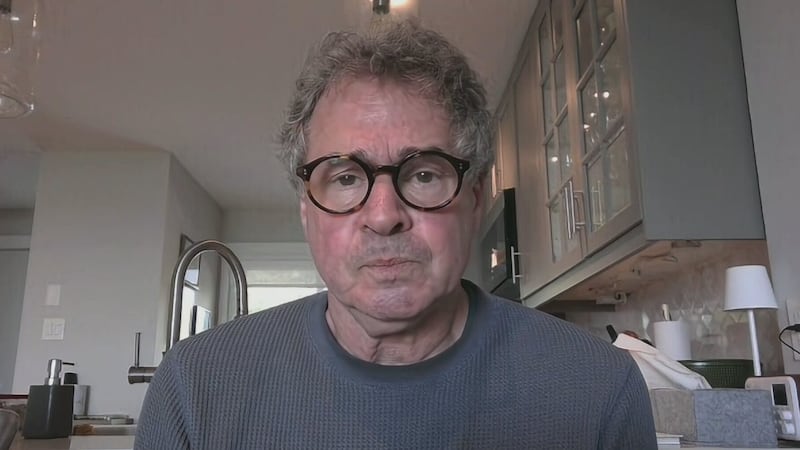
Read the full transcript below:
ROGER: Okay, a key moment for the CUSMA trade deal is coming up on Canada Day, when the three countries are expected to signal whether they want to extend the agreement. But U.S. President Donald Trump has suggested he’s not interested in renewing the deal as it stands. Joining us now to talk about what happens next is Drew Fagan, professor at the Munk School of Global Affairs at the University of Toronto. Drew, thanks, as always, for joining us. Do we have you, Drew? Oh, there you are.
DREW: Yes.
ROGER: Okay. Wonderful. Thank you. Thank you for joining us.
DREW: Pleasure. Nice to see you both.
ROGER: Okay. The July 1 deadline. Armageddon? Armageddon the next day if there’s no deal? What, what, what are we expecting leading up to that, and what’s going to happen after, do you think?
DREW: Anti-Armageddon. The opposite. So, the importance of July 1 is that it’s the sixth anniversary of the date when CUSMA went into effect. It went into effect July 1, 2020, and in that agreement, it’s actually the last article in a 2,000-page agreement, says that on the sixth anniversary, the parties will review, that’s the word, review the state of the agreement, decide whether or not they want to continue it. Not technically continue it so much as extend it, and I’ll get into that, and potentially change the terms.
Now, review doesn’t sound like renegotiation, but nobody expected in 2020 that Donald Trump would be in power in 2026, and he threw all the cards into the air last year when he came back to power with his protectionist platform globally, and with Canada and Mexico. So, there’s a negotiation that’s been going on. The negotiation, you know, we’ve been following has been going on for some months in the wake of his tariffs last year, limited tariffs in the case of Canada and Mexico, and July 1 is really the date when the three parties, the three countries, the three sets of negotiators assess.
Dates have already been set for negotiations: U.S.-Mexico, U.S.-Canada in July, which, you know, and the three countries have said we’re not going to reach an agreement on July 1. I would expect that they will say on Wednesday they will continue to negotiate. Those negotiations could well go on for months. They, we could be still negotiating quite easily at Christmas.
ROGER: All right. Drew, Darren’s got a question for you.
DARREN: Drew, how much political pressure do you think that the president is going to be under to get a win leading up to the midterms? You know, obviously there’s a difference between bite and bark, and, you know, I think one of the strategies that we could see on the Canadian side is just delay because if the president becomes a lame duck, that’s going to be a real challenge for him in terms of pushing through, you know, an Armageddon deal for Canada.
DREW: It’s a great point, and I think there’s a fundamental question for Ottawa with regard to whether you want to reach an agreement fairly quickly, even if it’s not on quite the same terms. The prime minister has said, you know, I could have reached a deal months ago. It just would have been a bad deal. Obviously, we don’t want a bad deal.
Question: Can we get better terms later, including in the context of maybe the thought that we have reached peak Trump, if you will? So that’s one consideration: fast, slow. I think the prime minister has been quite right in saying we’ll reach a deal when we get the right terms.
Those terms probably won’t be better than the terms we already had. It’s possible they will be, given, you know, negotiations in a couple of sectors where we have leverage: energy, energy and critical minerals. But, you know, on balance, I think it’s probably smart to just take the time needed to get the right deal.
As I say, they’re going to be continuing to negotiate for a while. There’s a risk to that. The uncertainty weighs more heavily on Canada than it does on the United States. We’re the smaller party, and our pitch globally, obviously, is come to a country that has a strong workforce, rule of law. Oh, and by the way, we guarantee access to the huge U.S. market. And that third point is not quite so strong right now. So, there’s a risk in that, but I think on balance it’s a risk that the government’s willing to take.
ROGER: Now, you mentioned that it may change. We do have some negotiating points. Dairy has been one that keeps coming up. I’m, I’m fascinated by Trump’s obsession with it. Is that something you could see Canada giving up?
DREW: To a limited extent. And I think the word obsession, you know, is not overstated. It’s, it’s a bugaboo of his. It’s, it’s been that way since, you know, 2016, really. It is an obsession for him, given the relatively small size of the sector.
In the first CUSMA negotiations, in Trump’s first term, the Trudeau government did give way to some limited extent, allowed increased exports of dairy and poultry products, and they paid substantial compensation, billions of dollars, to supply-managed farmers as a result.
It’s quite possible something like this will happen again, but I wouldn’t expect a situation in which the whole sector, you know, is sort of thrown up into the air. For one thing, the sector actually has stronger protections in federal legislation now than it did in 2018 or so. But the idea of sort of opening up the market a little bit more? Absolutely.
ROGER: All right, we have to wrap it up there, Drew, but thanks, as always, for joining us.
DREW: Pleasure.
ROGER: Drew Fagan, professor at the Munk School of Global Affairs at the University of Toronto.
---
This BNN Bloomberg summary and transcript of the June 29, 2026 interview with Drew Fagan are published with the assistance of AI. Original research, interview questions and added context was created by BNN Bloomberg journalists. An editor also reviewed this material before it was published to ensure its accuracy and adherence with BNN Bloomberg editorial policies and standards.

