A gradual rotation away from the Mag 7 and AI leaders is underway as investors respond to heightened volatility, geopolitical developments and a busy week of U.S. economic data. Markets are also entering a seasonally quieter period following quarter-end.
BNN Bloomberg spoke with Jonathan Corpina, senior managing partner at Meridian Equity Partner, about how shifting expectations for U.S. Federal Reserve policy, geopolitical headlines and sector rotation are influencing trading activity through the summer.
Key Takeaways
- Investors continue shifting money from Mag 7 and AI stocks into financials, industrials and defensive sectors as they lock in profits.
- Geopolitical developments and changing expectations for U.S. Federal Reserve policy remain the biggest drivers of short-term volatility.
- Quarter-end positioning and a heavy slate of U.S. economic data, including employment figures, could keep trading active despite the holiday-shortened week.
- Investors are moving into defensive sectors rather than cash, reflecting continued confidence in equities despite elevated uncertainty.
- SpaceX’s addition to the Nasdaq 100 could provide a short-term boost from index buying, while broader IPO activity may slow if volatility persists.
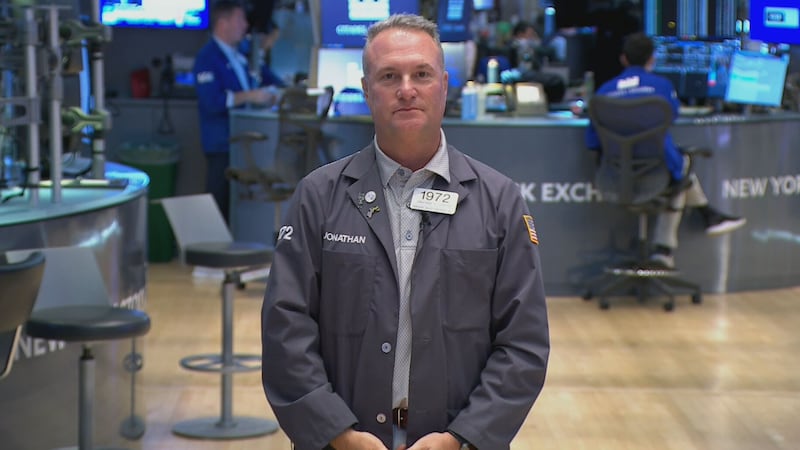
Read the full transcript below:
LINDSAY: So, as you’re seeing here, U.S. markets are in the green today as investors buy the dip after a rotation out of some of the U.S.’s top-performing stocks last week. Joining us now is Jonathan Corpina, senior managing partner at Meridian Equity Partner. It’s great to have you join us. Good morning.
JONATHAN: Good morning. Thank you.
LINDSAY: So, after what we saw, particularly last week, I guess, how would you characterize the current level of market volatility that we’re seeing?
JONATHAN: Yeah, we continue to see high levels of volatility. We’ve got these headwinds that continue to shift our markets back and forth. One that’s not moving the market as much as we thought at this point right now is what the Fed is going to do at their next meeting. We continue to get economic data, and it seems like we’re indicating at this point that the Fed is going to have at least one hike this year. Going into this year, we were talking about significant cuts, so I think that uncertainty is certainly adding to our volatility, and we continue to watch the headlines that are coming out of our geopolitical risks and issues in the Middle East. If you look at the trading activity on Friday, the U.S. government purposely waited until after the close on Friday to announce that there was some combat going on back and forth, and now, before the market opens today, we get a headline saying that talks are back on. This is the same story, the same rhetoric we’ve heard time and time again, and every time we hear it, it shifts the market. When there’s activity going on there, we get a selloff. When peace talks are getting closer to some sort of resolution, the market seems to buy itself back up again. So, the volatility is going to continue. I think we’re going to continue to see this type of headline movement throughout this week and for a few weeks to come.
LINDSAY: Yeah, it seems that way. You mentioned economic data, so I want to pick up on that point because U.S. jobs numbers are set to be released this week on Thursday. What are you expecting to see this week, and how might that shape rate expectations moving forward?
JONATHAN: Yeah, interesting week that we have in front of us, right? We’ve got two more trading sessions today and tomorrow that would end the month and the quarter, so we’ll see a lot of activity as we get toward the end of the quarter, possibly some window dressing. I’m not sure how much of that is needed, but we might still see that. Then, with the shortened trading week that we have, with markets closed on Friday, we’re going to get some jobs numbers on Thursday, which is unusual. But the economic data that we’ve seen all along, and the economic data pertaining particularly to jobs, continues to show that our economy is strong and moving in the right direction. You know, we’re still battling our inflationary issues and the data that’s associated with that. So, you mix all this together, and it puts a real interesting perspective that the Fed is going to have to digest as to what they do with rates at this point. Again, coming into this year, we kept talking about how many rate cuts we’re going to get, and now we’re talking about how many times the Fed could potentially raise rates this year. So, this economic data this week, a lot of data in a short period of time as we end the quarter and start a new quarter, put this all together, I think this is also just going to add to uncertainty. That’s not going to add to volatility. I think it’s uncertainty that’s going to add to just less participation in the market, with investors not doing as much as they normally would.
LINDSAY: We are seeing a slow rotation out of the Mag Seven and AI names, though, into other sectors like financials, industrials and defensives. Are you noticing that, and what do you think is driving that shift, if you are?
JONATHAN: Yeah, so this comes down to volatility and taking a look at where our markets have been and where we’ve come to. We’ve had some pretty significant runs over the last three months, the last six months of activity here, and I think when we get these uncertainty points talking about the Fed and geopolitical risk, investors try to take some profits off the table. So, how do they do that? They rotate out of some of the stocks that have done much better in their portfolio than others have. They’ll start taking some profits out of that, and where is that? That’s in technology. That’s in the Mag Seven. They have performed very well, and they are also the ones that are more volatile than some of the other sectors. So, they’ll start taking some profits, as we’ve seen, but they’re not leaving it in cash, right? There’s no value to letting your profits sit in cash. So, where are they moving them? Financials have done well. Some of the defensive stocks, some of the higher-dividend stocks, have done well. So, we start to see that rotation, and that rotation is slow. The interesting point is when the market starts to rebound and shift higher, the rotation out of those defensive names back into the technology, Mag Seven, is pretty swift, and we see that happen quickly, and that’s when the market will certainly shoot up higher. So, I think for now, looking at this week ahead of us, it’s a holiday week, it’s a short week. As we get into July, historically, summers are quieter trading months, but that doesn’t mean the headlines are going to cease and go away. We’re going to continue to see some activity. If we start to see increased activity in the Middle East, we’ll see more of that rotation coming out of tech into some of the more defensive names. If we start to get some sort of clarity that we are getting to a resolution, and maybe a longer ceasefire period where both sides actually oblige by the rules of engagement, then we’ll start to see that rotation come out of those defensive names and quickly go back into those tech names.
LINDSAY: It’s very interesting. Okay, I wanted to ask you about SpaceX as well because, obviously, we’ve been tracking that since its IPO a couple of weeks ago. It’s set to join the Nasdaq 100 after the close on July 6. I wonder, how meaningful is that inclusion for flows and valuation when that actually happens?
JONATHAN: Yeah, I think on a short-term basis it is meaningful, right? So, look at kind of the last, what is it, two weeks now that we’ve had SpaceX since the IPO. We saw the 135 IPO pricing open in the 150 range and then trade as high as 220. Just the euphoria out of that. It’s come way back down, has been sitting under a lot of pressure, got back down to that 150 level, and then the headlines that came out, which was expected, we knew this was going to happen. It was well orchestrated way ahead of time, of the inclusion into the Nasdaq 100, their technology top 100 names that are there. So, we’re seeing a bump in that today at some point, and as we get toward the inclusion in that, the index funds are going to have to own SpaceX whether they want to or not. The mandate of their portfolio is that they’re going to have to own it, so we’ll continue to see a very slow push higher and higher, I think, in SpaceX here. But I think it’s going to be artificially inflated. At some point, we’re going to start to see pressure back on it again. What I also think is kind of interesting, overall, in the IPO sector, we talked about SpaceX coming to market, but we’ve got Anthropic, OpenAI and other big names that were waiting to see how SpaceX was going to go, waiting to see what the economy was like, what our markets were doing to make their decision. With the activity that we’ve seen in SpaceX, again opening at 150, trading as high as 220, coming back down again, we’re starting to see these headlines, we’re starting to see these conversations of maybe these two other larger IPOs that we know are coming to market are going to hold off for some time, let the dust settle, and maybe 2027 is going to be the year they come in.
LINDSAY: Yes, and we’ve already got reports that OpenAI might be delaying the IPO, so definitely something to watch. Okay, we’ll leave it there for now. Jonathan Corpina, senior managing partner at Meridian Equity Partner, always great to get your expertise. Thanks for joining us.
JONATHAN: Thank you. Have a great day, and have a great week.
LINDSAY: You too.
---
This BNN Bloomberg summary and transcript of the June 29, 2026 interview with Jonathan Corpina are published with the assistance of AI. Original research, interview questions and added context was created by BNN Bloomberg journalists. An editor also reviewed this material before it was published to ensure its accuracy and adherence with BNN Bloomberg editorial policies and standards.

