Artificial intelligence, productivity gains and supply-side policies are reshaping the investment landscape, according to one strategist, who argues investors are relying too heavily on historical patterns that may no longer apply. He expects the U.S. economy to lead the next phase of growth while Canada lags behind.
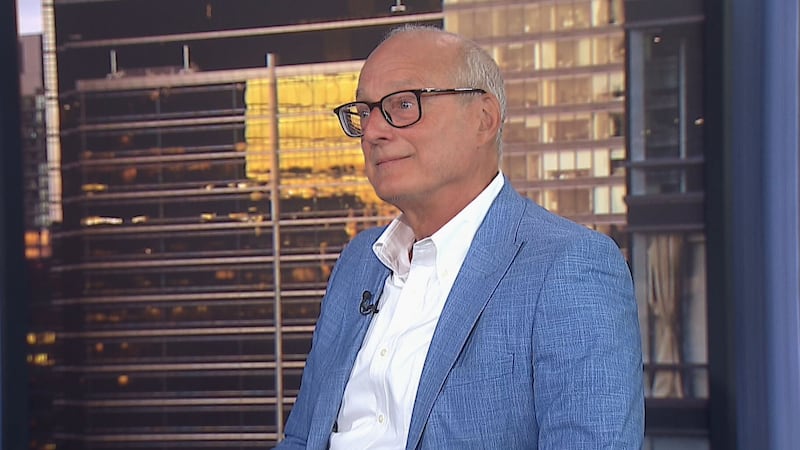
BNN Bloomberg spoke with Jim Thorne, chief market strategist at Wellington-Altus Private Wealth, about why he believes a new economic regime is underway, his long-term outlook for U.S. equities, the role of AI in driving earnings growth, and why he believes Canada needs lower interest rates.
Key Takeaways
- Thorne expects the S&P 500 to reach 8,000 as AI-driven productivity and stronger earnings support higher equity valuations.
- He believes AI investment is creating a long-term structural growth cycle rather than a typical technology boom.
- Thorne expects U.S. companies to generate substantially stronger earnings than current consensus forecasts over the next several years.
- He argues recent geopolitical tensions should be viewed as a temporary supply shock rather than a lasting threat to corporate earnings.
- Thorne says Canada is experiencing a balance-sheet recession and believes the Bank of Canada should lower interest rates further.
Read the full transcript below:
LINDSAY: Tech appears to be rebounding after last week’s swings across the sector, and investors are weighing a pause in hostilities between the U.S. and Iran. But zooming out to the bigger picture, our next guest says we are in the midst of a historic regime change, and investors may not realize it. So, joining me now is Jim Thorne, chief market strategist at Wellington-Altus Private Wealth, in studio. As always, great to see you.
JIM: Good morning.
LINDSAY: What do you mean by historic regime change? Let’s start there.
JIM: The structural change that we’re going through because of President Trump is investors really have to get a handle on it to realize the fact that maybe the historical data that we’ve been looking at previously to anchor our expectations is not that informative. So, you know, and that’s okay, right? So we’ve got an AI regime, right, memory. We’ve got, you know, deregulation of banks. I mean, look what Prime Minister Carney’s done with basically, you know, bailing out condos. Look at the cut in, you know, the deregulation in the Canadian banking industry. Look at, you know, Mr. Macklem, or Governor Macklem, saying that that’s not going to be enough to help the Canadian economy. So it’s all good. I mean, if you look at it as an opportunity, as opposed to the doomers looking at it as, you know, all doom and gloom.
LINDSAY: So, are you also saying, then, that investors can’t really look at what trends used to be in the past moving forward when they’re looking at how to invest or where to invest?
JIM: Yes, history rhymes, it doesn’t repeat, right? So let’s take a little bit from the past, but also recognize the fact that, first thing, things are going to be okay, right, in Canada and the United States. You know, the trade deal is going to get done. You know, the Gordie Howe Bridge is going to open, and the Canadian economy is evolving, right, and it just may take a little bit more time than what’s happening in the United States. But at the same point in time, look, we’ve got, you know, we’ve got a memory supercycle where we’ve got companies like Micron trading at very low PEs, and people don’t believe that this AI platform buildout is any different than an iPhone product cycle, and I think I differ with that type of point of view.
LINDSAY: Okay, I want to get back to that in a moment, but since we’re almost halfway through the halfway mark of 2026, then I guess, what do you think is going to happen with the markets for the second half of the year? What direction do you think they might go in? Is there one direction or many?
JIM: Well, my view has been, coming into this year, about 8,000 on the S&P. 8,400 would be a stretch. I think the interesting thing that’s happening is the earnings momentum is accelerating and, you know, I could get you US$400 worth of earnings in the S&P 500 next year. You put a multiple on it, 22 to 25, and, you know, for my end of the decade, I have US$650 of earnings in the S&P 500. But, Lindsay, we might get there in ’28. I mean, the ramp is so prophetic. And so, you know what? What do you do? How do investors, you know, process this in the sense that this cycle may not be a two- or three-year cycle? It might be a five- to six-year cycle. And when do we get the rerating fully priced in?
LINDSAY: Okay, so I want to go back to that then because you predict companies will earn, sounds like, more than US$650 per share moving forward, maybe before 2030-31. Why do you think that?
JIM: I just think that people don’t recognize the revenue generation within the totality of the economy that’s going to be generated by AI and also by the supply-side economic policies that are happening explicitly in the United States and implicitly in Canada. So the real economy is going to start to accelerate, and we’re going to see it first in the United States and then with a lag in Canada.
LINDSAY: Okay, and then I want to go back to your other point. Your call for the S&P 500 is 8,000. What specific earnings growth trajectory is needed to kind of reach that point?
JIM: To get to 30. If right now it’s 16 per cent, we’re comping at a 16 per cent earnings growth this year. We’re just coming into second-quarter earnings. Second-quarter earnings growth may blow numbers away, and so the sell side, or the Street, has been dragged in this because they’re very conservative, right, have been dragged along. So, look, to get to US$650 by 2031, and why I picked 2031 is that’s when the 100 per cent tax deduction goes away. That’s a 12 per cent earnings growth. Now here’s the secret: first off, is that earnings growth, when you’re estimating, is basically a multiple of nominal GDP and GDP. The Americans are going to run their economy hot to grow out of debt, so there’s one leg of the stool that we’re going to grow above historic norms. Now let’s put on top of that a productivity bubble, or a productivity era, and an AI buildout, and you could get to US$750 of earnings in ’28 just looking at bottom up. When you go onto your Bloomberg terminal and go into the earnings montage and look at the estimates for ’29, there are companies doubling earnings by ’29, and we haven’t accepted that because what are we doing? We’re just, like, going week by week, day by day. But if you take the long view, the alpha in the market is really generated when you look 12 to 14 to 18 months out. So I am very constructive moving forward. What I’m really concerned about is, do we get the earnings growth too early in the cycle, and does the market go like Icarus, too high, in ’28? But this is a secular growth market. You will never experience this again in your career. Well, this is the second time in my career I’ve experienced it, and we are in the early, early, early stages of a secular bull market for the ages.
LINDSAY: But looking short term, though, like just talking about second-quarter earnings that are coming up, do you think a lot of companies might be feeling the effects of the war in the Middle East this time around? Like, we could be seeing the trickle-down effect, don’t you think, in the second-quarter earnings?
JIM: We could, but I think we’re going to see through it, in the sense that I think there’s been enough communication that, you know, from the Governor of the Bank of Canada and the Fed, and what’s happening on Wall Street, where we’re going to process this as a supply shock. So it’s going to be a one-time effect. Look, Canada needs to adjust because what’s happening is we’re going through what’s called a balance-sheet recession, secular stagnation and what’s called a liquidity trap. We are actually replicating what the Americans did after the global financial crisis. That’s why what Prime Minister Carney did was so right. That’s why what the regulators did was so right. Now what we need is, I think, my opinion is, I think the economy needs to get rates down. We need another one percentage point cut from the Bank of Canada to get the demand for loans for the private sector to kick in. So we’ve got two legs of the stool. The Prime Minister’s done his job, the regulators have done theirs. Now all we need is the Bank of Canada to kick in for that final piece.
LINDSAY: Okay, we’ve got to leave it there. We’re out of time. Jim Thorne, always appreciate you coming in. Thanks so much.
JIM: Thank you.
LINDSAY: That’s Jim Thorne, chief market strategist at Wellington-Altus Private Wealth.
---
This BNN Bloomberg summary and transcript of the June 29, 2026 interview with Jim Thorne are published with the assistance of AI. Original research, interview questions and added context was created by BNN Bloomberg journalists. An editor also reviewed this material before it was published to ensure its accuracy and adherence with BNN Bloomberg editorial policies and standards.

