A weaker-than-expected U.S. jobs report did little to change expectations for stocks, with attention instead remaining on oil prices, AI spending and whether elevated valuations can be sustained through the second half of the year.
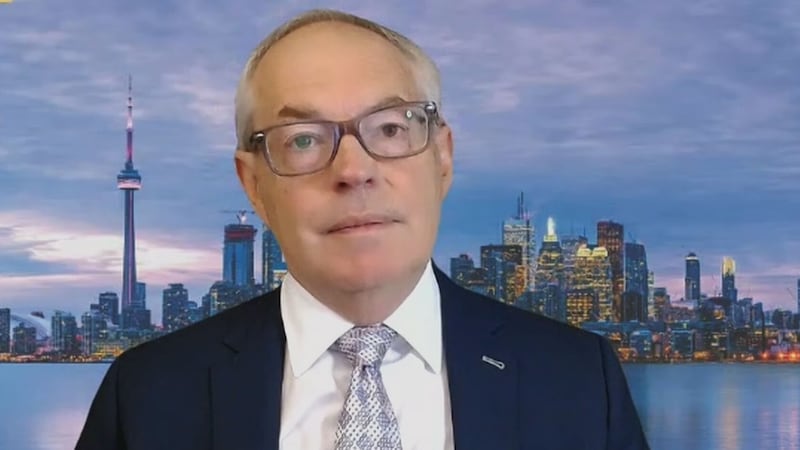
BNN Bloomberg spoke with Lyle Stein, president of Forvest Wealth Management, about why the payroll report was largely a non-event for investors, where he sees opportunities outside North America, and how portfolio positioning is evolving after a strong first half.
Key Takeaways
- The June U.S. payrolls report was viewed as too weak to accelerate growth but not weak enough to materially change Federal Reserve expectations.
- Oil prices and developments around the Strait of Hormuz are expected to have a greater influence on markets over the coming months than individual economic reports.
- Elevated equity valuations leave little room for disappointment, particularly if AI-related spending begins to slow.
- India and South Korea are viewed as attractive opportunities outside Canada, while Europe remains less compelling.
- Portfolio strategy is gradually shifting toward dividend-paying investments and income generation while remaining selective within technology.
Read the full transcript below:
LINDSAY: U.S. stock futures are trending higher as investors react to a weaker-than-expected U.S. non-farm payrolls report for June. Let’s get some perspective now. Joining me is Lyle Stein, president of Forvest Wealth Management. Good morning. Thanks for joining us.
LYLE: Hi, Lindsay.
LINDSAY: So, I guess first of all, can we get your take on the direction when it comes to the payroll numbers that we saw just last hour? We’ve got 57,000 jobs added in the month of June, but that’s less than expected. What’s your take on what we saw?
LYLE: Yeah, basically it’s showing an economy that’s just grinding along, is the best way to perhaps read it. It’s not enough to cause, I would say, someone to change their views with respect to Fed policy or change their views with respect to growth in GDP, but it just shows that, you know, the economy is not rocking and rolling, except in the AI sector. It’s just kind of bumping along.
LINDSAY: How much do you think this is going to impact the markets today? Obviously, we’re looking at the Dow, Nasdaq and S&P 500 futures. They’re all in the green at the moment. What’s your take on the direction of the markets and the main drivers here?
LYLE: Well, I think you see on the screen there, you know, a quarter- to a third-of-a-per-cent move in the markets is saying basically this is a non-event. We’ll wait, I think, and see what shakes out as the weeks unfold with respect to Hormuz and how that plays out with the price of oil. I think that’s much more important over the next month or two than what the job reports are going to come in at.
LINDSAY: Let’s talk about oil and the decline in the price of oil that we’ve seen recently. It’s been very interesting to see the developments ever since peace talks have been starting, and the Strait of Hormuz is relatively open at the moment. What do you think about what you’re seeing? Could we see another production adjustment if prices continue to slide?
LYLE: Well, it’s interesting. When you look at this chart, you could basically eliminate all the things that went on between Feb. 28 and, you know, the end of the quarter. It’s been pretty much flatlined at just a little bit, let’s call it US$70 for argument’s sake. What we watch as investors, though, in looking at where we’re going to allocate our clients’ resources, is that longer-term, one-year-out, six-month-out contract because that’s where the decision-makers are making their decisions. They don’t rely so much on the traders. It’s more on what the curve is saying with respect to our drilling activities and how we might meet anticipated demand. Right now, we’re just not really sure. Is the Strait really open? How much of this oil is going to get to market? And then, more importantly, how quickly will it get there? These are all important questions that I think will come to light by the time we finish July.
LINDSAY: What about gold? What do you make of what you’re seeing with gold prices right now? I know we’re going to talk about your strategy in just a moment. You have said you’ve shifted away from gold a little bit. Why is that?
LYLE: Well, basically, gold, you know, hit $5,100 and it rolled over. The run-up, I think, was more liquidity-driven than anything else. You know, we view gold in two pieces: there’s the insurance piece, which is really physical bullion, and then there’s the leverage to bullion, which are the mining companies, the streamers and the like. What we did do is reduce our exposure to that levered play, the miners and the streamers, as opposed to taking off that insurance policy. We think the insurance-policy aspect of gold is as important today as it has been really over the course of the last five years.
LINDSAY: Let’s talk about your strategy a little further, then. So, we’ve talked about gold. What else are you gravitating toward right now?
LYLE: Well, it’s been a great first half, you know. The markets, I think, did much better than anybody expected. It was a very narrow market. You look at the Nasdaq, all the gain in the Nasdaq was essentially done by 10 stocks. You’re seeing a very narrow market, but it is a bull market. Earnings have been strong. The good news is they continue to be ramped up. The bad news is, what do you do for an encore here? And earnings growth is good, but it could disappoint, particularly on the AI side, and I’ll touch on that. The other aspect is interest rates, and we seem to be anchored now at that 4.5 per cent level, plus or minus. Warsh is talking about getting inflation down. That is good, but the proof of the pudding will be in the eating, and I don’t think we’ll see that until we probably have one more Fed rate increase. At least that’s what we’re factoring in. So, when you look at the macro environment, it’s pretty good for stocks, but that’s why they’re trading at all-time highs. So, the question is, is the valuation right? What can you do going forward?
LINDSAY: You said you’re looking for equities outside of Canada. Are there any international markets you like?
LYLE: We recently took a stance in two of the Asian markets, India. India really has not participated in the rally, and they will be a major beneficiary of the drop in oil prices that the previous chart showed. So that’s one area. We’re still in South Korea, despite the fact that half the market resides in Hynix and Samsung, the two memory chip companies. That’s a very attractive market to us in terms of where growth can come from in Asia, so that’s where we’ve concentrated our bets. We’re staying away from Europe at the present time, and the U.S. is still the place to be, but you have to be very, very selective.
LINDSAY: Another story that we might be watching today, depending on how things unfold when markets open: Micron and Nvidia are both trading lower this morning. What’s your take on that? Do you think investors are just taking some profits here?
LYLE: Yep, I think that’s the easiest explanation. I mean, look at that run in Micron. It led the Nasdaq. It led the markets, really, through the second quarter. You know, we had a nice position in Micron, and as it crossed $900, our valuation approach kicked in and we trimmed back. We still own some. You know, two weeks ago, it wasn’t nearly enough. Now it’s looking much, much better. But we still believe that the memory chip sector is the way to play the AI boom. We’re a little bit concerned about the compute world that Nvidia rolls in. So, when we look at technology, it’s an area that we don’t today want to have as much exposure as we did at the beginning of the second quarter, and I think you have to be very selective. All tech is not equal, as you can tell by the difference between Microsoft and, let’s say, Google. So, you have to be very selective now in stock-picking. It’s not just roll the dice and put it into technology.
LINDSAY: I wonder if investors are starting to feel that way too. Do you think investors are officially moving beyond the Mag 7? I know we touched on this earlier, but in more detail, what do you think you’re seeing there in terms of trends?
LYLE: I think that’s exactly what’s happening. You know, the Mag 7 was the narrow market of 2023 and 2024. Now that’s migrating out, but a lot of that Mag 7 money went into what we see as the memory chip trade. Now the question is, where does it go from there? Growth continues to be in favour. We, at this stage in the market, would much rather look for what we would call dividend plays, where we get the bird in the hand, as opposed to the bird in the bush from growth. So, when we look at companies today, we want to make sure that they’ve got cash flow that can cover dividends, that can buy back shares, the same old stuff that people invest in. I think what you’re seeing is a lot of trading money, a lot of hotter money that ran into the chips out of Nvidia, now looking for a new home.
LINDSAY: Okay, we’ll leave it there. Lyle Stein, president of Forvest Wealth Management. Appreciate your time. Thanks for joining us.
---
This BNN Bloomberg summary and transcript of the July 2, 2026 interview with Lyle Stein are published with the assistance of AI. Original research, interview questions and added context was created by BNN Bloomberg journalists. An editor also reviewed this material before it was published to ensure its accuracy and adherence with BNN Bloomberg editorial policies and standards.

