Canada’s proposed southern oil pipeline route is renewing debate over Canada’s energy infrastructure and long-term economic potential. Investors are also watching whether recent rotations across gold, technology and other sectors signal the next phase of the investment cycle.
BNN Bloomberg spoke with Bruce Campbell, founder of StoneCastle Investment Management Inc., about the proposed pipeline, energy demand, the outlook for gold and technology shares, and why shifting investor sentiment could create opportunities during the second half of the year.
Key Takeaways
- Canada’s proposed southern oil pipeline could improve energy export capacity and strengthen long-term economic growth if the project secures private-sector support.
- Global energy demand continues to rise over the long term, supporting the need for additional oil export infrastructure despite periodic economic slowdowns.
- Extreme negative sentiment toward gold could set the stage for a rebound if inflation or interest rates begin to shift.
- Recent weakness in semiconductor-related stocks reflects changing investor sentiment rather than deterioration in underlying business fundamentals.
- Investors should monitor whether hyperscale technology companies begin slowing AI infrastructure spending, as that could affect future semiconductor earnings.
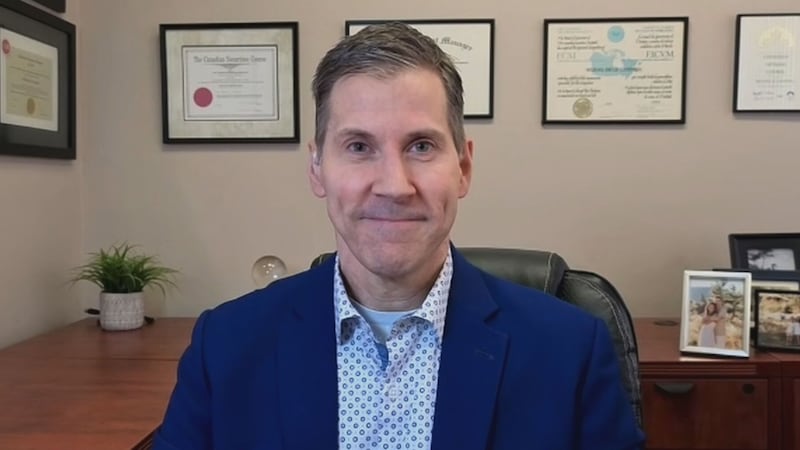
Read the full transcript below:
ROGER: Okay, Alberta is proposing a southern route for a new oil pipeline for the West Coast. The Prime Minister says it’s yet to secure private-sector backing. This could push Canada’s oil industry to a new turning point. Here to discuss that and more is Bruce Campbell, founder of StoneCastle Investment Management. Bruce, thanks, as always, for joining us.
BRUCE: Yeah, thanks for having me on, Roger.
ROGER: Okay, this new pipeline, or the new proposed pipeline, the new route further south, does this make it more appealing, do you think?
BRUCE: Well, it certainly seems like it’s, you know, politically more appealing because there was so much resistance to the northern route that, you know, this is basically taking the same route that the other pipeline runs, and perhaps that makes us get done a little bit quicker than it would have been trying to push through that northern route. It means that it takes longer for the gas or the oil to get to the actual market, but if that’s the case, then certainly it helps Canada from an economic-advantage standpoint.
ROGER: How much longer would it take? What’s the time difference for that?
BRUCE: I don’t know exactly what it is. I’ve just heard that it’s a longer route to go through the south than it is to go straight across the north.
ROGER: And is, I mean, we’ve heard from some people saying that maybe the demand isn’t there. What do you think of that? How do you respond to that?
BRUCE: Yeah, I don’t think that would be the case. You know, if we look at just overall energy production in the world, it continues to go up year by year. Obviously, if you have a recession or economic slowdown, then, you know, it can have a year where that’s affected by a slight amount. But generally, you know, we’re looking at using more energy every single year, so that demand will continue to be there. And I, you know, I think that when something like what we’ve just gone through with Iran and the U.S. happens, that, of course, is also an opportunity for people to look for other sources and a second route or an option that they didn’t have before.
ROGER: And with that, with what’s unfolded in the Middle East, of course, it drew so much attention here. And now that, well, as I say, it looks like it’s calming down, Iran’s making threats about... Will there still be interest in Canadian oil if things return to normal, like it looks like we’re heading in the Middle East?
BRUCE: I mean, I don’t think anyone’s going to take a look and say that what just happened is just a memory and not an impact on what they do or how they want to operate. So they’re going to be looking for a second supply or maybe even a primary supply that’s going to be what they need to help in the event that something like this happens again.
ROGER: All right, I want to move over to gold now and talk a little bit about that. It’s had a bit of a roller-coaster ride, and it’s slowly roller-coastering down. What are your thoughts on it right now?
BRUCE: Gold certainly has had a roller coaster, especially just in the last few months, right? If you look at, you know, 24 months or 48 months, it’s really been on that upturn as it’s, as you know, been a hedge against inflation, and we’ve seen higher inflation. And then just recently we saw gold get really extended. It got, you know, we had some times there in February where gold and silver were up massive amounts on a percentage basis in a day, and sentiment got stretched so far. And since then we’ve seen it really sell off, both the commodity and the underlying stocks, and they got pushed to the place where sentiment was actually at record levels to the negative. And anytime that happens, it creates an opportunity, and all you would need is probably to see some catalysts as far as interest rates and also inflation, and then that market starts to come alive again. And with sentiment being pushed to an extreme, that’s where returns can be strong.
ROGER: And how big a catalyst would we need to see, either with inflation or the like?
BRUCE: I don’t think it’s a lot. I think it’s just marginal amounts. It wasn’t a lot on the way down. It’s only been just incremental, a little bit. It just is a function of markets flowing and investors always looking for opportunity, and so that money ebbs and flows in certain areas, and that flow creates opportunity for investors. In this case, it’s just been incremental, the amount of interest-rate moves and also inflation going down and then going back up, that has affected gold. So I don’t think it’s going to take a lot from either of those two factors to really start to see gold move again.
ROGER: All right, and talking about tech now, it’s been a bit of an interesting way. It feels like people have said they’ve woken up again, going, “Whoa, maybe we’re a little too deep with it.” Where do you see things unfolding there?
BRUCE: Sentiment, again, is having a big, big impact there. If you take a look a couple of weeks back, the Bank of America Global Fund Manager Survey that surveys investment fund managers said that the semiconductor trade was the most overextended that it’s ever been, and it was in the high 70s that felt that was the case. And it’s no surprise that it was literally a week or two later that we saw the top in a lot of, maybe not the semis necessarily, but some of the products and the companies that service that area, so the hardware, a lot of those hardware companies. And since then, you know, some of that air is coming out of the balloon again. It’s a sentiment thing. It can be a flow thing. If you look at the numbers and you look at the underlying businesses, those businesses continue to be extremely strong and grow. The only thing that we really have to watch and be careful for is at what point in time do some of these hyperscalers start to cut back their spending or at least push back on the pricing. We saw when Micron announced their margins were massive, and that’s not normal for a semiconductor company. Those companies tend to be cyclical, so at some point in time the hyperscalers might start to push back, and then that could take some of that earnings lift out of the companies. But it certainly doesn’t seem like that’s the case quite yet.
ROGER: And I know they’re hyper, but are they big enough to push back and have a response to it?
BRUCE: Yeah, I mean, certainly they could be, especially if there’s any type of efficiencies in technology where they don’t need the same amount of new product to get the same amount of computing power that they have now, or that they’re going to need in the future. And those are always things that can change, and can change fairly quickly in technology.
ROGER: All right, we have to wrap it up there, Bruce. But thanks, as always, for joining us.
BRUCE: Yeah, thank you.
ROGER: Bruce Campbell, founder of StoneCastle Investment Management.
---
This BNN Bloomberg summary and transcript of the July 3, 2026 interview with Bruce Campbell are published with the assistance of AI. Original research, interview questions and added context was created by BNN Bloomberg journalists. An editor also reviewed this material before it was published to ensure its accuracy and adherence with BNN Bloomberg editorial policies and standards.

