Canada’s run to the Round of 16 at the World Cup has intensified discussion about whether the tournament can deliver lasting economic and social benefits. As Canada hosts World Cup matches and interest in soccer reaches new highs, attention is shifting to the long-term legacy of investments in sport.
BNN Bloomberg spoke with Adam van Koeverden, secretary of state for sport of Canada, about how World Cup-related investments could strengthen local economies, increase participation in sport and create lasting benefits for communities and businesses.
Key Takeaways
- Governments expect World Cup-related investments to generate economic activity through tourism, infrastructure and local business spending.
- Officials say the tournament’s legacy will be measured through long-term participation in sport, economic data and community outcomes.
- Investments in sports infrastructure are intended to support future sporting events, conventions and community use beyond the World Cup.
- Increased youth participation in sport is expected to deliver broader economic and social benefits, including improvements in health and workforce development.
- Canada aims to build on World Cup momentum by attracting more national and international sporting events.
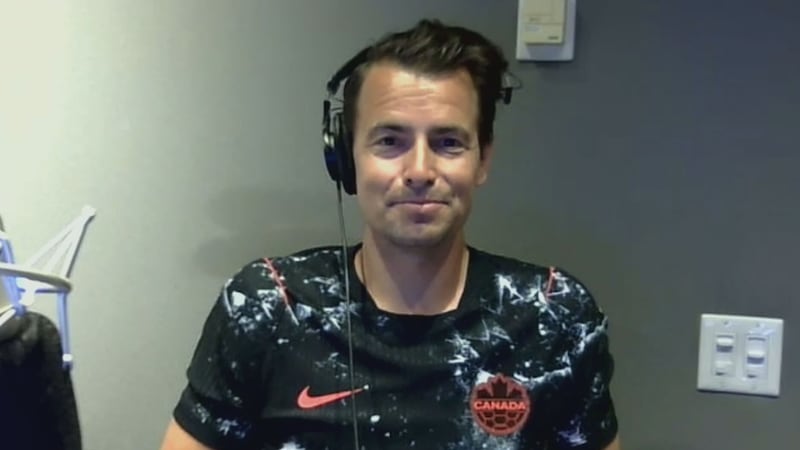
Read the full transcript below:
ROGER: Oh, love it! And with that, Canada advances to the Round of 16 in the World Cup, facing Morocco tomorrow. It’s further than the team has ever gone in the tournament, marking a turning point in Canada’s soccer history, with millions being invested in Canada, hosting a handful of World Cup games. Soccer can become one of the country’s most profitable sports, or more profitable. Here to discuss this more is Adam van Koeverden, secretary of state for sport of Canada. Adam, thank you very much for joining us today.
ADAM: Thanks for having me on.
ROGER: Okay, we’re going to get into the money and the benefits of all this. What did you think of the game?
ADAM: It wasn’t, it was amazing. A lot of, I learned a lot about the rules, you know. I played soccer when I was a kid, and I thought I knew what offside meant. I guess if you’re also an NFL fan, and you know that, like, you know, it matters where your feet are, if you’re in or out. We learned a little bit about what offside means, and, and all the rules and the technicalities. I also learned that the Canadian Premier League is testing a new rule, like an offside daylight rule, so it’s actually looking at how modifying that rule will impact the game a little bit. So, another Canadian innovation in sport.
ROGER: All right, just as we start to understand offside, we’re going to change it again. Okay, let’s talk about the benefits. I know a lot of people are looking at the price tag, questioning it. Where are we going to see that money go?
ADAM: Well, every dollar that every level of government invested in making sure that we were prepared to host this amazing World Cup tournament has been invested directly back into the Canadian economy, whether that is through one of the 24,000 jobs that it’s created and maintained or, you know, built new infrastructure for young people, for high-performance athletes, for future trade shows and conventions. As we’ve seen at BC Place, BC Place is now more accessible. We’ve doubled the number of elevators. We’ve also added a convention space that’ll be great for things in addition to, but other than sport. But we’re also building 25 mini pitches, you know, there was a recent article that I read about how we’ve got everything that we need to continue to be a higher-participating nation, a better sport nation, to have sport contribute more to our GDP and economy, except for the infrastructure, so it’s a big part of our plan to build more, to invest more into sports, that we get more out of it. It’s also relevant, I know this is a business show, to talk about the knock-on effects of $1 invested into sport, in terms of the social value, the impact on our health and our mental health, and, and how vibrant our communities are. We’ve seen that over the last five or six weeks that $1 invested in sport goes a really, really long way into improving the lives of kids. I was in the stands yesterday with six young people who got to be flag-bearers, they’re part of the Milton Magic Soccer Club in my riding, and the look on those kids’ faces after they got off the pitch, and, like, you know, we’re in the vicinity of Cristiano Ronaldo, they had their soccer scarves on, and they could not wait to get back onto the field. So we want to inspire lifelong love and affinity for sport, physical activity and recreation, because that’ll also downstream save costs on things like health care, public safety, and some of the, you know, tougher things that are harder challenges to focus on as a government.
GRANT: Adam, it’s a pleasure chatting with you. I remember watching you at the Olympics a number of years ago, so really, really nice to see you. You know, there’s obviously a lot of great momentum. I was downtown last night in Toronto, and saw all the Portuguese fans going absolutely bonkers. There’s a lot of momentum being built, like you’re talking about. How do we in Canada keep that going beyond what’s the beyond the World Cup? Like you’re talking about all these great knock-on events. How do we keep that momentum going? What do you think is the best thing that we can do here?
ADAM: Well, that’s a great question. We’ve just invested $755 million into sport to emphasize the value that it plays in our society, but also to support our national sport organizations in hosting more of these types of events. Now, look, the 2026 FIFA men’s World Cup is not only the biggest event of the year, it’s also the biggest World Cup ever, so it may be the biggest sporting event ever in the history of planet Earth, so when I say we need to do more hosting, I mean large and medium-sized events, like later this year in Montreal, we’re hosting the World Cycling Championships, a massive event that’s also highlighting the 50th anniversary of the 1976 Montreal Olympics being hosted here on home soil in Canada. We need more of these types of hosting events, we need to diversify our portfolio of options. You know, I will reference the Northern Super League, for example, Canada’s first-ever domestic professional women’s soccer league, and various clubs. They’re working to expand, and what I would love to see is more kids and families out at all of those games. It’s a different vibe, you know. It’s similar to the PWHL, like it’s a really, like, warm, welcoming, fun family environment that’s frankly different than the sort of Bay Street crowd that maybe you might encounter at a Leafs game, and we all need to participate, right, carving out time in our week to do more recreation, be more physically active, volunteer when we can, if we have time and contribute where we can, because other nations are maximizing and leveraging the impacts that sport, physical activity and recreation have, not just on our economy, but also on the social fabric and the quality of life that we all enjoy, and it’s working out. So I’m grateful for the enthusiasm that the FIFA 2026 men’s World Cup has brought to both Toronto and Vancouver, who I will say, according to Sports Illustrated, ranked first and third out of 16 host cities across North America. That’s something we should be very proud of.
ROGER: They’ve had some great rigs. I just want to jump in, and some of those Bay Street guys love that ROI. How are you gauging with the money spent, the investment you’re putting in? How do you tell when you’re... how do we know if we’re getting good return on this money?
ADAM: By measuring things you know as well as anybody that, you know, you can’t change, you can’t impact what you don’t measure. So we’re going to rely on all the organizations like Sport Tourism Canada, Statistics Canada, the business bureaus, the business improvement areas, the chambers of commerce to tell us what the impact was. Anecdotally, I chatted with some shop owners in Vancouver the other day, who told me they did a month’s worth of business in two days. I’ve never seen Granville Street like that. I’ve never seen Strathcona the way that I have in the last couple of days. This has brought such a level of enthusiasm. So many people have travelled to Toronto, whether they’re travelling from Markham or travelling from Strasbourg. It has been a hot spot, you know. Canada has been in the spotlight, and Toronto and Vancouver have definitely been highlight cities for the entire tournament across North America, and we will continue to measure the impacts this has had, building on the anecdotal evidence that we’ve heard from businesses across the country that this has been positive, but we also know it’s going to have a long tail, because as kids say, I want to play soccer, you know. As I was walking into this studio, I walked by a big mural of Vince Carter, and I think about the Carter effect all the time in the late ’90s when Vince Carter came to Toronto and really ignited a love for basketball in Toronto and right across our, our entire country. I think Alphonso Davies, Richie Laryea, you know, Stephen Eustáquio, they’ve all done the same thing for Canadian kids, so I think the impact, both in terms of legacy, economically and socially, can have a long tail.
ROGER: We’ll give last question to Grant.
GRANT: Yeah, Adam, you know, I think this is just anecdotal, I don’t have any, any stats behind this, but I think that people are really starving for community. We see that back home, where I’m from, in Winnipeg, where companies like True North Sports that own the Jets have done a really good job of trying to bring community together again, to bring them to the rink. I’m just curious, like we’re seeing a lot of that community right now. How do you measure, how do you help actually the local, like sports federations or the local sports associations to continue to do that after this, and, and again, going back to the ROI, what does that mean for businesses in these places going forward?
ADAM: Fantastic question. Grant, great to hear that you’re from Winnipeg. On my way home from Vancouver, I stopped off in Winnipeg to visit the Winnipeg Aboriginal Sport and Recreation Association camps, an organization that we fund. I went to a skate park, you know, enjoyed, they have a swimming pool, they do all this great recreation stuff. It’s youth-led, and those are the types of activities that, like, literally change lives on the ground in community at the grassroots, right? So, we want to see more of that. The $755 million that we’ve just invested into sport goes directly to those types of initiatives led by national sport organizations and groups like the Canadian Parks and Recreation Association, Canadian Tire Jumpstart, and KidSport, and all the wonderful groups and organizations across our country that create these opportunities for youth. Those opportunities are jobs like young people employed for the summer, getting prepared to go to college or university in the fall, meeting people, learning new skills. That is success, like that is future GDP, if you want to put it in that context, but it’s also just health, mental health, like quality of life, feeling like you’re contributing, feeling like you’re part of a team, like learning how to coach and be coached. These are fundamental life skills for whether you’re looking for a job or, you know, you’re looking to start a new business. Sport also teaches us to take risks, and from an economic and business perspective we know that’s fundamental as well, so all of the community sport organizations across the country are going to feel a sense of urgency over the coming weeks, whether, you know, we’re talking about field hockey, soccer or cross-country skiing, people are going to be invigorated, and all of those NSOs and community sport organizations are going to have to go, okay. We’re going to welcome everybody in. We have to have a strategy to increase the our ability to bring people in, to welcome them, and to ensure that we can all benefit from sport going forward.
ROGER: Okay, we have to wrap it up there. But thank you very much for joining us this morning. We appreciate it.
ADAM: Thank you, guys. Anytime, go Canada, go.
ROGER: You got it. Adam van Koeverden is secretary of state for sport of Canada.
---
This BNN Bloomberg summary and transcript of the July 3, 2026 interview with Adam van Koeverden are published with the assistance of AI. Original research, interview questions and added context was created by BNN Bloomberg journalists. An editor also reviewed this material before it was published to ensure its accuracy and adherence with BNN Bloomberg editorial policies and standards.

