Crude oil has fallen sharply from its spring highs as geopolitical tensions in the Middle East continue, but investors are increasingly focused on supply-and-demand fundamentals rather than geopolitical risk. At the same time, new Canadian pipeline proposals are strengthening the long-term case for the country’s energy sector.
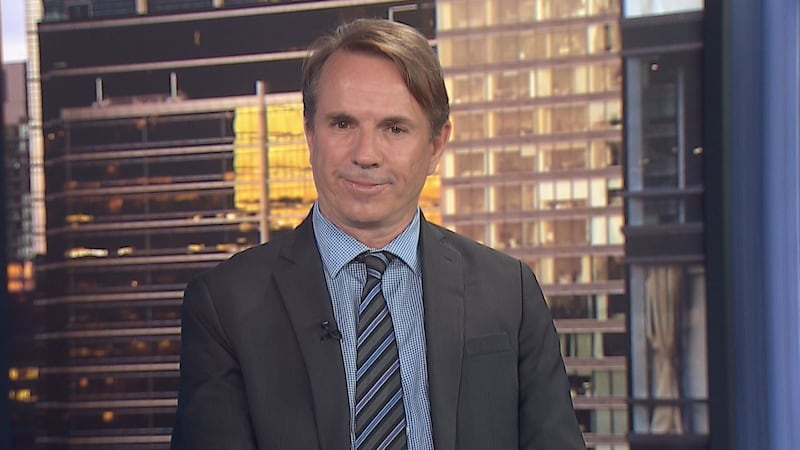
BNN Bloomberg spoke with Jerome Hass, partner at Lightwater Partners, about why he believes Canadian energy companies remain attractive despite weaker crude prices, pointing to years of underinvestment, improving export infrastructure and strong cash generation across the sector.
Key Takeaways
- Oil prices have largely shed their geopolitical risk premium despite continued uncertainty in the Middle East.
- Proposed Canadian pipeline projects could improve export capacity and reduce long-standing pricing constraints for producers.
- More than a decade of underinvestment and stronger capital discipline continue to support Canada’s energy sector.
- Mid-sized Canadian oil producers may offer compelling valuations and free cash flow relative to larger peers.
- Investors should focus on companies with durable cash generation rather than short-term swings in crude prices.
Read the full transcript below:
ROGER: Crude oil has fallen from its spring highs despite continued geopolitical uncertainty in the Middle East. While the Strait of Hormuz remains open and markets have largely removed the geopolitical risk premium from oil, Canada’s energy sector is still getting a boost from new pipeline proposals aimed at expanding export capacity. Joining us now is Jerome Hass, partner at Lightwater Partners. Jerome, thanks very much. Nice to see you in studio. Appreciate it.
JEROME: Thanks for having me.
ROGER: It’s not a calm day, but oil’s not overreacting, is it?
JEROME: I’m very surprised by the reaction today. It’s yet another move by President Trump. He first tried to bomb Iran into submission. That didn’t work. He tried the blockade. That didn’t work. So now he’s going to bomb them. What, to get them back to the negotiating table? It seems a strange tactic on his part, but he’s kind of in a desperate situation. Here, the MOU was a bit of a farce, to be honest, between Iran and Iraq, or, sorry—
ROGER: Right, and the U.S.
JEROME: And the U.S., and he’s got the midterms looming, so I think he had to do something.
ROGER: And is this enough? I mean, they both have a lot to lose. I mean, Iran has almost as much to lose. They both want to stay in power, so that pressure to kind of calm things down, is that there?
JEROME: Well, I think the one thing that we all have to bear in mind, at the end of the day, is they both have an incentive to get the oil flowing. Trump, for the November midterms, and Iran because they need the revenues from that. And so, because they both need that, we know that they want to get the oil flowing. Oil prices have come down substantially from the levels we saw earlier this spring, but—
ROGER: No, finish, sir.
JEROME: Yeah, no, I think we saw a real overreaction in the financial oil market in that, you know, last week we hit US$68 for WTI, which to us was a dramatic overshoot. We were nowhere near clear of the situation yet. We were pricing in pre-war levels for oil, which made no sense to us.
ROGER: Yeah, I was going to ask. I heard that from a few different people saying that it went too low. It went the other way. And now, what’s a realistic range for it?
JEROME: Well, you know, if you ask me, I expect—
ROGER: An expectation. What do you think it might be?
JEROME: Well, I think the bottom is US$70, and I think US$75 is a very low estimate for the remainder of the year. Initially, what we saw last week and the week before, after the MOU was signed, was that there was a flush of oil that came out of the Gulf, and also the prospect of Iran releasing its production onto the market without sanctions. And so I think that had a short-term impact, but that flush would only last for a month, or at most two, and then we’re going to go back to the realities that there’s a very tight oil market. We’ve lost a lot of supply over the last four months, and I don’t think it’s unrealistic to see WTI going back to US$80.
ROGER: And were you surprised? It did seem when the Strait seemed to reopen, oil quickly recovered. At one point, they were talking about a glut again soon.
JEROME: Yeah, we were shaking our heads a little bit at that because, if you recall, in January there was talk of a glut. I think with the events in Iran, that is just not going to be a possibility. But what is clear is when the ships do come out of the Gulf, there will be a temporary supply blip. It’s more a flush. But once that’s over, then we’ve got a serious deficit within the global oil market, and so we see it going back to US$80 at least at that point.
ROGER: All right, let’s talk about Canada in this. How are the oil companies here? Are they still going to benefit? Is there still going to be interest in them?
JEROME: I think so. And there have been a lot of developments in the last couple of weeks. Firstly, we’ve had more than 10 years of underinvestment in the industry, and there hasn’t been a lot of interest in oil stocks and oil companies, for one. Secondly, there’s been a development with regards to Alberta and the federal government, the MOU with regards to the pipeline to the West Coast. I think, because of recent events, the probability of that is probably closer to 50 per cent, which is higher than it was even a month ago. On top of that, we’ve now had Alberta and Ontario talking about the Northern Shield pipeline, which was an out-of-the-blue development, bringing a line from Alberta to Sarnia. It has the potential for a spur to Churchill. As well, Ontario has been talking about a strategic reserve, which is the first time I’ve ever heard that really talked about in Canada. It’s great to hear.
ROGER: All right, and what companies are you keeping an eye on, or where are you looking right now?
JEROME: Yeah, well, the largest position that we have in the All-Canadian Oil & Gas ETF is Surge Energy, and we just think it’s an undervalued mid-cap stock. It trades at about 3.4 or three-and-a-half times valuation. It’s got a free cash flow yield of about 16 per cent at US$75. It’s a conventional oil producer in southeast Saskatchewan, in the Sparky, 90 per cent oil. These are just cash flow machines right now. You know, they upped their capital budget a little bit about six weeks ago, and so they’re going to have production growth of about five per cent this year. These companies are really kicking off a lot of free cash flow, and on top of that, you’ve got about a six per cent yield in the company too, so you’re getting paid while you wait.
ROGER: Why are they being—are they just getting lost in everything else that’s going on, or is it—
JEROME: Well, yeah—
ROGER: Like, are we just really playing catchup with our oil companies?
JEROME: Well, no. The problem is that nobody’s been investing in these for 10 years, and so those that are invested are invested in the top five or six names. So we actually did a study when we looked at the largest actively managed funds in Canada. None of them own anything in the oil and gas space other than the big five or six. There’s not many players that are in the space below that, and you get a very interesting valuation differential between the global supermajors, the Canadian largest ones, and everyone below that. If you’re in the mid-cap space just below that, there are significantly lower valuations. Like 3.4 times is ridiculously cheap in our view. You put a four-times multiple on it, which is still cheap, Surge goes from $9.80, where it is today, to $12. I mean, there’s still a lot of upside at a very reasonable valuation on that.
ROGER: Okay, we’ve got to wrap it up there, Jerome. But thanks, as always. Nice to see you coming in. We usually chat by phone, but it’s nice to see you in. Thanks for doing it.
JEROME: Thank you.
ROGER: All right, that was Jerome Hass, partner at Lightwater Partners.
---
This BNN Bloomberg summary and transcript of the July 9, 2026 interview with Jerome Hass are published with the assistance of AI. Original research, interview questions and added context was created by BNN Bloomberg journalists. An editor also reviewed this material before it was published to ensure its accuracy and adherence with BNN Bloomberg editorial policies and standards.

