U.S. inflation cooled more than expected in June as falling gasoline prices helped ease price pressures. However, renewed tensions with Iran and higher oil prices could make that relief temporary.
BNN Bloomberg spoke with Gennadiy Goldberg, managing director and head of U.S. rates strategy at TD Securities, about the Federal Reserve’s options as it balances inflation risks against a resilient economy.
Key Takeaways
- The June inflation report weakened the case for a Federal Reserve rate hike at its July meeting.
- Unexpected softness in rents, airfares and other categories suggests inflation pressures eased beyond energy.
- Renewed oil-price increases could prolong above-target inflation but may not be enough on their own to trigger higher rates.
- Persistently strong consumer spending and a reaccelerating labour market could make the Federal Reserve more hawkish.
- TD Securities expects no rate changes through 2027 but sees greater risk of increases than cuts later in 2026.
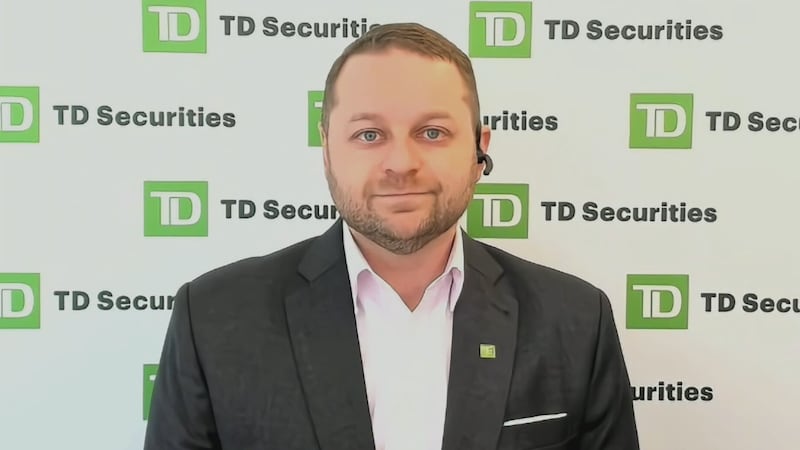
Read the full transcript below:
ROGER: All right. U.S. consumer prices slowed in June, falling just under half a percentage point from May, up three and a half per cent from a year earlier. The latest numbers suggest a pullback in gas prices during a fragile ceasefire between the U.S. and Iran, a deal that collapsed just last week. For more insight, let’s welcome Gennadiy Goldberg, managing director and head of U.S. rates strategy at TD Securities. Gennadiy, thank you, as always, for joining us.
GENNADIY: Thanks for having me.
ROGER: Okay, where are we with it right now? Sorry, I’ve just—I’ve lost my notes for a second. Core inflation—that’s what I want to talk about first. Down in the States, the numbers a little lower than expected. Is that—is that where you were seeing it? What do you think of that?
GENNADIY: Well, it was. It came in even lower than we were anticipating. We had a slightly below-market forecast. It came in even lower than that. A couple of surprises there. Rents were quite a bit lower. Things like airfares came in lower. Really, if you look at it, you know, kind of all over the place, you had quite a bit of unexpected weakness. I think that’s quite positive.
Just yesterday, you had Governor Waller talking about persistently high inflation would prompt the Fed to move. You know, that’s coming on the heels of a resumption of hostilities around Iran and oil moving sharply higher. So I do think the market was preparing for a really kind of almost a worst-case scenario. This pours some cold water on the narrative that, you know, we need to see imminent rate hikes as soon as a July meeting.
But what it doesn’t do is necessarily say that we’re in the clear. You know, this is one month of data. It is one month of fairly good data, and I think that should be encouraging. But we’ll have to keep watching this because, you know, there are some worries that core services inflation could remain a little bit stickier for longer.
ROGER: All right, I’ll ask about the core service, but, I mean, oil, obviously a concern. It’s inching back up, instability. The—we—we see it flaring up in the Strait again. Could that derail that and push them hawkish again?
GENNADIY: It could. You know, the Fed’s been very cautious to talk about, you know, not necessarily responding to a supply-side shock. I mean, they’ve talked about a couple of points here. You know, supply-side shocks are not something they can really reply to, but they do talk about inflation in the context of the broader AI boom, and that’s a supply-side story that they can respond to.
I don’t think the move in oil prices is necessarily going to really put them over the edge in terms of actually hiking interest rates. That’s not something they’re keen to do, but I do think it plays into the narrative that we’ve had multiple, you know, dare I say, transitory shocks that have continued to play through the inflation story, and we’ve had multiple years of above-target inflation.
I do think the FOMC as a whole is getting somewhat tired of having inflation persistently above target for as long as they have—as long as it has been. That’s why you hear from Chair Warsh really talking tough on inflation, that we will bring it back to two per cent. I think there are enough hawks on the FOMC who are starting to get nervous that perhaps this—the higher inflation—is getting more ingrained into the markets, and they want to prevent that.
ROGER: And what’s the danger if it does become ingrained?
GENNADIY: You know, inflation is persistently a—you know—a psychological phenomenon. I do think that if it becomes ingrained, people expect inflation. It becomes almost self-perpetuating. There’s a lot of parallels being drawn back to the—the 1970s, with successive, you know, oil-price shocks really kind of creating almost a loop. The Fed really wants to short-circuit that if possible.
We don’t think that’s happening. We don’t really see evidence of that persisting, but there is worry that, you know, you’ve had all of these shocks and you’ve still got services inflation, even before the Iran shock, persistently, you know, kind of above target and not really coming down as quickly as anticipated, as you would, especially given that, you know, things like wages have really slowed down.
So I think there’s hope for lower inflation still. But I think what this does is basically pour a little bit of cold water on the narrative that the Fed has to hike as soon as July. But it doesn’t take out the threat of rate hikes. You know, we at TD don’t expect hikes or cuts both in 2026 and 2027. But I think the risk, if I had to pick one, would be towards a move higher in interest rates later this year rather than lower.
ROGER: All right, but you’re thinking through 2027 or into?
GENNADIY: All the way through. So right now, we don’t have any hikes or cuts in our forecast horizon. We’re obviously watching the data quite closely. You know, we’re being as data-dependent as the Fed. They are responding to inflation. If inflation really is persistently stronger and it doesn’t come down and the labour market stays firm, I think there’s a risk that the Fed does decide to tighten policy a bit.
I don’t think it’ll be material tightening. I think it’ll be something along the lines of a midcycle adjustment, something like 50 to 75 basis points, and the markets are already priced just south of 50 basis points. So I think a lot of that is already pencilled in. I don’t think the market’s going to be surprised with another, you know, 2021-2022 type of rate-hiking cycle.
ROGER: All right, now AI, the capex and oil. What other factor could be a thing here?
GENNADIY: Really, the worry is about the consumer and the labour market. You know, the consumer—and this is—this is something Governor Waller brought up yesterday as well in his remarks. The consumer has been almost bulletproof in all of this. Whether it’s COVID, whether it’s the tariff shock, whether it’s the geopolitical risks, consumers have continued to spend through strongly.
There’s been this assumption that consumers—consumer spending would slow down. It really hasn’t materially. Part of that has to do with a very strong labour market, which also hasn’t really slowed down. So if you start to see the labour market reaccelerating, I think that would give the Fed, you know, quite a bit of worry that inflation could be on the upswing as well.
But really, right now, they do—the labour market is somewhat steady at lower levels, and they’re worried about getting inflation under control. So that’s really where the focus is. If you start to see the labour market really pick up and the unemployment rate move lower for good reasons, not like we saw last month, you could really see the Fed actually turning even more hawkish.
ROGER: All right, we’re cutting you short a little bit, Gennadiy. I apologize, but we’re going to go hear from the Fed themselves. Kevin Warsh is now speaking, but thank you for joining us. Always appreciated.
GENNADIY: Thanks for having me.
ROGER: Gennadiy Goldberg, managing director and head of U.S. rates strategy at TD Securities.
---
This BNN Bloomberg summary and transcript of the July 14, 2026 interview with Gennadiy Goldberg are published with the assistance of AI. Original research, interview questions and added context was created by BNN Bloomberg journalists. An editor also reviewed this material before it was published to ensure its accuracy and adherence with BNN Bloomberg editorial policies and standards.

